
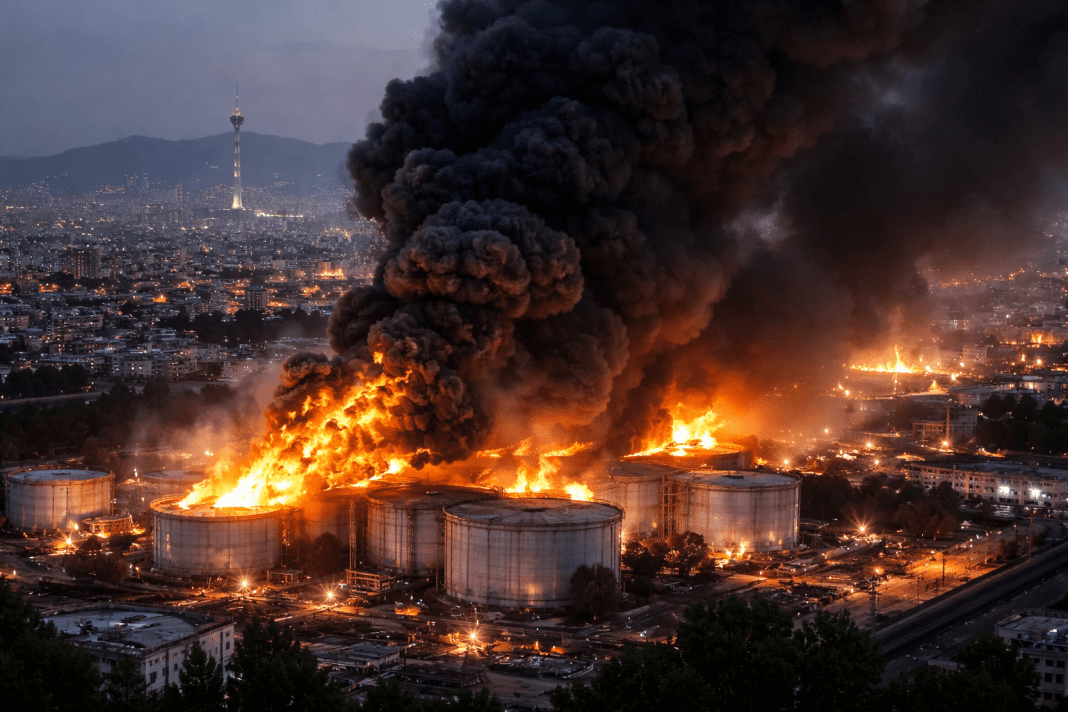

The United States has reportedly asked Israel to pause strikes on Iranian oil and gas infrastructure as the conflict intensifies. The request was delivered to Israeli leaders and IDF Chief Eyal Zamir. U.S. officials warn that continued attacks on refineries, fuel depots, and other oil infrastructure could trigger a wider energy crisis. The strikes have also raised environmental concerns after fires and smoke were reported in Tehran.
US Urges Israel to Pause Attacks on Iranian Oil Infrastructure
The White House request focuses specifically on Iranian oil and gas facilities. U.S. officials believe that destroying a large portion of Iran’s energy infrastructure could lead to serious global consequences.
American leaders fear that continued strikes on refineries and fuel depots might provoke Iran to retaliate by targeting energy facilities across the Gulf region. Such retaliation could include oil terminals, pipelines, or refineries in neighboring countries that are key suppliers of global energy.
India reports 37 oil and LPG tankers stranded near Strait of Hormuz as fuel shipments delayed
A wider conflict involving oil infrastructure could severely disrupt the global oil supply. Many of the world’s largest oil exporters operate in the Gulf, and their production plays a critical role in maintaining stable international energy markets.
Even early signs of the conflict have already affected markets, with analysts reporting rising diesel and fuel prices. Officials warn that if the situation escalates further, energy costs could surge and contribute to another wave of global inflation affecting transportation, manufacturing, and food production worldwide.
Environmental and Humanitarian Concerns After Tehran Strikes
Another major reason behind the American request is growing concern about the environmental damage caused by attacks on fuel depots and oil storage facilities. Recent strikes in Tehran reportedly ignited several large fuel depots, sending massive clouds of thick black smoke into the sky above the Iranian capital. The fires were visible from long distances and quickly raised alarms about air pollution and public health.
Tehran is home to nearly 10 million people, and the pollution spread rapidly across several parts of the city. Residents reported dark smoke covering the skyline and strong chemical odors lingering in the air. Many people expressed concerns about possible toxic fallout, especially in neighborhoods located near industrial zones and fuel storage sites.
Trump downplays rising gas prices as US-Iran conflict disrupts oil markets globally
Experts say that when large fuel facilities burn, they release dangerous pollutants into the atmosphere. These fires can emit chemicals that affect air quality and may lead to respiratory problems for people living nearby. In some areas, there were also fears that contaminated rain, sometimes described as acidic or polluted rainfall, could spread harmful particles across wider regions.
Environmental groups warn that attacks on fuel infrastructure can cause long-term ecological damage. Oil fires and chemical leaks can contaminate soil and water supplies, creating lasting environmental risks. Because of these concerns, U.S. officials have urged restraint in targeting major energy facilities during the ongoing conflict.
Strategic Debate Emerging Between Washington and Jerusalem
The request to pause strikes on Iranian oil infrastructure reflects broader strategic concerns within the United States administration. Officials in Washington are reportedly considering what the region could look like once the conflict ends. Some policymakers believe Iran’s energy sector might eventually help stabilize global oil markets if relations improve in the future.
This idea follows strategies the United States has used before in other regions. In certain cases, Washington supported efforts to restore oil production in previously isolated countries so they could rejoin global energy markets. Officials believe that if Iran’s energy facilities are severely damaged during the conflict, such opportunities could disappear.
Donald Trump gives mixed signals on Iran war timeline as markets watch rising oil prices
At the same time, the United States continues to support military operations aimed at weakening Iran’s military capabilities and nuclear-related programs. American leaders have emphasized that the primary objective of the campaign remains the degradation of Iran’s military power.
However, the issue of oil infrastructure is creating a rare point of tension between Washington and Jerusalem. Israel has conducted strikes on Iranian fuel depots and storage facilities, arguing they support military operations, while U.S. officials suggest that targeting large civilian energy infrastructure may go beyond what they consider strategically necessary.