
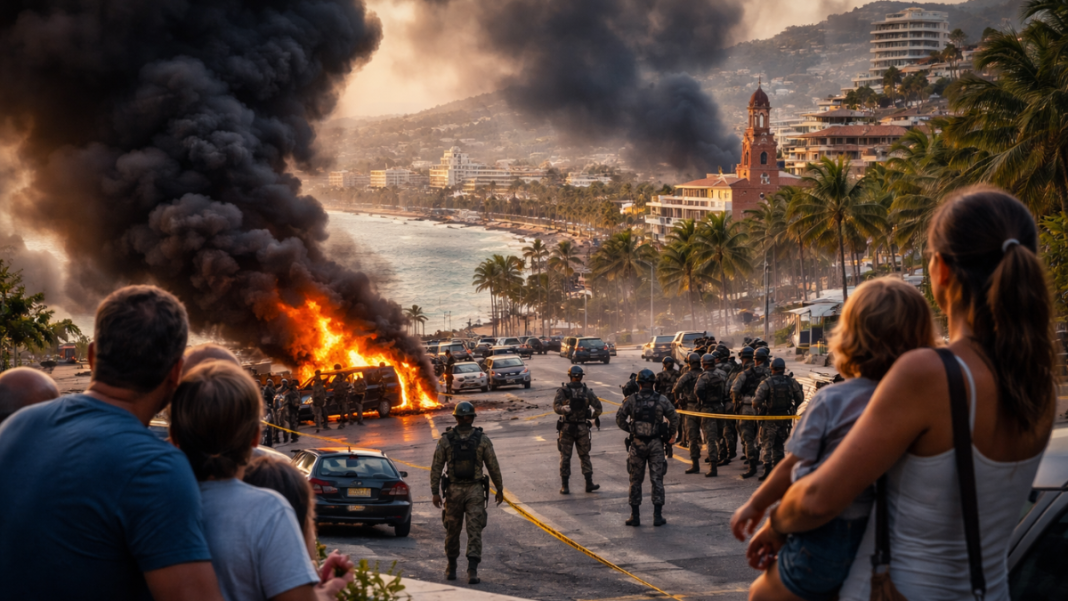

The death of powerful drug cartel leader Nemesio “El Mencho” Oseguera Cervantes triggered unrest across several Mexican states and left many US tourists stranded. Fires, roadblocks, and flight cancellations disrupted normal life and turned popular vacation destinations filled with beachgoers and families into tense areas.
As a result, tourists who had planned simple beach vacations are now sheltering indoors. Meanwhile, authorities are actively responding to the situation, while many travelers wait inside hotels and rental homes for further updates. Overall, the violence has impacted well-known tourist areas, including Puerto Vallarta and Guadalajara, as well as regions across Jalisco, Baja California, and Quintana Roo.
Violence Erupts in Popular Tourist Destinations
The unrest began shortly after news spread that El Mencho had been killed. His death reportedly sparked retaliation and organized disruptions across multiple cities.
In Puerto Vallarta, a well-known beach resort city in Jalisco, tourists described seeing burning vehicles blocking major roads. Taxis were reportedly set on fire and left across intersections, making it impossible for cars to pass.
Smoke rose above the city skyline for hours. Visitors staying near the coast said large areas of the bay were covered in dark smoke. From balconies and hotel windows, people could see flames in the distance.
Nearly half of Mexico’s seized .50-caliber ammo traced to U.S. Army-owned Missouri plant
Under normal conditions, tourists crowd the streets as they head to beaches and restaurants. However, the unrest quickly emptied those same streets. As tension escalated, businesses shut their doors one after another. Shortly afterward, loud noises and the sight of people running through the streets drove residents and visitors back indoors for safety.
At the same time, airlines canceled several domestic and international flights in Guadalajara, a major city in Jalisco. Although airport terminals remained open, blocked highways and suspended taxi services made it difficult for many travelers to reach them.
Meanwhile, authorities urged travelers in other parts of Mexico, including Baja California and Quintana Roo, to remain alert. In response, security forces stepped up patrols in key areas and maintained a stronger presence to reinforce safety measures.
US Tourists Told to Shelter in Place
The US government advised Americans in several affected states to shelter in place. This means staying inside secure buildings and avoiding unnecessary travel until it is safe.
For many tourists, the advice changed their plans immediately. Beach trips, birthday celebrations, and sightseeing outings were canceled. Families stayed inside hotel rooms and vacation rentals, watching the situation unfold outside.
In Puerto Vallarta, all taxis and ride-sharing services were suspended. This created serious challenges for travelers trying to reach the airport. Even those with confirmed flights found it difficult to leave their accommodations.
White House sparks backlash as Trump team praises Mexican-American War as a “legendary victory”
Some hotels faced shortages because guests could not safely go out for food. In certain cases, hotel staff members rushed to nearby convenience stores to gather snacks and bottled water for visitors. Some of these stores had visible fire damage.
Parents traveling with children said the experience was frightening. With smoke visible outside and emergency vehicles moving through the streets, many families kept their children indoors and away from windows.
The sense of uncertainty grew as travelers waited for updates. Many remained inside for extended periods, unsure when it would be safe to step outside.
Flights Canceled and Roads Blocked Across Mexico
As airline schedules changed, passengers grew confused. In many cases, travelers discovered cancellations only after they arrived at the airport. Meanwhile, others could not reach the airport because burning vehicles blocked the highways.
At the same time, officials reported roadblocks in multiple locations. In several areas, groups set vehicles on fire to stop traffic, which caused long delays and restricted emergency services from moving freely. As a result, authorities limited public transportation in several regions. In Puerto Vallarta, for example, officials suspended taxis and ride-share services, leaving many tourists without transportation across the city.
In response, security forces increased patrols in major cities. Officers positioned patrol vehicles on highways and at key intersections. Additionally, authorities cleared roads and removed damaged vehicles. Throughout the disruption, hotels housed stranded tourists, while staff members kept guests indoors and continued monitoring official updates.
Trump pushed for U.S. military strikes while CIA quietly armed Mexico’s anti-cartel forces
Despite airports technically remaining open, transportation problems and safety concerns led to widespread disruption. Travelers who had planned to return home found themselves waiting for clearer conditions.
At present, Americans in Jalisco, Baja California, and Quintana Roo have been urged to remain sheltered indoors. Road closures, flight cancellations, and transportation suspensions remain part of the ongoing situation.
US tourists in Mexico continue to wait inside hotels and rental homes as authorities respond to the unrest triggered by the death of Nemesio “El Mencho” Oseguera Cervantes.