
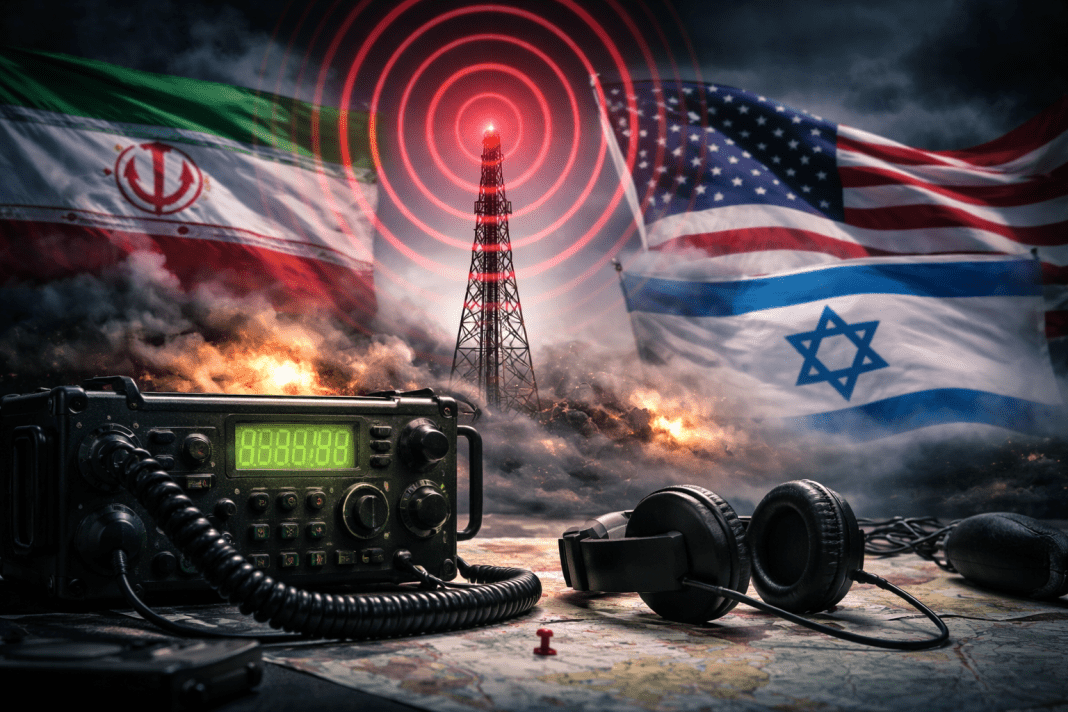

The death of Iran’s Supreme Leader Ali Khamenei on February 28 has reportedly triggered a series of covert communications that have raised concerns among intelligence agencies across the world. According to reports citing an intercepted encrypted transmission, Iran may have issued what officials describe as a possible “operational trigger” intended to activate sleeper cells operating in different countries.
Intercepted Signal Raises Fears of Global Sleeper Cells Activation
Authorities detected the alleged signal shortly after military conflict escalated between the United States, Israel, and Iran. Authorities say the message likely targeted covert operatives stationed outside Iran, commonly known as “sleeper assets.”
Sleeper cells are secret agents or networks that remain inactive for long periods until they receive a coded instruction to act. Intelligence officials believe such networks can operate quietly within other countries while waiting for a command signal.
At the same time, military tensions in the Middle East have continued to intensify. The United States and Israel have carried out heavy airstrikes on Iranian targets, while Iran has responded with attacks on Israel and some Gulf nations. In addition, Israel has also been targeting Iran-backed Hezbollah forces in Lebanon as the militant group launches rockets into Israeli territory.
Encrypted Message Raises Global Security Concerns
U.S. intelligence agencies reportedly intercepted a mysterious encrypted broadcast believed to have originated from Iran. The message appeared shortly after the death of Iranian Supreme Leader Ali Khamenei and the start of major military strikes against Iran. Officials said the transmission may contain coded signals intended for covert operatives stationed outside the country, often referred to as sleeper assets.
Authorities believe the message may serve as a possible activation instruction for these sleeper cells abroad. The transmission targeted clandestine recipients, meaning individuals who already possess the encryption keys needed to decode the signal. Because the message is encrypted, intelligence officials have not confirmed its exact contents, but the format suggests it may carry instructions for covert networks.
Water wars begin: Iran strikes desalination plants as Gulf conflict enters deadly new phase
Investigators also discovered that a newly detected radio station repeatedly broadcast the signal. According to a federal alert sent to law enforcement agencies, the station transmitted the encrypted message to several countries. Intelligence officials say espionage operations sometimes use radio signals because they do not rely on internet or mobile networks and can travel long distances while remaining difficult to trace.
Officials added that the broadcasts show “international rebroadcast characteristics,” indicating that the station likely intended the messages for audiences beyond Iran. However, authorities emphasized that investigators have not linked the intercepted signal to any specific attack or location.
Security Agencies Across the United States Increase Vigilance
The possibility that sleeper cells could become active has led to tighter security measures across the United States. Counterintelligence experts say the ongoing conflict involving Iran has raised concerns about possible revenge attacks by militant groups linked to Tehran.
Chris Swecker, a former assistant director of the FBI, warned that periods of escalating conflict can sometimes encourage extremist networks to act. Speaking to Fox News, he said that if groups like Hezbollah or Hamas were ever to attempt violent activity inside the United States, such a moment could increase that risk.
U.S. security agencies have already taken precautionary steps. After American forces carried out strikes on Iranian targets on February 28, FBI Director Kash Patel announced that counterterrorism teams were on high alert. In a message on the social media platform X, Patel said he instructed intelligence teams to mobilize additional resources and closely monitor potential threats.
Donald Trump gives mixed signals on Iran war timeline as markets watch rising oil prices
The White House has also acknowledged the possibility that Iran or groups linked to it could attempt retaliation. President Donald Trump said officials regularly prepare for such scenarios and plan for possible risks during times of conflict.
Meanwhile, authorities in major American cities including Los Angeles, Miami, and New York have increased patrols around sensitive locations such as places of worship, cultural centers, and schools. Officials said the measures are precautionary and no specific threat has been identified.