
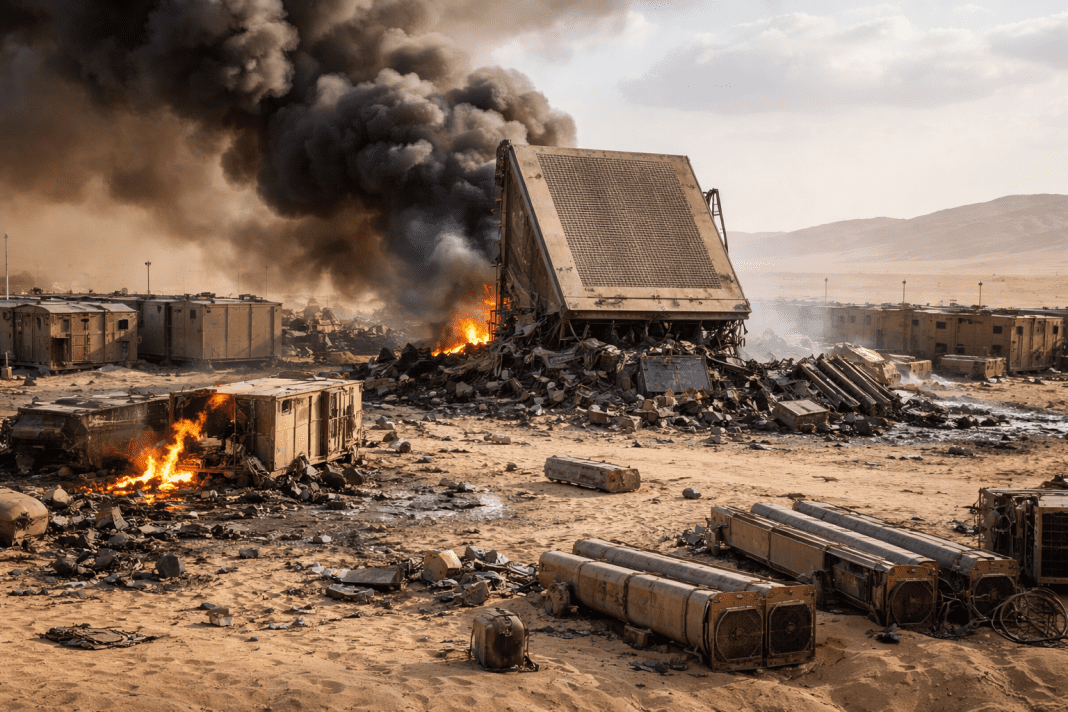

The United States suffered a significant blow in its ongoing Middle East operations after Iran reportedly destroyed a high-tech missile defense radar worth $300 million. The radar, part of the Terminal High Altitude Area Defense (THAAD) system, is a critical tool for detecting and intercepting incoming ballistic missiles. Its loss represents a major setback for U.S. defense capabilities in the region.
Iran Strikes Key U.S. Radar Amid Rising Middle East Tensions
The destruction of the radar occurred during the early stages of rising tensions in the Middle East. Satellite images confirmed that an AN/TPY-2 radar and its support equipment were destroyed at a military base in Jordan. This radar is critical for tracking missile threats and guiding interceptors to neutralize them. Experts say hitting such a high-value target marks one of Iran’s most successful attacks so far.
The attack came shortly after U.S. military strikes in the region. In response, the Pentagon began reviewing its missile defense readiness to ensure other key systems remain operational. The loss of this radar highlights vulnerabilities in the U.S. defense network.
To address the situation, U.S. defense officials held a meeting with major defense contractors. The discussions focused on production schedules and replenishing weapons and equipment used in recent military operations. This step aims to restore critical capabilities quickly amid ongoing regional tensions.
What THAAD Is and Why It Matters
THAAD, or Terminal High Altitude Area Defense, is a high-tech missile defense system built to detect and destroy incoming ballistic missiles before they can reach their targets. Each THAAD battery includes six truck-mounted launchers, and each launcher carries eight interceptor missiles. The system also comes with a TPY-2 radar, a fire-control system, and communications equipment.
The TPY-2 radar is the heart of the THAAD system. It scans the sky for threats, tracks incoming missiles, and guides interceptors to destroy them in mid-air. The radar alone costs about $300 million, while a full THAAD battery is valued at around $1 billion. It is designed to handle advanced missile threats that shorter-range systems, like Patriot missiles, cannot effectively counter.
Iran blocks 38 Indian vessels in Persian Gulf and accuses India of aiding US submarine attack
The United States currently operates eight THAAD systems worldwide. These are deployed in strategic locations, including South Korea and Guam. Each battery is staffed by roughly 90 soldiers and has 48 interceptor missiles ready to engage ballistic threats at any time.
Despite these deployments, the number of THAAD systems is still below the nine-battery goal set years ago. Losing even a single radar can put extra pressure on other missile defense systems and reduce the overall ability to track and intercept high-altitude threats.
Details of the Iranian Strike
According to reports, Iran targeted the radar at a military base in Jordan, striking in the early days of the conflict. The attack destroyed both the radar and its supporting equipment, severely impacting the ability of the THAAD system to track incoming missiles in the region.
Without the TPY-2 radar, other missile defense systems, such as the MIM-104 Patriot, may have to take on a larger role. Patriot systems use PAC-3 interceptors, which are already in limited supply. The loss of the THAAD radar means U.S. forces have fewer options to intercept high-altitude threats, potentially complicating defense strategies.
Iran launches missile strikes across Gulf cities as authorities deny Burj Khalifa was hit
Experts have noted that successfully hitting a THAAD radar is a significant operational achievement. These radars are considered highly secure and difficult targets, highlighting the effectiveness of the Iranian strike. Reports indicate that this radar had previously played a central role in guiding U.S. interceptors and maintaining the integrity of missile defense in the Gulf region.
In response to the attack, the U.S. is reviewing defense production and supply chains. High-level meetings with major defense contractors have focused on ensuring that the military can replenish its systems, including missile interceptors and radar components. These discussions underline the importance of maintaining operational readiness in the face of unexpected losses.