
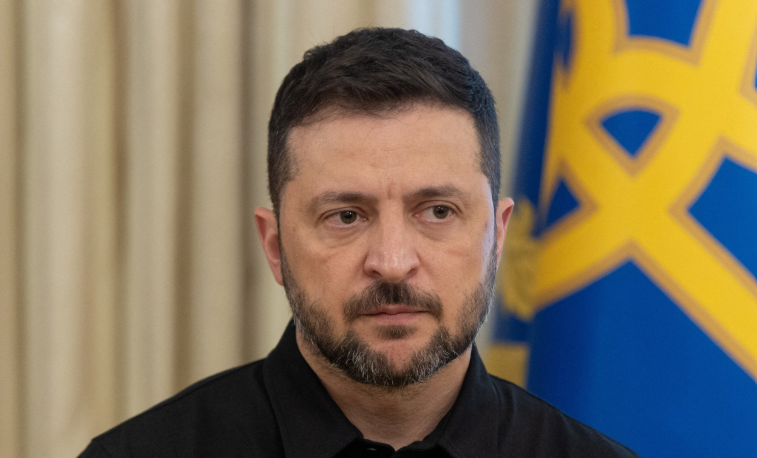

Ukrainian President Volodymyr Zelensky said the United States has asked Ukraine for help against Iranian-made Shahed drones. Ukraine has faced these drones for years during its war with Russia. Because of this, Ukrainian forces have developed effective ways to detect and intercept them. Now the U.S. wants to learn from Ukraine’s battlefield experience as concerns grow about similar drone threats in the Middle East.
Why the Shahed Drone Has Become a Global Threat
The Shahed-136 drone has gained attention in several conflicts in recent years. It is known as a “loitering munition,” meaning it can fly toward a target area and wait before striking. Although simpler than advanced military aircraft, it still poses a serious threat.
One reason is its low cost. Because the drones are inexpensive to produce, they can be launched in large numbers at the same time. When many approach together, they can overwhelm traditional air defense systems designed to stop fewer, more advanced threats.
Ukraine’s STING interceptor drone shoots down jet-powered Shahed armed with air-to-air missile
Shahed drones can also travel long distances and are often used in “swarm” attacks to confuse radar systems. Ukraine has faced thousands of these drone strikes during the war with Russia, giving its defense forces valuable experience in intercepting them.
How Ukraine Became a Leader in Anti-Drone Warfare
Over the course of its conflict with Russia, Ukraine has developed highly effective methods to intercept and neutralize Shahed drones before they reach their targets. Years of repeated drone attacks have given Ukrainian forces extensive battlefield experience, allowing them to understand both the technical and tactical aspects of these unmanned threats.
One key approach is electronic warfare. Ukrainian teams can jam or disrupt the communication and navigation systems guiding the drones, causing them to lose control and crash before hitting critical sites. This method allows multiple drones to be neutralized without relying solely on traditional weapons.
Ukraine also uses specialized interception tactics. Mobile air defense teams, equipped with anti-aircraft guns, machine guns, and portable missile systems, quickly respond to detected drones. These teams can engage threats in real time, preventing them from reaching cities, military positions, or infrastructure.
In addition, Ukraine has built a detailed database of drone flight patterns, operational behavior, and technical weaknesses. This intelligence helps operators predict drone movements and plan precise countermeasures. According to President Zelensky, these strategies have made Ukraine a global leader in fighting Shahed drones. Recognizing this expertise, the United States has asked Kyiv to share its knowledge, including technical intelligence, operational strategies, and training lessons learned from years of real combat.
US Seeks Ukrainian Lessons as Drone Threat Expands
The U.S. request comes as Iranian drone technology appears in multiple conflict zones. Shahed drones have been used not only in Eastern Europe but also across parts of the Middle East. Military analysts say these drones are now part of a wider network of weapons used by groups aligned with Iran. Because of this spread, American military planners are paying closer attention to the threat.
U.S. bases, naval vessels, and allied infrastructure in the region could face similar drone attacks. Learning how Ukraine has countered these drones may help strengthen defenses. According to Ukrainian President Volodymyr Zelensky, Ukrainian experts are ready to share their experience. This includes technical knowledge about drone design, guidance systems, and weaknesses identified during combat.
Doha explosions follow missile threat as Israel confirms incoming projectiles from Iran
The cooperation highlights how modern warfare has become closely connected across regions. Weapons developed in one area can quickly appear in conflicts elsewhere. Ukraine’s experience defending its cities and military sites has therefore become valuable for other countries facing the same technology.
Ukrainian forces have reportedly intercepted thousands of Shahed drones during the war with Russia. Their experience includes both successful interceptions and lessons learned from earlier attacks, offering practical knowledge that could help improve defense strategies against large-scale drone strikes.