
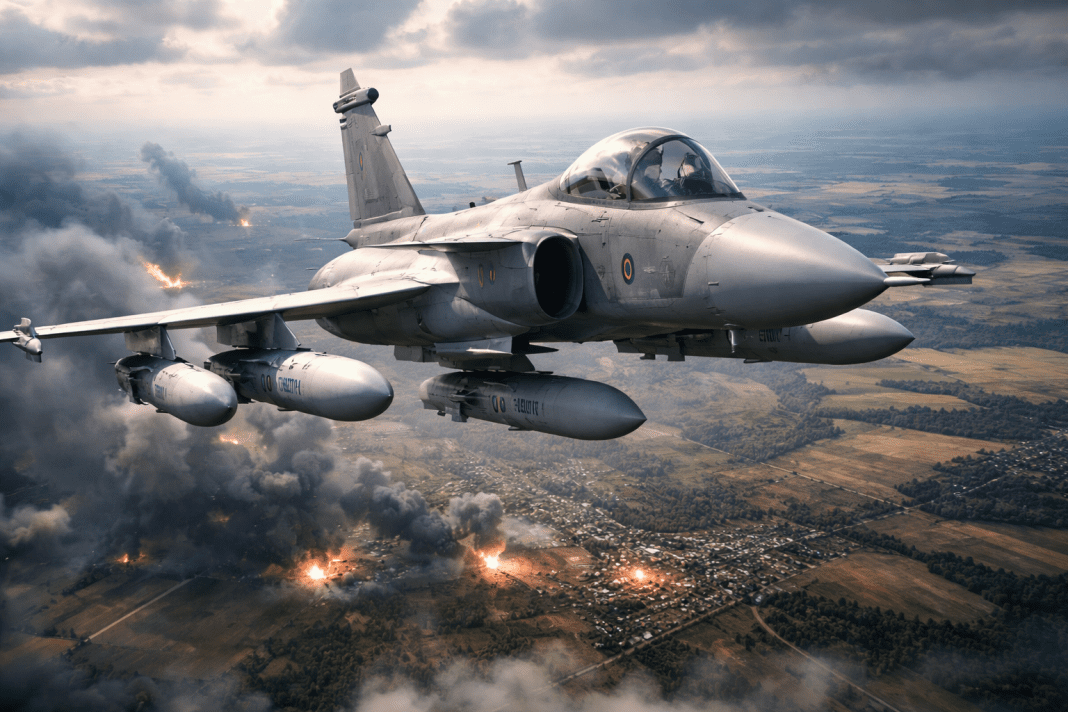

Ukraine and Sweden have held high-level talks about one of the most significant military assistance packages discussed so far, including discussions on supplying Gripen fighter jets and Meteor missiles. The focus of these talks is on strengthening Ukraine’s ability to protect its skies and push back against advanced aerial threats.
A Major Defense Package Takes Shape
The proposed support package is broad and far-reaching. It includes advanced air defense systems, modern radar technology, and deeper cooperation with Ukraine’s own defense industry. This cooperation would cover areas such as electronic warfare tools and long-range strike drones designed to hit targets far behind enemy lines.
At the heart of the discussions is air defense. Both sides emphasized the urgent need to improve protection against aircraft, cruise missiles, and especially ballistic missile attacks. Strengthening these defenses is seen as essential for safeguarding cities, infrastructure, and frontline forces.
The talks also highlighted efforts to expand an existing initiative aimed at ensuring Ukrainian forces receive critical weapons and equipment faster and in larger numbers. This initiative focuses on cutting delays and scaling up deliveries so that defensive systems reach the battlefield when they are most needed.
Although officials have not formally announced any final decisions, both Ukraine and Sweden demonstrate serious commitment to long-term military cooperation and strengthening Ukraine’s overall defense capability.
The Gripen Fighter Enters the Conversation
One of the most eye-catching elements discussed was the possible supply of Gripen fighter jets to the Ukrainian Air Force. The Gripen is a modern multirole fighter that offers flexibility, efficiency, and strong survivability in contested airspace.
Its advanced sensors help pilots see threats clearly and respond quickly. The radar tracks multiple targets at long distances, and the sensor fusion system combines data from different sources into one clear picture for the pilot. This setup allows pilots to make faster and safer decisions during combat.
Another key advantage of the Gripen is its relatively low operating cost. Compared with many other modern fighter jets, it requires less maintenance and pilots can fly it from short, rough, or dispersed airfields. This capability proves especially valuable in wartime conditions, where enemy forces may constantly threaten large air bases.
The Gripen can take off and land on highways and simple runways, allowing operators to spread out and hide aircraft rather than concentrate them in a few vulnerable locations.
This ability makes it harder for enemy forces to destroy planes on the ground. What makes the Gripen discussion especially important is its full integration with one of the most advanced air-to-air missiles in the world: the Meteor. Together, they form what many analysts describe as a “deadly combo” for air combat.
Meteor and the “No-Escape Zone” Explained
Experts consider the Meteor missile one of the most advanced air-to-air weapons in the world. Engineers built it to strike enemy aircraft at very long distances and extremely high speeds, giving pilots a major advantage in air combat.
Unlike traditional missiles that burn their fuel quickly and slow down near the target, Meteor uses a ramjet propulsion system. This allows the missile to control its thrust during flight, saving energy early and maintaining high speed until the final attack. As a result, it remains fast and dangerous throughout its journey.
This design creates a large “no-escape zone,” meaning that once an enemy aircraft is targeted within this range, it has little chance of avoiding the missile. Experts believe this zone exceeds 60 kilometers, making it one of the largest among modern air-to-air missiles.
Meteor can reportedly engage targets at distances of up to 200 kilometers and at speeds above Mach 4. This allows pilots to attack threats long before enemy aircraft can launch their own weapons.
France Unleashes $2 Billion Military Aid Package for Ukraine
The missile features a two-way datalink that provides in-flight updates from the launching aircraft or other friendly platforms. Pilots receive real-time information about the missile’s status, helping them make better combat decisions and increasing accuracy and kill probability.
Meteor is effective in heavy electronic warfare environments and can engage aircraft, cruise missiles, and drones in all weather conditions. When paired with the Gripen fighter, it could significantly limit enemy aircraft that rely on long-range attacks, strengthening air control and reducing aerial threats.