
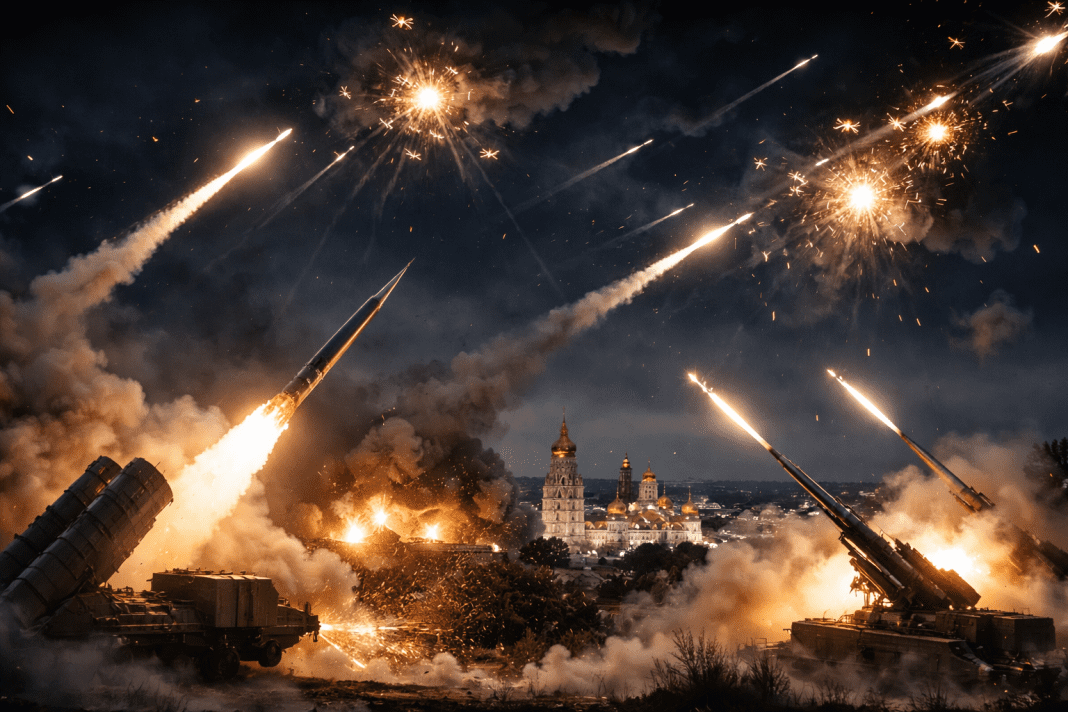

Ukrainian Air Defense Forces have once again shown remarkable skill and resilience by destroying a large number of Russian missiles and drones during a major attack. Since the evening of February 11, Ukrainian forces have successfully repelled multiple strikes aimed at key cities, including Kyiv, Kharkiv, Dnipro, and Odesa. The coordinated defense highlights the readiness and effectiveness of Ukraine’s air defense systems in protecting civilians and critical infrastructure.
Massive Air Assault Hits Ukraine
The attack began at 6:00 p.m. on Wednesday, February 11, when Russian forces launched a significant strike against Ukraine. The assault involved 24 ballistic missiles, including advanced Iskander-M and S-300 missiles. Russian forces fired these missiles from several regions, including Bryansk, Voronezh, and Rostov, as well as the temporarily occupied territory of Crimea. They also launched a Kh-59/69 guided air missile from the temporarily occupied part of the Donetsk region.
The missile attack was accompanied by a massive wave of drones. Around 219 unmanned aerial vehicles (UAVs) approached Ukraine from multiple directions. These included Shahed, Gerbera, and Italmas drones, with approximately 150 of them being Shahed-type drones, which have been widely used in previous attacks. The drones came from various regions, including Kursk, Orel, Millerovo, Bryansk, Primorsko-Akhtarsk, and Shatalovo in Russia, as well as Hvardiiske in Crimea.
Ukraine says Russia dangled staggering $12 trillion offer to US in secret peace talks
The main targets of the attack were Ukraine’s largest and most important cities. Kyiv, the capital, faced serious threats, along with Kharkiv, the country’s industrial hub, Dnipro in central Ukraine, and the southern port city of Odesa. Authorities issued air raid warnings and urged residents to take shelter, highlighting the serious nature of the strike.
Air Defense Forces Repel the Attack
Ukraine’s Air Defense Forces responded rapidly to the assault. A combination of aviation units, anti-aircraft missile systems, electronic warfare teams, unmanned systems units, and mobile fire groups worked together to intercept and destroy incoming threats.
By 9:00 a.m. on Thursday, February 12, Ukrainian forces had neutralized 213 air targets. This included 15 ballistic missiles of the Iskander-M and S-300 types, one Kh-59/69 guided air missile, and 197 drones.
Ukraine downs Su-34 bomber and Su-30 fighter, dealing costly blow to Russian air force
Despite these successful interceptions, nine missiles and 19 UAVs managed to strike 13 locations, causing some damage. Debris from downed drones fell across 14 locations, but the quick and effective response of Ukrainian defense units helped prevent a far larger disaster.
The operation demonstrated close coordination between different branches of the military. Anti-aircraft systems worked alongside electronic warfare units to jam and misguide enemy missiles and drones. Aviation units intercepted aircraft in the sky, while mobile fire teams and specialized drone defense units targeted unmanned threats. This multi-layered defense system clearly showcased Ukraine’s ability to handle large-scale aerial assaults and protect key cities and infrastructure.
Casualties and Ongoing Threats
The attack also resulted in tragic human losses. On the night of February 12, Russian forces carried out a combined strike on Lozova, a city in the Kharkiv region. According to preliminary reports, this strike involved both ballistic missiles and Geran-2 combat drones. A man and a woman were killed, and six other people were injured.
Authorities have warned that several enemy drones remain in Ukrainian airspace, indicating that the attack is still ongoing. Citizens have been urged to stay alert, follow air raid alerts, and take necessary precautions.
Despite the heavy assault, Ukraine’s Air Defense Forces have proven highly effective in intercepting and destroying enemy missiles and drones. The large number of destroyed targets underscores both the scale of the Russian attack and the strength of Ukraine’s defense capabilities.
This coordinated response demonstrates that, even under intense pressure, Ukraine’s military is capable of protecting its cities and citizens from advanced aerial attacks.