
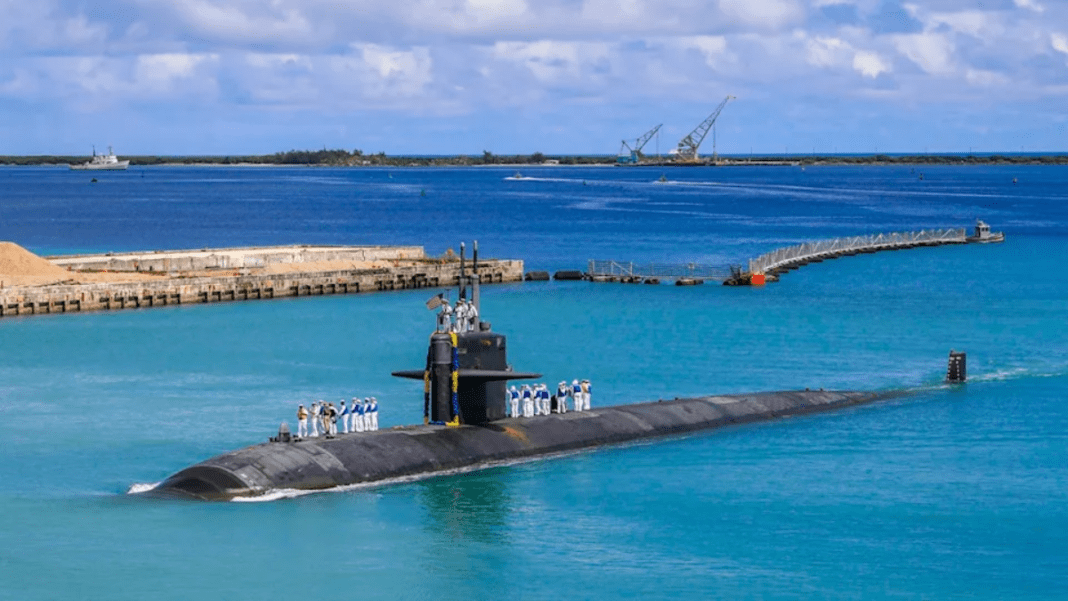

In a dramatic and rare naval operation, a U.S. Navy submarine fired a $4.2 million torpedo that detonated beneath an Iranian warship off the southern coast of Sri Lanka. The attack marked a historic first in modern warfare, described as the first sinking of an enemy ship by torpedo since World War II. Officials said the strike sent a clear message of unmatched U.S. maritime power.
Historic Submarine Strike
The weapon used in the operation was a Mark 48 Advanced Capability (ADCAP) torpedo, one of the most powerful anti-ship weapons in the U.S. Navy’s arsenal. Unlike conventional torpedoes that hit ships directly, this torpedo explodes underneath the vessel. The explosion creates a massive bubble of water and gas that lifts the ship and breaks it in half, sinking it within minutes.
The targeted ship, the Iranian frigate IRIS Dena, was the newest addition to Iran’s naval fleet. It was heavily armed with surface-to-air missiles, anti-ship missiles, and torpedo launchers. Despite these defenses, the U.S. submarine’s stealth, mobility, and precision ensured the operation was executed smoothly and quietly.
Sri Lanka launches dramatic rescue as Iranian frigate IRIS Dena begins sinking in Indian Ocean
Officials explained that such a strike is extremely rare. In recent history, only two instances exist where a nuclear-powered submarine fired a torpedo to sink a major surface warship. The first occurred during World War II, and the second was in 1982, when a British submarine sank an Argentine cruiser during the Falklands War.
Torpedo Strike Shows Unmatched Power and Precision
The Mark 48 torpedo carries a 650-pound warhead and is specifically designed to strike the underside of ships. As a result, the explosion is so powerful it can split a vessel in half almost instantly. Experts called the strike a “quiet death,” emphasizing both the weapon’s lethality and the skill of the submarine crew.
In addition, U.S. submarines have a major technological edge over most other navies. They can move at high speeds for long periods and remain extremely quiet underwater, which makes them very hard to detect. Moreover, with advanced sensors and weapons, they can track and attack targets far beyond the reach of regular ships.
The operation required careful planning and surveillance. To ensure success, forward naval deployments were used to position the target for the strike. Furthermore, conducted under the cover of night, the mission relied on surprise and precise execution.
Sri Lanka’s coast guard reported that the Iranian ship sent a distress call at 5:08 a.m. local time after an explosion. By that time, the frigate had already been lifted and sunk by the torpedo.
Strategic Message in International Waters
Officials emphasized that the strike was not only a tactical achievement but also a strategic signal. By targeting a modern warship in international waters, the operation showed U.S. naval dominance. It also sent a warning that Iranian naval assets were vulnerable.
Iran’s submarine fleet is believed to be outdated. Most of the vessels are ex-Russian diesel-electric submarines. These older submarines lack nuclear power, satellite communication, and the endurance of U.S. submarines. U.S. submarines can operate almost indefinitely underwater, limited only by food supplies on board.
Minnesota soldier among six US troops killed in Iranian drone strike in Kuwait
The attack also highlights the advanced capabilities of U.S. nuclear-powered submarines. They can operate quietly, move quickly, and strike with devastating accuracy. Experts said that engaging and sinking the IRIS Dena was well within their operational capacity. This shows the clear technological advantage of U.S. submarines in underwater warfare.
This unprecedented action demonstrates the precision, power, and effectiveness of modern submarine operations. The $4.2 million torpedo, combined with planning and skilled execution, sank one of Iran’s most modern warships. The strike is a landmark moment in modern naval history. It shows the lethal combination of technology, training, and tactical planning. It also reinforces that U.S. naval forces can carry out highly targeted operations in international waters with minimal warning or resistance.