
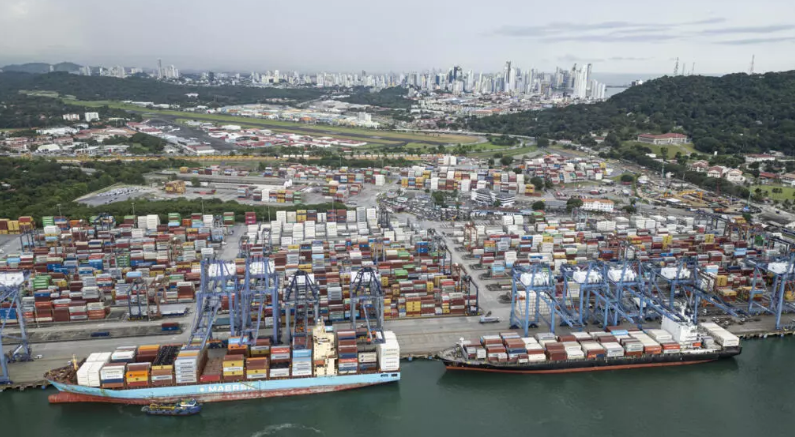

Tensions between the United States and China have unexpectedly centered on two ports at the Panama Canal, one of the world’s most strategic waterways. What started as a business deal has grown into a high-stakes conflict that involves billionaires, governments, and decades of international trade.
The Panama Canal Deal That Caught Global Attention
The controversy began when Hong Kong tycoon Li Ka-shing’s conglomerate, CK Hutchison Holdings Ltd., announced plans to sell 43 of its global ports, including the Balboa and Cristobal terminals at the Panama Canal. These two ports are crucial because they sit at either end of the canal, which connects the Pacific Ocean with the Caribbean Sea. Around 3% of the world’s seaborne trade passes through this route, making it a vital link for global shipping.
CK Hutchison has managed the Panama Canal terminals since 1997. The original concession was renewed in 2021 for another 25 years. The company’s plan to sell the ports gained international attention when former U.S. President Donald Trump highlighted the waterway in his inauguration speech. Trump falsely claimed that China controlled the canal and called for the United States to “retake” it. His comments drew global headlines and put CK Hutchison in the middle of a geopolitical tug-of-war.
🔥 U.S.–China power clash erupts at Panama Canal as investigation expands in port scandal
The planned sale included BlackRock’s Global Infrastructure Partners taking a 51% stake in the two Panama Canal ports, while Italian billionaire Gianluigi Aponte’s Terminal Investment Ltd. (TiL) would hold the remaining 49%. TiL would also take over CK Hutchison’s other ports around the world.
China Pushes Back
China quickly expressed concerns about the sale. Beijing is wary of BlackRock, which it sees as a U.S.-linked financial influence. To ease tensions, CK Hutchison invited the state-owned Chinese shipping company Cosco to join the buyer consortium. Cosco reportedly requested veto rights to protect China’s interests.
Despite these moves, Chinese authorities instructed state-owned firms to pause any new projects with Li Ka-shing’s companies. Several Chinese agencies also reviewed the deal for potential security or antitrust issues. Officials even asked shipping companies to consider rerouting cargo away from Panama if doing so wouldn’t significantly increase costs.
Greenland Not for Sale —Hegseth Won’t Rule Out U.S. Invasion of Greenland or Panama
China’s influence over CK Hutchison is limited. Only 12% of the conglomerate’s revenue comes from Hong Kong and mainland China, while Li’s private investment ventures are mostly overseas. However, his family’s property and insurance businesses have more exposure to the mainland. Any tension with Beijing could affect future opportunities for Li’s sons, Victor and Richard, in China.
Legal Challenges and Global Fallout
The situation became even more complicated after Panama’s Supreme Court ruled in late January that CK Hutchison’s contract to operate the Balboa and Cristobal ports is unconstitutional. The ruling has not yet taken effect, and CK Hutchison is challenging it through arbitration under the International Chamber of Commerce rules. The company has said it is seeking “extensive damages.”
The Chinese government reacted strongly, calling the court’s decision “absurd.” It warned that Panama would face serious consequences if the decision stands, accusing the country of succumbing to outside pressure. Meanwhile, Panama had already shown signs of distancing itself from China by withdrawing from Beijing’s Belt and Road Initiative last year.
🚢 Under pressure from Beijing, Hutchison adds Chinese buyer to rescue $23B Panama port sale
For the United States, the deal was seen as a way to regain influence over a key strategic waterway. For China, it represents a test of how far it can protect its interests abroad. Meanwhile, Li Ka-shing, 97, finds himself in the middle of this clash. Once considered a bridge between the East and West, his conglomerate’s operations at the Panama Canal have now become a focal point in a growing US-China rivalry.
Li made his fortune in Hong Kong, rising from humble beginnings to become the city’s second-richest man, with a net worth of over $41 billion. He started as a manufacturer of plastic flowers and later expanded into real estate. He also invested in energy, technology, and other industries worldwide. While he stepped down from leading CK Hutchison in 2018, he remains a senior adviser and holds significant stakes in the company and its property arm.