
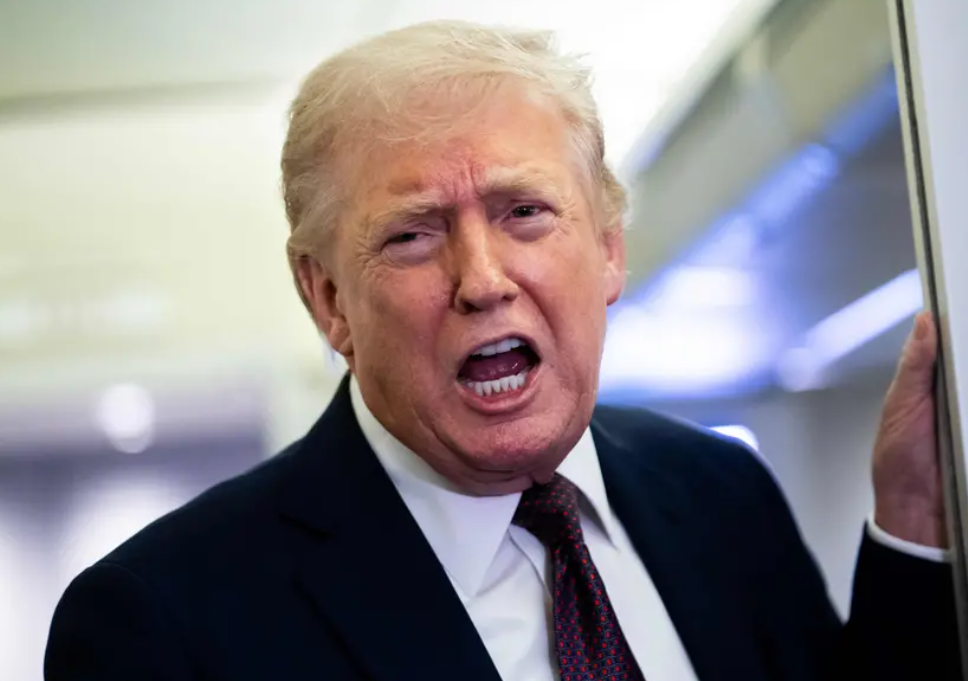

U.S. President Donald Trump has issued a strong warning to global powers, saying the future could become “very bad” if key international partners do not help reopen and secure the Strait of Hormuz. The narrow waterway connects the Persian Gulf to the Arabian Sea and is one of the world’s most important routes for oil shipments.
Trump Warns of “Very Bad Future” If Strait of Hormuz Remains Closed
Speaking to reporters during a lengthy briefing, Trump said the United States has carried much of the responsibility for protecting the strait for many years. Now, he believes other countries that depend on the route for energy should also help ensure it stays open.
According to Trump, the United States does not rely as heavily on the strait as other nations because it produces large amounts of oil domestically. However, he said countries in Europe and Asia rely heavily on energy supplies that pass through the region every day.
Russian oil revenues jump $1.3 billion as Strait of Hormuz crisis shifts global supply
The president stressed that keeping the shipping lane open is essential for global trade and energy security. Tankers carrying crude oil and natural gas move through the Strait of Hormuz daily, making it one of the most strategically important waterways in the world.
Trump warned that if the route is disrupted or blocked, it could affect oil supplies worldwide and create economic problems for many nations.
Calls for Support From NATO Allies and China
During his remarks, Donald Trump urged members of NATO and the government of China to help patrol and secure the Strait of Hormuz. He said many countries rely heavily on energy shipments that pass through the waterway and should share responsibility for protecting it. Trump argued that the United States has spent years safeguarding the shipping route even though it benefits other nations more than Americans.
Trump pointed out that China receives a significant portion of its oil imports through the Strait of Hormuz. Because of this dependence, he said Beijing should also contribute to keeping the strategic route open and safe for global trade and energy transport.
According to Trump, Washington has already contacted several countries about creating a joint effort to police the strait. He said some governments have shown interest in participating, while others appear reluctant to become directly involved in the situation.
Trump also mentioned discussions with leaders from allied countries, including the United Kingdom. He said he had earlier asked British leaders to send aircraft carriers to the region before the conflict escalated, but that support did not arrive at the time. He added that the United States will remember which countries choose to help secure the vital waterway.
Trump Claims Iran’s Military Capabilities Have Been Weakened
In the same briefing, Donald Trump spoke about the ongoing conflict with Iran. He claimed recent U.S. military actions have significantly weakened Iran’s armed forces. According to Trump, American operations have damaged parts of Iran’s air force, navy, and air defense systems, while also reducing its missile supplies.
Trump also said the United States has targeted facilities connected to drone production and other military infrastructure. He described the campaign as a strong and effective operation that has limited Iran’s ability to produce drones and carry out attacks.
Former NATO leader expects the alliance to remain out of Middle East conflict
Despite these claims, Trump said he is not officially declaring victory. He stated that although Iran’s military capabilities have been heavily damaged, the situation is not yet over. Trump also suggested that Iranian leaders may be seeking negotiations with the United States but may not yet be ready to accept Washington’s conditions.
One of the main demands mentioned by Trump is that Iran must not develop nuclear weapons. He said stopping Iran from obtaining nuclear arms remains a key U.S. objective. Trump also warned about misinformation during the conflict, saying false reports and AI-generated content can create confusion while tensions remain high around the Strait of Hormuz.