


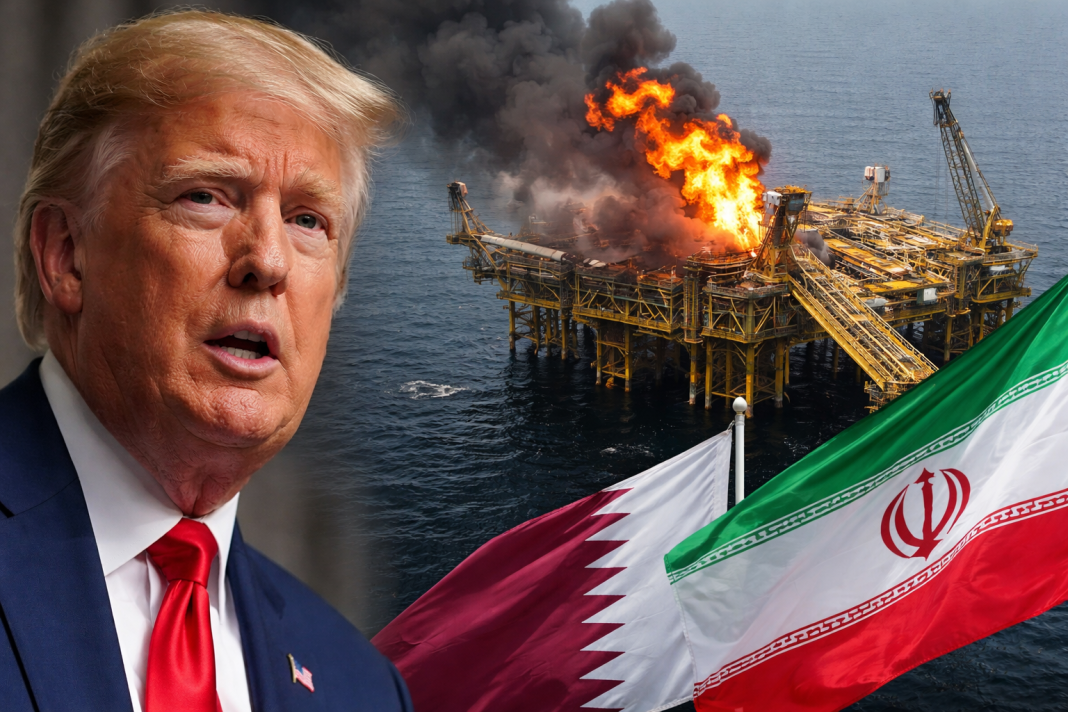


Tensions in the Middle East escalated sharply after a strike on Iran’s South Pars Gas Field, one of the world’s most critical energy hubs, triggered global concern over oil supplies and regional stability. Donald Trump said Israel will not carry out further attacks on the facility, while issuing a stark warning to Tehran against targeting energy infrastructure in Qatar and other Gulf nations. The development comes amid rising fears that the conflict could spill into a wider energy crisis affecting global markets.
Trump distances US and Qatar from strike
Trump moved quickly to clarify that the United States had no role in the attack on South Pars, describing it as a unilateral Israeli action. He also emphasized that Qatar, a key global energy supplier, was not informed and had no involvement in the strike.
According to Trump, only a “small section” of the massive gas field was hit, suggesting limited physical damage. However, the symbolic impact of targeting such a vital energy asset has been significant.
The South Pars field is central to Iran’s gas production and plays a major role in global energy supply chains. Any military activity involving such infrastructure is closely watched by markets and governments alike due to the potential for disruption.
Warning to Iran over Gulf energy infrastructure
Trump’s statement also included a clear warning aimed at Tehran. He cautioned against any retaliatory strikes targeting energy facilities in Gulf countries, including Qatar, Saudi Arabia, and the United Arab Emirates.
Trump says Israel won’t strike Iran gas field again, distances US and Qatar from attack
The warning follows reports that Iranian authorities have threatened to target multiple energy sites across the region. Such a move would mark a major escalation, potentially drawing more countries into the conflict.
Energy infrastructure in the Gulf is among the most strategically important in the world. A significant portion of global oil and gas exports passes through this region, making it highly sensitive to geopolitical tensions.
Energy markets react to rising risks
The strike on South Pars has already sent ripples through global energy markets. Oil prices showed signs of volatility as traders reacted to the possibility of further disruptions.
Even limited damage to a major gas field can create uncertainty, especially when tensions remain high. Analysts warn that if the conflict expands to include multiple energy facilities, the impact on supply chains could be severe.
Shipping routes, insurance costs, and energy prices are all likely to be affected if the situation deteriorates further. This has increased pressure on global leaders to prevent escalation and maintain stability in the region.
Risk of wider regional conflict grows
The latest developments highlight the fragile nature of the current situation. With both sides signaling potential further action, the risk of a broader regional conflict remains high.
Countries across the Gulf are on alert, given their reliance on energy exports and the vulnerability of their infrastructure. Any attack on these facilities could have immediate and far-reaching consequences.
Trump’s remarks appear aimed at containing the situation by signaling that Israel does not intend to escalate further in this specific area, while also deterring Iran from expanding the conflict.
The Day Stealth Died: Iran Becomes First Country to Destroy F-35 Jets in Active Combat
Strategic stakes remain high
The targeting of energy infrastructure underscores how modern conflicts increasingly involve economic and strategic assets. Facilities like South Pars are not just sources of energy but also key leverage points in geopolitical power struggles.
As tensions continue, global attention remains focused on whether diplomatic efforts can prevent further escalation. The balance between retaliation and restraint will likely determine the next phase of the conflict.
For now, Trump’s message signals an attempt to draw a line—limiting further strikes while warning of serious consequences if the conflict spreads to critical energy infrastructure across the Gulf.