
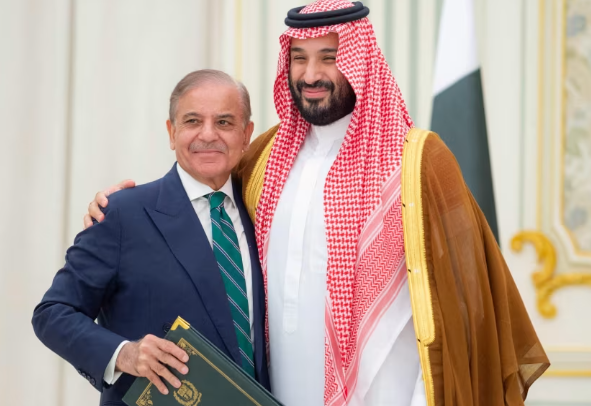

The Gulf region is reassessing its security alliances after tensions involving the United States, Iran, and Israel. Long reliant on US protection, GCC countries are now questioning Washington’s reliability, prompting discussions on alternatives like Europe and an “Islamic NATO” to strengthen long-term security.
Gulf Shock After US Moves and Israel Priority in West Asia War
The recent conflict involving the United States, Iran, and Israel has raised serious concern across the Gulf region. GCC countries such as Saudi Arabia, the UAE, Qatar, Kuwait, Bahrain, and Oman have long depended on the US for security protection, but recent developments have weakened this trust.
During the latest escalation, US President Donald Trump’s ceasefire proposal and the collapse of US-Iran talks in Islamabad created confusion among Gulf leaders. Many observers believe Washington showed a stronger focus on Israel’s interests, leading to what analysts describe as a growing “trust gap” between the US and its Gulf partners.
UK and Gulf partners fast-track Skyhammer missile system to counter drone threats
The conflict has also exposed the vulnerability of Gulf energy infrastructure, with Iranian attacks targeting oil and gas facilities raising fears of economic instability. Although Gulf states avoided direct involvement, rising risks around the Strait of Hormuz and damage to energy assets have pushed leaders to reconsider their long-term security dependence on the United States.
Europe as a Safer but Limited Alternative for Gulf Security
As tensions with the United States increase, some Gulf policymakers are exploring Europe as an alternative security partner. Europe has mostly avoided direct military involvement in the Iran-related conflict, which has given it an image of neutrality compared to Washington.
The United Kingdom and several European countries have taken a cautious approach. While they allowed limited US use of military bases, they did not deploy troops or engage directly in combat. This has led some Gulf analysts to see Europe as a more balanced diplomatic partner.
However, Europe’s ability to replace the United States in security matters is limited. Many European countries still rely on American defence systems such as Patriot missiles, THAAD, NASAMS, and Stinger platforms to protect their airspace and allies. The Ukraine war further deepened this dependence, as European defence purchases from the US increased significantly after 2022.
Pakistan holds talks with Saudi Arabia on Islamic defence cooperation amid Middle East tensions
At the same time, Europe faces internal challenges, including energy concerns, economic pressure, and political disagreements among member states. These issues make it difficult to build a unified defence strategy, even though some leaders speak about “strategic independence.”
Despite these limitations, Europe remains an important economic partner for the Gulf through trade, investment, and technology cooperation. However, in military protection and rapid response capabilities, it is still largely dependent on the United States, placing it in a middle position rather than a full alternative to US security guarantees.
Islamic NATO Debate Gains Attention Amid Pakistan and Regional Shifts
Alongside discussions on Europe, the idea of an “Islamic NATO” is gaining attention. It refers to a proposed military alliance among Muslim-majority countries aimed at creating a shared defence system similar to NATO. Although not new, recent Iran-related tensions, missile attacks in the Gulf, and shifting US policies have revived interest in regional security cooperation.
Pakistan has emerged as an important player in these discussions due to its nuclear capability and long-standing military ties with several Muslim countries. Some observers also highlight Pakistan’s role in communication efforts during recent US-Iran tensions, which has increased its relevance in regional security debates.
Asim Munir’s Islamic NATO dream collapses as Saudi Arabia pivots to India for regional security
However, forming such an alliance is widely seen as very difficult. Muslim-majority countries across the Middle East, South Asia, and Central Asia differ in political systems, economic priorities, and security concerns. Countries like Saudi Arabia, Iran, Turkey, and Pakistan often have overlapping but competing interests, making consensus challenging.
Earlier initiatives such as CENTO, which included Iran, Pakistan, Turkey, and the UK, eventually collapsed due to political changes and regional conflicts. Today, Gulf states continue to rely on the United States for defence while exploring alternatives amid shifting global priorities.
Iran’s regional influence and Israel’s military strength further complicate the idea of a unified defence framework, keeping “Islamic NATO” largely theoretical.