
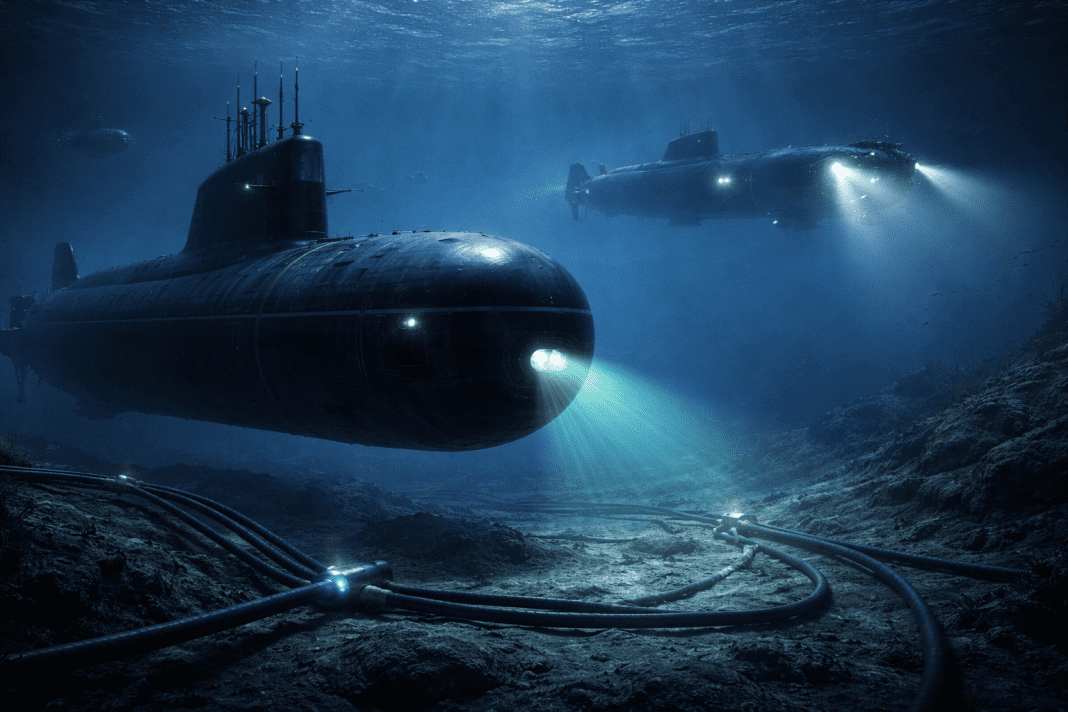

Rising Russian submarine activity in European waters is raising serious security concerns. Experts warn these submarines may be carrying out missions beyond routine patrols, possibly aimed at mapping critical undersea infrastructure. This has heightened fears about risks to vital communication cables and energy networks that many countries depend on.
Growing Concern Over Undersea Surveillance Activity
Tensions in Europe are rising after reports that Russian submarines are carrying out increasingly bold operations beneath the ocean. Defence experts believe these missions are not routine patrols but part of a broader strategy to map critical infrastructure and identify vulnerabilities.
Katja Bego from Chatham House said the activity is becoming more aggressive. She explained that submarines may be locating weak points in undersea systems and testing how countries respond. These systems include vital communication cables and energy links that support internet services, financial transactions, and electricity supply, making them essential to daily life.
UK navy shadows Russian submarines in the North Atlantic to protect vital undersea cables
The concern grew after John Healey said the UK had tracked Russian submarines near key cables in the North Atlantic. Bego warned this could signal preparation for escalation, especially for island nations like the United Kingdom and Ireland, which rely heavily on these underwater networks.
Advanced Capabilities of Russian Submarines Raise Alarm
Details from defence officials show that one of the submarines involved was an Akula-class vessel, considered one of the most advanced in Russia’s naval fleet. These nuclear-powered submarines can remain underwater for long durations without needing to surface. Their quiet design and advanced technology make them difficult to detect, giving them a major advantage during surveillance and military operations.
Akula submarines carry powerful weapons, including torpedoes that can target enemy ships. They also perform intelligence gathering and monitor strategic areas beyond combat roles. Their ability to handle both defensive and offensive missions makes them a key part of Russia’s naval capabilities.
Britain nuclear submarine base sees breach surge as UK MoD reviews security at HMNB Clyde
In addition to the Akula submarine, defence officials identified two other vessels as spy submarines linked to the Main Directorate of Deep-Sea Research, also known as GUGI. This unit focuses on deep-sea operations, including surveillance and potential sabotage of underwater infrastructure, and experts believe Vladimir Putin directs it.
These specialised submarines, including Belgorod and Losharik, use strong titanium hulls that allow them to dive to extreme depths. Experts say they can operate directly on the ocean floor, locate critical cables, and even place devices nearby, making them a serious concern.
Calls for Stronger Response From Europe
Security analysts are increasingly urging European countries to take stronger and more coordinated action in response to rising underwater activity. Katja Bego emphasized that simply monitoring these movements is no longer enough. While publicly exposing such operations can raise awareness, she stressed that Europe must prepare to impose a significantly higher cost on Russia to effectively deter future incursions.
According to Katja Bego, this response could involve a combination of military, technological, and diplomatic measures. European countries can strengthen surveillance of undersea regions, improve the resilience and protection of critical cables, and enhance cooperation among NATO allies. These efforts aim to reduce vulnerabilities and ensure quicker responses to potential threats.
Meanwhile, Sidharth Kaushal from the Royal United Services Institute provided insight into how such operations may unfold. He suggested that the Akula submarine tracked by the UK may have acted as a diversion, drawing attention away from more specialised submarines operating in the same area.
Kaushal noted that tracking these submarines helps build awareness of which infrastructure is being studied and how missions are conducted. He also warned that submarines could leave behind surveillance devices, making monitoring efforts critical to understanding evolving tactics in modern underwater operations.