
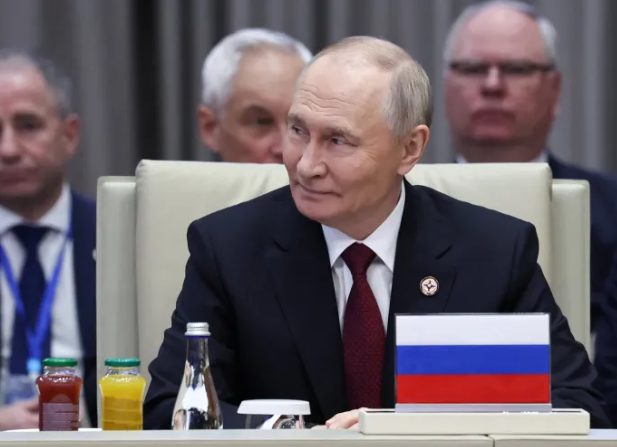

Russian President Vladimir Putin met a senior US delegation in Moscow for new peace negotiations. The meeting was confirmed by the Kremlin. The talks aim to help end the war in Ukraine. They come as Ukraine faces heavy attacks, blackouts, and harsh winter conditions. Both sides say the peace negotiations are meant to find a way to stop the fighting.
What Happened in the Moscow Peace Negotiations
The US delegation arrived in Moscow on January 22 after attending the World Economic Forum in Davos. Russian officials said the meeting with President Vladimir Putin lasted about three hours and began late at night. Although shorter than earlier talks, both sides described it as meaningful and part of ongoing peace negotiations.
US Special Envoy Steve Witkoff said the peace negotiations are now close to the final stage. He noted that only one issue remains before a ceasefire can be agreed but did not explain what it is. Russian officials suggested that land and security guarantees are still the main challenges.
Sweden ties Gripen jets, naval aid, and training for Ukraine to a formal peace agreement with Russia
After the talks, Putin said the territorial issue remains unresolved. Russian media reports say Moscow wants Ukraine to give up the remaining parts of Donetsk still under Ukrainian control, including strong defense lines built over years. Zelenskiy has refused to agree to this.
These talks follow a December 3 meeting, after which a 27-point plan was drafted. Borders and security guarantees remained unresolved. A December 28 Zelenskiy–Trump meeting nearly reached a deal, but Ukraine wanted stronger assurances. Ushakov called the Moscow talks “constructive and frank.”
The Main Issues: Territory and Security
The biggest problem in the talks remains land. Russia controls large parts of eastern and southern Ukraine and says these areas are now part of Russia. Ukraine says the land is occupied and must be returned, making this the hardest issue in the peace negotiations.
Sources in Moscow say Putin has told his team to follow a formula discussed earlier with Donald Trump at a summit in Alaska in August. That meeting set a general framework but did not reach a final decision.
Security is the other main issue in the peace negotiations. Ukraine wants strong guarantees that it will not be attacked again. President Volodymyr Zelenskiy has warned that without real protection, any deal would only pause the war for a short time.
Peace in Ukraine won’t end the threat, Finland warns as Russia eyes NATO borders
Russia is also asking for its own security guarantees. The Kremlin wants promises that a future Ukrainian government will not try to take back the lost territories by force.
While leaders argue over these issues, life in Ukraine remains very hard. Russian attacks have damaged the power grid, causing long blackouts and heating problems during one of the coldest Januarys in years.
Zelenskiy has not commented on the latest Moscow talks, but earlier this month he said the war might end by summer.
What Comes Next: UAE Talks and the Peace Council
The Moscow meeting is not the end of the peace negotiations. According to Ushakov, the next step is a two-day meeting in the United Arab Emirates starting on January 23. This meeting will be a three-way discussion involving Russia, the United States, and Ukraine, aiming to advance the ongoing efforts to reach a ceasefire.
Ushakov said that a special security group will take part in these talks to address military and defense concerns. At the same time, separate sessions will focus on economic issues, showing that the discussions are broader than just the conflict itself.
Zelenskyy says Ukraine is 10 per cent from peace deal but warns final issues shape Europe’s security
These parallel meetings indicate that the peace negotiations now cover not only political and security matters but also the future economic relations between the involved countries. Both sides appear committed to integrating multiple areas into the talks to build a more comprehensive agreement.
Meanwhile, former President Trump has launched a new international body called the “Board of Peace.” This initiative is connected to the broader diplomatic efforts and adds another layer to the peace negotiations, signaling that global cooperation and economic collaboration are now part of the discussion.