
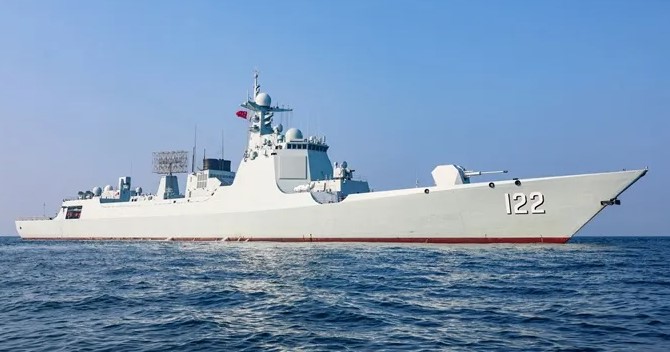

The Philippine Navy said it deployed warships after reports of a Chinese naval vessel lingering near waters off Zambales in the West Philippine Sea. The Navy described the response as calm and controlled, with ships sent to identify the foreign vessel, communicate with it, and assert Philippine maritime rights near Capones Island, an area within the country’s exclusive economic zone off Zambales.
Chinese Warship Spotted Near Zambales and Capones Island
On December 17, members of the local maritime community reported spotting a foreign warship near Capones Island in Zambales. The Philippine Navy later identified the vessel as a People’s Liberation Army-Navy Jiangkai II class frigate with bow number 569, located about 41 nautical miles southwest of the island.
Naval authorities said the vessel was operating within the Philippines’ exclusive economic zone off Zambales, where the country holds sovereign rights under international law. The Chinese frigate drew attention because it appeared to loiter in the area without clearly stating its purpose, raising concern in the sensitive waters near Zambales.
China warns Philippines after rumored Taiwan minister visit sparks uproar
After receiving the report, the Philippine Navy responded quickly by deploying warships to waters off Zambales to verify the situation and establish communication. Navy ships identified themselves over radio and asked the foreign vessel to clarify its intentions while operating inside the Philippine EEZ, emphasizing that they handled the encounter professionally and without hostility.
Navy Response in Zambales Waters and Controlled Escort Operation
To address the situation, the Philippine Navy deployed two warships to escort a Chinese frigate away from Zambales waters. The operation aimed to maintain control, avoid confrontation, and clearly assert the country’s maritime rights within its exclusive economic zone.
Naval units issued radio warnings to the Chinese vessel, reminding it that it was operating inside the Philippine EEZ off Zambales without clearly stating its purpose. The Navy said this type of communication follows standard maritime procedures, especially when foreign military ships are detected in sensitive areas.
The Northern Luzon Naval Command described the escort as “controlled and non-escalatory.” This meant avoiding aggressive actions while still delivering a clear message. Naval officials said their ships maintained a calm and professional posture throughout the encounter near Zambales.
Philippine economy stumbles — growth crashes to 4%, corruption scandal deepens slowdown
The Navy emphasized that professionalism guided the entire operation. Crews followed established rules at sea to ensure the safety of all vessels involved. The focus remained on close monitoring, clear communication, and preventing misunderstandings that could increase tension in waters off Zambales.
During the escort, the Chinese frigate was closely monitored as it moved away from the area. The Navy reported no unsafe maneuvers or exchanges beyond radio communication. Officials said the goal was to protect national interests while keeping the situation stable.
The Navy added that such deployments are part of its regular duties, which include monitoring foreign vessels to protect maritime zones and maintain awareness of activities within Philippine waters.
Tensions Near Scarborough Shoal
The Chinese frigate was spotted near Scarborough Shoal, also known as Panatag Shoal, an area west of Zambales that has been a long-standing flashpoint in the West Philippine Sea.
Scarborough Shoal is a key fishing ground traditionally used by fisherfolk from Zambales and nearby coastal areas. Since 2012, China has maintained effective control over the shoal, enforcing restrictions that have limited access and affected fishing activities linked to Zambales communities.
China claims sovereignty over much of the South China Sea through its “10-dash line,” a claim that overlaps with maritime zones off Zambales. The Philippines challenged this at an international arbitral tribunal, which ruled in 2016 that China’s sweeping claims had no legal basis under international law. The tribunal also declared the shoal a traditional fishing ground shared by several countries.
China has rejected the ruling and continues to operate in and around the shoal. Recent incidents, including vessel collisions and patrols, have raised concerns over safety and stability in waters affecting Zambales.
The latest sighting of a Chinese frigate near Zambales underscores the sensitive situation in the West Philippine Sea. The Philippine Navy said it remains focused on monitoring maritime activity and safeguarding national rights, particularly in areas close to Zambales.