
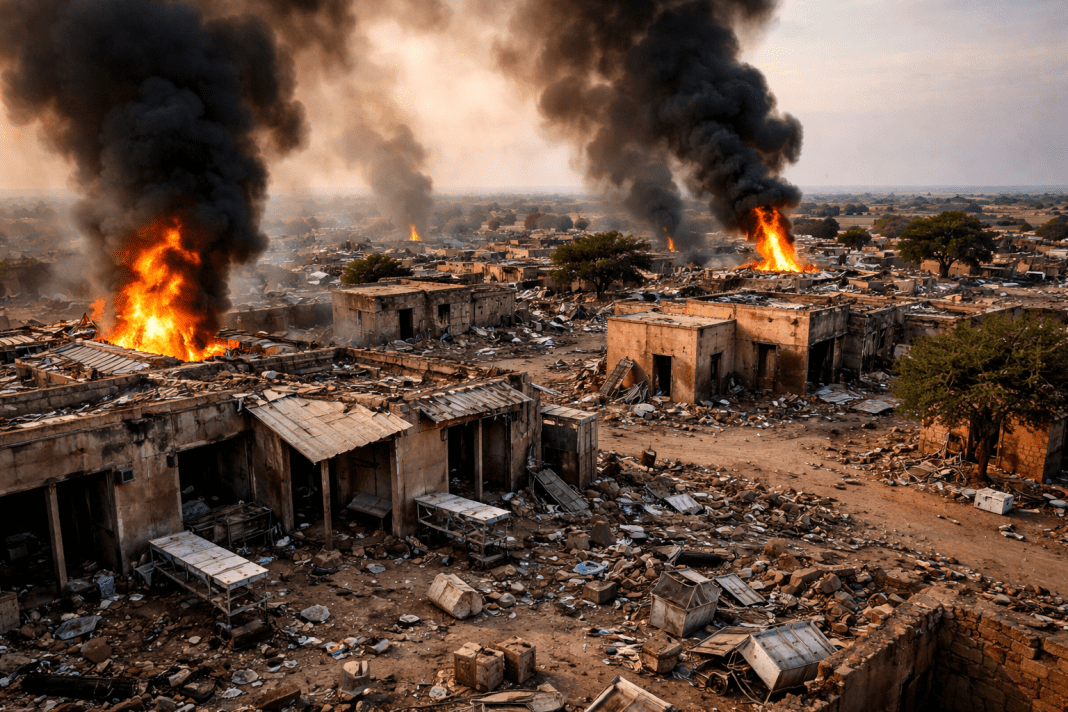

Drone attacks across Sudan’s Kordofan region have killed more than 100 civilians, marking one of the deadliest escalations in the country’s ongoing civil war. The violence has struck towns, villages, hospitals, and even places meant to protect children, leaving families shattered and communities in fear. As fighting spreads into central Sudan, the humanitarian crisis has deepened, with thousands forced to flee and vital services collapsing under pressure.
Deadly Drone Strikes Devastate Civilian Areas in Kordofan
Since early December, drone attacks have repeatedly hit parts of Sudan’s Kordofan region. The attacks intensified after armed forces seized a major army base in the town of Babnusa following days of heavy fighting. After taking control of the base, they launched a wave of strikes that hit civilian areas far from the front lines.
The deadliest incident took place in the town of Kalogi in South Kordofan. Drone strikes hit a kindergarten and a nearby hospital, killing dozens of people. Many of the victims were children and women. Local reports said the attacks wiped out entire families within moments. Survivors described scenes of panic as rubble trapped the injured and hospitals struggled to cope.
‘Second Nakba’ fears rise as Israel negotiates Gaza exodus with South Sudan
The strikes also hit other towns across North and South Kordofan. Attackers damaged or destroyed residential neighborhoods, health centers, and public buildings. Medical workers reported shortages of supplies, beds, and staff as injured civilians poured in. In several cases, hospitals themselves became targets, forcing doctors and nurses to flee or work in unsafe conditions.
Drone attacks have also hit areas hosting international peacekeeping forces. A strike on a peacekeeping base in Kadugli, the capital of South Kordofan, killed several personnel and damaged equipment. These attacks raised serious concerns about the safety of peacekeepers and civilians living nearby.
Fighting Expands Across Kordofan as Thousands Are Displaced
The violence in Kordofan marks a major shift in Sudan’s civil war. For months, fighters concentrated much of the fighting in the western region of Darfur. Now, the conflict has spread into central Sudan, an area that connects several regions and holds strategic importance.
As clashes grow more intense, the violence has forced tens of thousands of people to leave their homes. Families have fled with little more than the clothes they were wearing as they seek safety in neighboring towns or states. Many people have taken shelter in schools, unfinished buildings, or open fields.
US issues sanctions over Colombian-linked group involved in Sudan conflict
Cities such as Kadugli and Dilling now face severe pressure. Fighting has cut off roads, supplies are running low, and armed groups have trapped civilians on all sides. In some areas, people have gone days without clean water or electricity. Markets have closed, and food prices have risen sharply.
In the oil-producing area of Heglig, fighting earlier this month caused further displacement. Thousands of residents fled toward safer regions, adding to an already massive number of displaced people across Sudan. Aid groups warn that many of these families are now living without proper shelter, healthcare, or sanitation.
Health Crisis Deepens as War and Disease Collide
Beyond the immediate death toll, the drone attacks and fighting have triggered a serious health emergency. Large parts of the region are facing outbreaks of cholera and dengue fever. Health officials say thousands of cases have been recorded, with many patients unable to access treatment.
Around one-third of health facilities in the area are no longer functioning. Some have been damaged by fighting, while others lack staff, medicine, or electricity. Ambulances struggle to move due to insecurity and damaged roads.
The targeting of hospitals has made the situation even worse. Medical workers report that fear has forced some facilities to shut down completely. Patients with injuries, infections, or chronic illnesses are left with few options for care.
Children are among the most affected. Many have lost parents, homes, and access to schools. Malnutrition is rising as food becomes scarce and aid deliveries are delayed. Clean water shortages increase the risk of disease, especially in overcrowded shelters.
RSF Allegations Lead Sudan to Break UAE Relations
International organizations have warned that attacks on civilians, medical facilities, and humanitarian workers violate international law. They have called for the protection of non-combatants and access for aid agencies, but fighting continues to block relief efforts.
Sudan’s war, which began in April 2023, has already claimed tens of thousands of lives. More than 14 million people have been displaced nationwide, making it the largest humanitarian crisis in the world today. In Kordofan, the recent drone attacks have added a new layer of fear and destruction, showing how deeply the conflict continues to harm ordinary people far from the battlefield.