
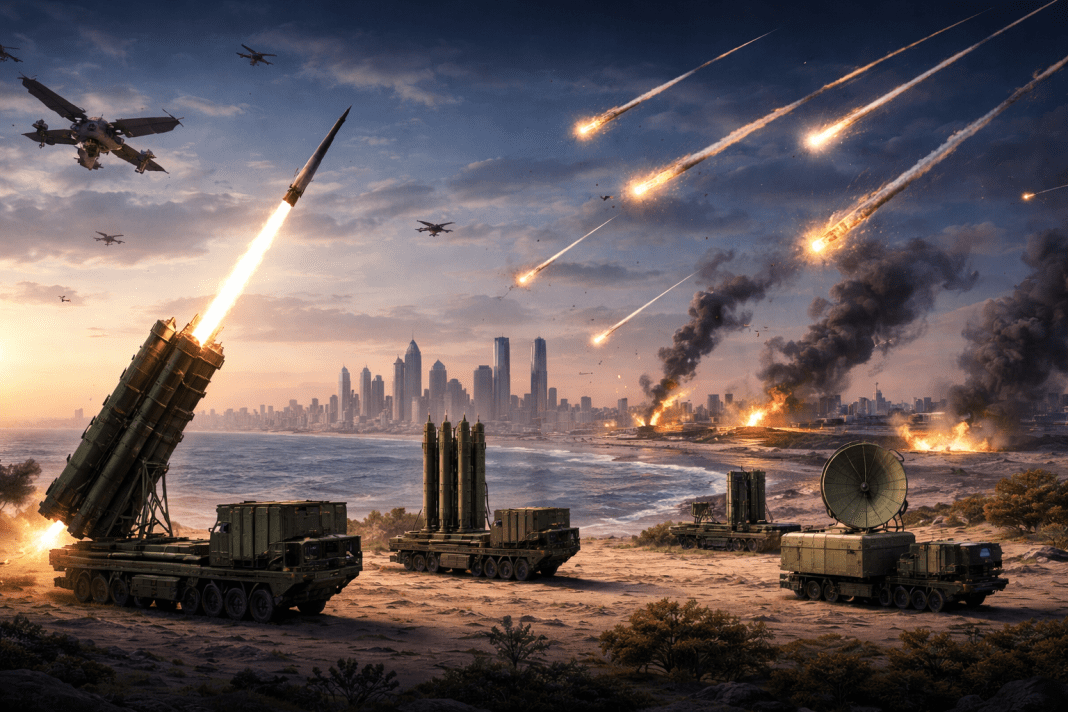

Gulf nations are rethinking their defense strategies as repeated missile and drone attacks expose gaps in existing air defense systems. With interceptor stockpiles under pressure and demand rising, countries like Saudi Arabia, the United Arab Emirates, and Qatar are seeking faster and more cost-effective solutions, turning attention toward South Korea’s growing role in the global defense market.
Growing Threats in the Gulf Expose Air Defense Gaps
Gulf countries are facing rising security pressure after large-scale missile and drone attacks linked to Iran. Nations such as Saudi Arabia, the United Arab Emirates, and Qatar are relying heavily on air defense systems to protect cities, oil facilities, and critical infrastructure.
In recent weeks, these countries have used many interceptor missiles to stop incoming threats. These missiles are designed to destroy enemy drones and missiles before they reach their targets. However, the constant use of these systems has rapidly reduced their stockpiles, creating concerns about how long they can sustain such defenses.
US pulls key missile defenses from South Korea as interceptor stockpiles face growing pressure
A major challenge is the nature of the attacks. Many drones are low-cost and mass-produced, allowing them to be launched in large numbers. This makes them difficult to stop, even for advanced systems. At the same time, interceptor missiles are expensive and take time to produce, creating an imbalance that increases financial and operational pressure on defense systems.
Shift Toward South Korean Missile Systems
To tackle rising security challenges, Gulf states are increasingly looking beyond their traditional defense partners. South Korea has emerged as an important alternative, particularly in the supply of interceptor missiles. This shift comes as countries seek quicker and more practical solutions to strengthen their air defense systems amid ongoing threats.
One system drawing strong interest is the Cheongung-II, a medium-range air defense system developed in South Korea. It is designed to intercept both incoming missiles and aircraft, making it suitable for modern warfare where threats can come from multiple directions. Its versatility has made it an appealing option for countries looking to upgrade their defenses.
South Korea weighs NATO PURL participation as allies fund Ukraine air defense
Another key reason behind its popularity is cost. The Cheongung-II is considered more affordable than many Western systems, allowing Gulf nations to purchase larger quantities. In addition, South Korean manufacturers are known for faster production and delivery timelines, which is critical during periods of high tension.
Reports indicate that Saudi Arabia is exploring ways to speed up deliveries of this system, while the United Arab Emirates has requested additional interceptor missiles. This reflects growing confidence in South Korean technology as Gulf countries aim to build a more flexible and diversified defense network.
Global Demand for Korean Weapons on the Rise
The growing interest in South Korean weapons is no longer limited to the Gulf region. Countries across the world are increasingly turning to Korean defense systems as conflicts continue and security threats become more complex. This shift reflects a broader need for reliable, flexible, and quickly deployable military solutions.
One of the main reasons behind this trend is reliability. South Korean defense systems are known for their strong performance and modern technology. They are designed to handle a wide range of threats, including missiles, drones, and aircraft. This makes them suitable for today’s evolving battlefield, where multiple types of attacks can occur at the same time.
Ahn Gyu-back discusses plans for South Korea’s nuclear-powered submarines with U.S. senators
Another important factor is scalability. South Korean systems can be produced in larger quantities and delivered faster than many alternatives. This is especially important when countries face mass attacks involving swarms of drones or repeated missile strikes. Having access to systems that can be quickly expanded helps maintain strong defenses.
The situation in the Gulf highlights how warfare is changing. Instead of relying only on a few high-end systems, countries now need layered defenses that combine advanced and cost-effective solutions. South Korea’s defense industry has adapted to these needs, offering practical and efficient systems. As a result, more nations are diversifying suppliers and strengthening their overall defense preparedness.