
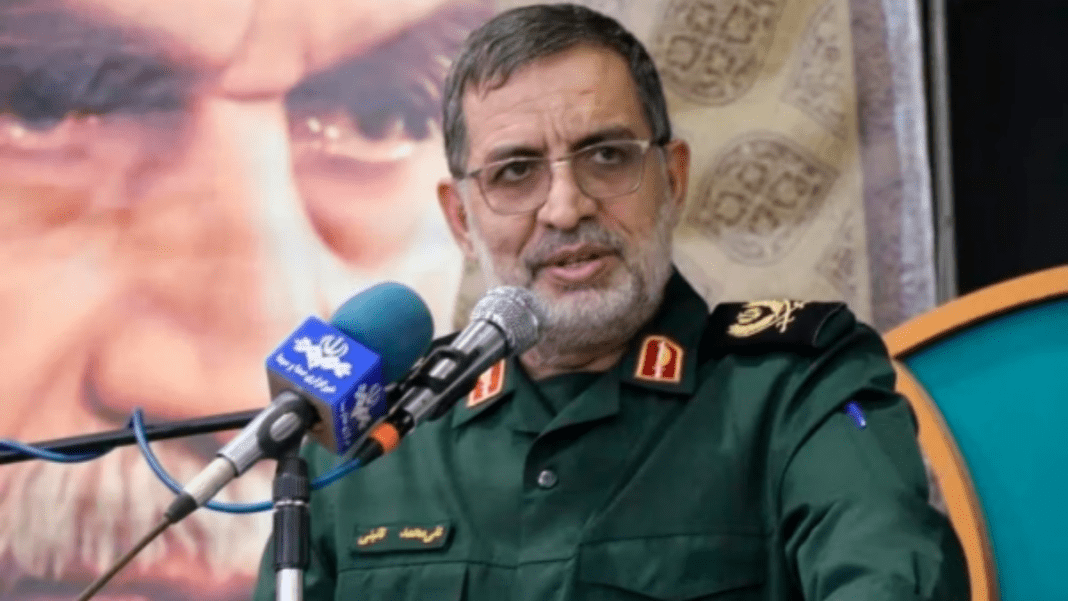

Ali Mohammad Naini was a senior military official in Iran. He served as the spokesperson for the Islamic Revolutionary Guard Corps (IRGC), one of the most powerful branches of the country’s armed forces. His role involved sharing official statements and updates during times of conflict.
Born in 1957 in Kashan, Iran, Ali Mohammad Naini built a career that combined military service and education. He held the rank of Second Brigadier General in the IRGC, showing his importance within the organization.
Apart from his military duties, he was also active in academics. He worked as a professor of social sciences and was a faculty member at Imam Hossein University. His work in education highlighted his role in shaping ideas as well as strategy.
In 2024, he became the official spokesperson of the IRGC. In this position, he worked under the leadership of Hossein Salami. His role became more visible as tensions in the Middle East increased.
Naini was also under international sanctions. The United Kingdom placed sanctions on him following Iran’s missile strikes on Israel in October 2024. This showed his connection to key military decisions taken by Iran.
Airstrike and Rising Military Tensions
According to Iranian state media, Ali Mohammad Naini was killed in an airstrike. His death comes during a period of intense conflict involving Iran, the United States, and Israel.
Military operations by the United States and Israel have been targeting Iran’s defense systems and leadership. These actions are part of a broader effort to weaken Iran’s nuclear and missile capabilities.
Reports indicate that Israel had instructed its military to target Iranian leaders without needing additional approval. This points to the seriousness of the situation and the speed at which decisions are being made.
Naini’s reported death followed the killing of other senior figures, including Ali Larijani and his son. These developments have increased tensions in the region and added to fears of a wider conflict.
The IRGC plays a central role in Iran’s military strategy. It is responsible for major operations and protecting national interests. Because of this, its leaders are seen as key targets during such conflicts.
The airstrike that reportedly killed Naini is part of ongoing attacks focused on both infrastructure and leadership. These actions aim to reduce Iran’s ability to respond and operate effectively.
Trump says Israel won’t strike Iran gas field again, distances US and Qatar from attack
Background of the Conflict and Recent Developments
The current conflict intensified after a major strike on February 28. During this operation, forces from the United States and Israel launched a large-scale attack on Iran. This marked a significant escalation.
The strike reportedly led to the killing of Iran’s top leader Ali Khamenei. This event increased global attention and raised concerns about the scale of the conflict.
The main focus of the operation has been Iran’s nuclear and missile programs. These programs have been a long-standing concern for other nations.
Since the strike, military actions have continued for nearly 20 days. Several important targets have been hit, including military facilities and senior officials.
Statements from Israel’s Prime Minister Benjamin Netanyahu claimed that Iran’s ability to enrich uranium and produce ballistic missiles has been severely reduced. Efforts are ongoing to destroy remaining systems linked to these programs.
Iran remains central to the situation, with its military structure, including the IRGC, continuing to play a major role. The targeting of figures like Ali Mohammad Naini shows a focus on leadership within the conflict.
The reported death of Naini highlights the intensity of ongoing military operations and the risks faced by senior officials during this period of escalating tensions.