
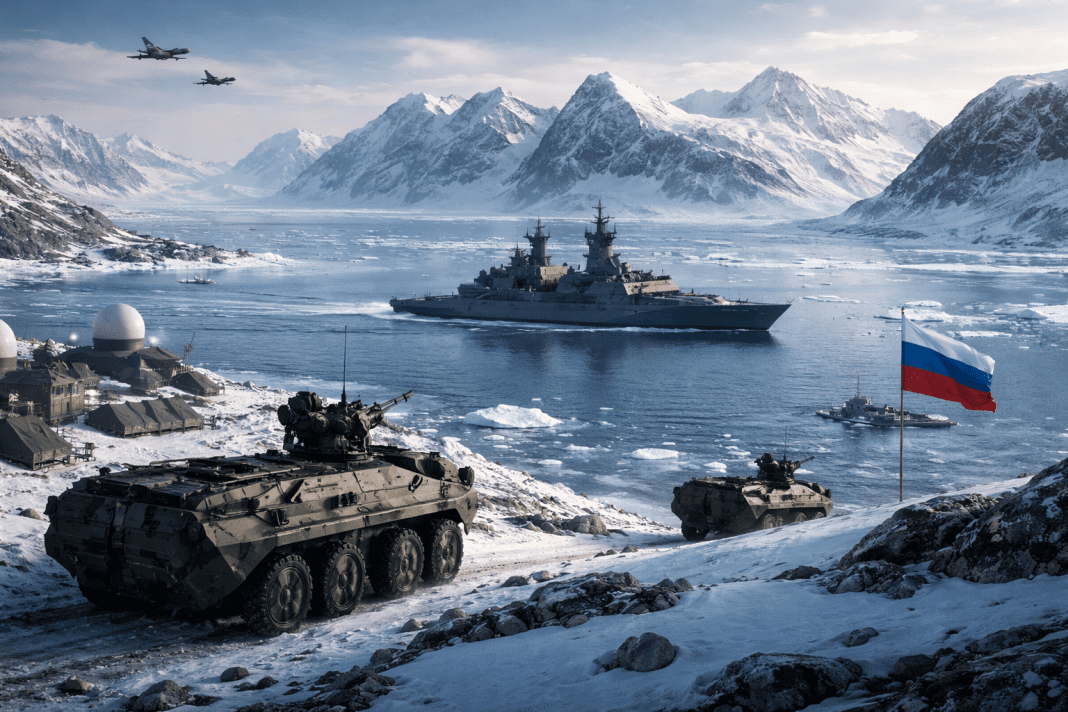

Russia has warned it could respond with military measures if Greenland is heavily militarized. The warning is closely linked to concerns about militarization in the Arctic. Interest in Greenland is rising as the Arctic opens due to melting ice. New shipping routes and natural resources are increasing its strategic value. Russia says the warning comes in response to growing Western military activity and fears of expanding militarization in the region.
Rising Militarization in the Arctic Region
The Arctic was once viewed as a distant and frozen region, but warming temperatures have changed that quickly. Melting ice has opened new shipping routes that were previously blocked for much of the year. These routes can shorten travel times between Europe, Asia, and North America, increasing global attention and concerns about Arctic militarization.
The Arctic also holds large reserves of oil, gas, and minerals, drawing interest from many countries. Governments now see the region not only as an environmental zone but also as an economic and strategic area. This shift has increased competition and accelerated debates over regional militarization.
The United States and several NATO members have expanded military activities in the Arctic, including patrols and joint exercises. Greenland’s location between North America and Europe makes it important for monitoring air and sea movements. Russia says this growing presence fuels militarization and alters the regional security balance.
Greenland’s Strategic Role and Growing Global Focus
Greenland is the world’s largest island and sits at a critical crossroads in the Arctic. While it has self-governing powers, defense and foreign affairs are handled by Denmark. This unique status adds complexity to security discussions and concerns about militarization.
In recent weeks, Greenland has appeared more often in Arctic defense discussions. Talks about stronger Western involvement have drawn attention because they touch on sovereignty, defense cooperation, and rising militarization.
Western countries say their actions are defensive and aimed at maintaining stability. Russia disputes claims that it poses a threat and argues that exaggerated narratives are used to justify further militarization. The situation shows how different views on militarization continue to raise tension across the Arctic region.
🧊 Arctic power play erupts — Russia exploits Greenland dispute to challenge NATO in Svalbard
Russia, however, disputes claims that it poses a threat to Greenland. Moscow also rejects suggestions that China is preparing hostile moves toward the island. According to Russian statements, such narratives exaggerate the situation and are used to justify a stronger military footprint by NATO countries.
Russia has repeatedly said it wants the Arctic to remain peaceful and stable. It emphasizes cooperation, international law, and existing agreements that limit conflict in the region. At the same time, it stresses that it will not ignore developments it sees as threatening.
Arctic Competition and Escalating Political Tensions
The warning linked to Greenland shows how the Arctic is becoming a zone of growing geopolitical competition. The region, once focused mainly on climate research, is now closely connected to national security and military planning. Melting ice has increased access to shipping routes and natural resources, raising the Arctic’s strategic importance.
NATO has strengthened coordination among its members on Arctic security. This includes joint planning and shared activities to improve readiness in harsh and remote conditions. These efforts reflect the region’s rising role within broader defense strategies.
“Greenland could choose Russia”: Medvedev remark sends shockwaves through Arctic politics
Russia is closely watching these developments. It controls large Arctic areas and has major military assets there. Moscow describes its actions as defensive, saying they respond to increased Western military activity rather than attempts to escalate tensions.
The use of the term “military-technical” measures adds weight to Russia’s warning. While not clearly defined, it suggests steps beyond diplomacy, such as changes to military capabilities. The situation around Greenland shows how different perceptions can fuel mistrust and raise tensions in the Arctic.