
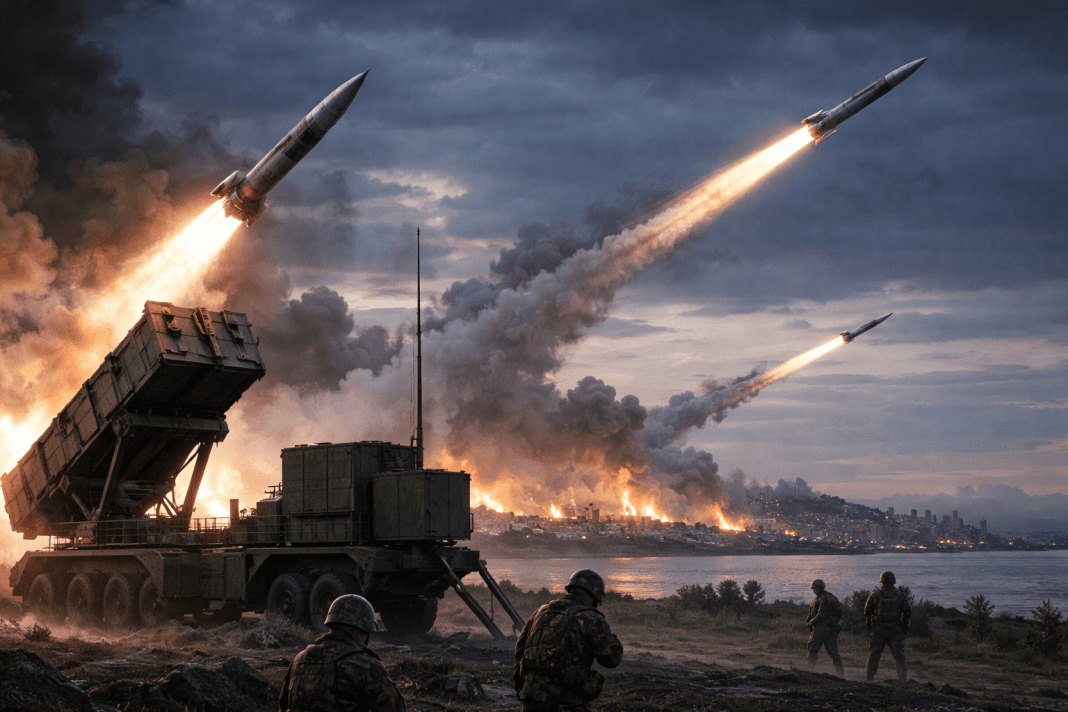

Russia has launched advanced missiles at Ukraine, including the hypersonic Zircon and the nuclear-capable Oreshnik. Russia has carried out the strikes in limited, isolated launches. Ukrainian officials say these launches do not aim to gain battlefield advantage. Instead, Russia uses them as a show of power to intimidate Ukraine and its Western allies.
Targeted Demonstrations with Zircon and Oreshnik, Not Mass Attacks
The Zircon and Oreshnik missiles serve different purposes. Zircon was initially designed as an anti-ship missile, but Russia has used it to strike land targets in Ukraine. It climbs to altitudes above 40 kilometers (25 miles) and follows a ballistic-style trajectory, similar to older missiles like the Kh-22.
Meanwhile, the Oreshnik is a modernized version of a Soviet-era ballistic missile. It is nuclear-capable, giving it a symbolic weight in addition to its military use. Ukrainian officials emphasize that the missile’s limited launches appear aimed at sending a signal to Western countries rather than at achieving a clear tactical advantage on the battlefield.
These launches have targeted regions across Ukraine. Russia has fired Zircon missiles from Crimea toward Kyiv, Kharkiv, and Vinnytsia, and has used the Oreshnik missile in strikes on central and western Ukrainian cities, including Dnipro and Lviv, which lies near NATO borders. Analysts say these strikes aim to showcase Russia’s claimed ability to deploy weapons it asserts cannot be intercepted.
Air Defense and Interceptions
Ukraine’s air defense systems have successfully intercepted some Zircon missiles, though their effectiveness depends heavily on the positioning of advanced US-made Patriot air defense systems. Proper deployment of these systems is critical to stopping the high-speed, high-altitude missiles before they reach populated areas or strategic targets.
One of the most notable suspected Zircon strikes took place on the night of January 20, when Russia launched a missile from Crimea aimed at the Vinnytsia region. Earlier incidents include unexplained explosions in the northeastern city of Sumy in November. Analysts suggest that Russia may have used Zircon missiles, highlighting the selective but high-impact deployment of this advanced weapon.
Oreshnik missiles raise escalation concerns as United Nations debate highlights deep divide
In August, experts confirmed the use of a 3M22 Zircon missile after carefully analyzing debris from a strike. These events show that Russia is deploying the missile sparingly but deliberately, choosing specific targets to demonstrate capability and send a signal of power. The missile’s speed, trajectory, and precision make it a highly visible tool for psychological and strategic messaging.
Despite the technological sophistication of Zircon and the nuclear-capable Oreshnik, the number of launches has remained relatively low compared to Russia’s regular missile attacks. This suggests that the primary purpose of these strikes is not to change the battlefield but to create fear, pressure, and uncertainty, particularly among Ukraine and its Western allies.
Psychological Pressure on Ukraine and the West
Experts note that Russia’s strategy with these missiles appears focused on sending a clear message to the West. By using hypersonic and nuclear-capable weapons in isolated launches, Russia signals its ability to strike critical locations, potentially bypassing defenses.
The Oreshnik missile, for instance, is a reminder of Russia’s nuclear capabilities. Its use in strikes near NATO borders underscores the symbolic nature of these attacks, which aim to influence the perception of power rather than change immediate military outcomes.
Similarly, the Zircon missile, though designed for naval targets, demonstrates Russia’s ability to deploy highly advanced technology on land targets. Its high speed, steep trajectory, and precision allow Russia to visibly demonstrate its power, even when it launches only a few missiles.
⚔️ Unstoppable at Mach 9: Russia arms Su-57 with Zircon hypersonic the U.S. can’t intercept
Officials emphasize that people should not compare these attacks with Russia’s regular missile barrages, which use larger numbers of conventional weapons. Instead, Russia carefully conducts these launches to create psychological and political pressure, highlight its advanced missile capabilities, and send a warning to Kyiv and Western nations.
The use of Zircon and Oreshnik missiles in Ukraine is not about overwhelming military strategy. It is about sending a powerful message, showcasing advanced weaponry, and attempting to influence the perceptions of both Ukraine and its international partners. These missile strikes underline the ongoing tensions in the region and the high stakes of modern missile technology in geopolitical signaling.