
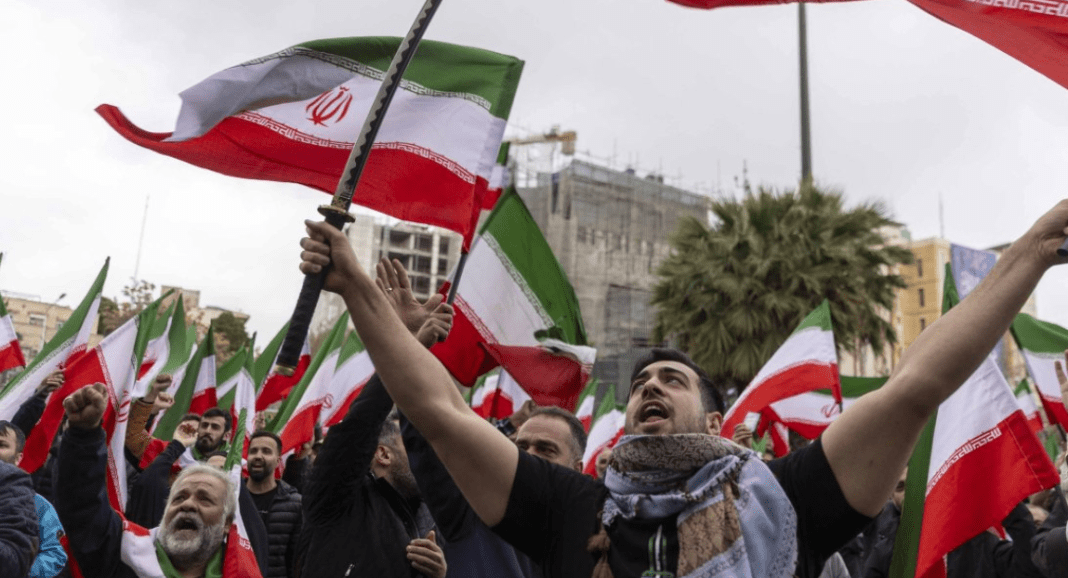

Iran is facing rising internal tensions as power struggles intensify between civilian leadership and the Islamic Revolutionary Guard Corps (IRGC). President Masoud Pezeshkian is at the center of the crisis, as disputes over authority and control continue to grow.
Growing Rift Between Government and Military
Tensions within Iran’s leadership have escalated sharply, creating what insiders describe as a “complete political deadlock.” President Masoud Pezeshkian is facing mounting resistance from the Islamic Revolutionary Guard Corps (IRGC), which appears to be expanding its influence beyond traditional military duties into key areas of governance.
Sources say the IRGC has begun blocking major presidential decisions, particularly appointments to sensitive roles. This has slowed down government functioning and limited the administration’s ability to carry out its responsibilities. Several proposals have reportedly been rejected outright, highlighting a widening gap between civilian leadership and military authority.
The standoff became more visible when efforts to appoint a new intelligence minister failed. Ahmad Vahidi is said to have opposed all suggested candidates, including Hossein Dehghan. He reportedly argued that, due to wartime conditions, key leadership positions should remain under the direct control of the IRGC.
This development marks a significant shift in how power is being exercised within the country. While the civilian government continues to operate, its ability to make independent decisions appears to be increasingly restricted by military influence.
IRGC Role Deepens Amid Uncertainty Around Supreme Leadership
Uncertainty surrounding Mojtaba Khamenei has added to the growing instability. His condition and whereabouts have remained unclear in recent weeks, raising questions within Iran’s political system and contributing to the ongoing power struggle.
President Pezeshkian has reportedly made several attempts to meet Mojtaba Khamenei to discuss urgent national matters. However, these requests have gone unanswered, and no direct communication has been established. This lack of access has further complicated the government’s ability to function effectively.
According to informed sources, a “military council” made up of senior IRGC officials is now overseeing key decision-making processes. This group is believed to be handling important state affairs while also controlling access to Mojtaba Khamenei, limiting who can reach him.
Iran deploys elite black-clad NOPO commandos to guard new supreme leader Mojtaba Khamenei
Reports suggest that a strict security cordon has been placed around him, preventing government updates and reports from reaching him. This has weakened the role of civilian leadership and shifted more authority into the hands of the military, deepening the sense of uncertainty.
Speculation has also emerged regarding Mojtaba Khamenei’s health, although no official confirmation has been provided. These uncertainties have added to the complexity of the current situation.
Internal Conflicts and Rising Pressure
At the same time, internal tensions are intensifying within Mojtaba Khamenei’s inner circle. Ali Asghar Hejazi has become a central figure in these disputes, with some members reportedly seeking his removal from a powerful position.
Hejazi has openly opposed the idea of Mojtaba Khamenei potentially succeeding as Supreme Leader. He has raised concerns about whether Mojtaba meets the necessary qualifications and warned against hereditary succession within Iran’s political framework.
According to sources, he told members of the Assembly of Experts that such a move would go against the principles outlined by Ali Khamenei. He further cautioned that elevating Mojtaba could significantly increase the influence of the IRGC, potentially sidelining civilian institutions.
Leaked audio claims Mojtaba Khamenei escaped airstrike that killed Ali Khamenei by minutes
These warnings have contributed to growing disagreements within the leadership circle. The debate over succession and authority has become a key point of tension, adding to the broader political strain.
Earlier reports indicated that Hejazi may have been targeted in an airstrike in Tehran during the early phase of the ongoing conflict. While initial claims suggested he had been hit, later updates confirmed that he survived. This incident has further highlighted the high-stakes environment and the ongoing internal struggles within Iran’s leadership.