
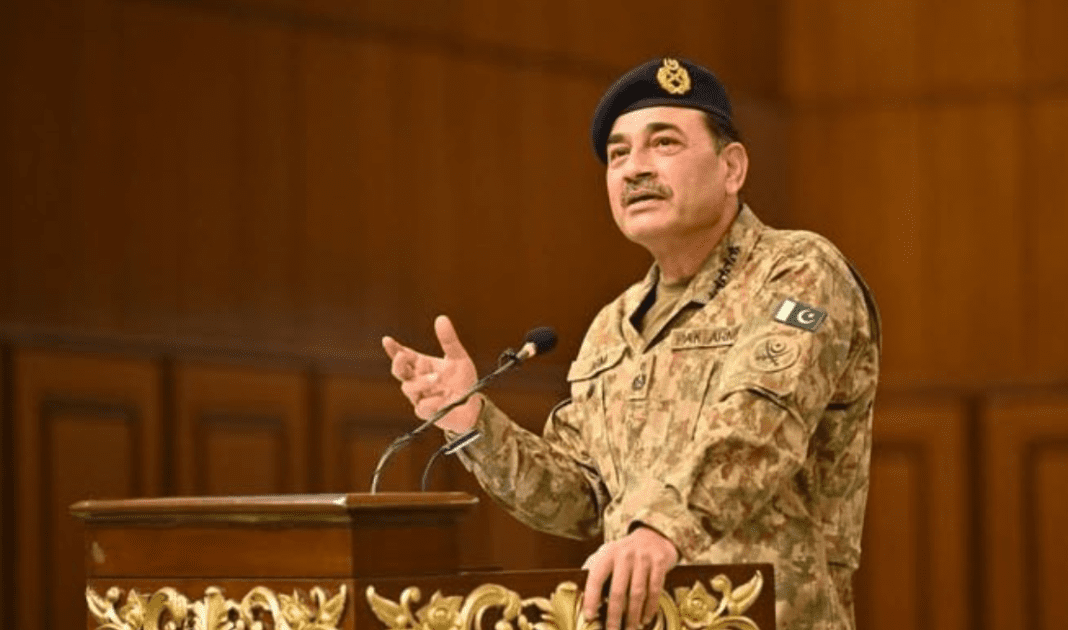

Pakistan’s ambition to emerge as a key security player in West Asia is now facing serious setbacks. What began as a push to build an “Islamic NATO” and expand regional influence has instead exposed deep strategic and internal challenges. As tensions in the region grew, Islamabad struggled to balance alliances and domestic pressures. At the centre of these developments is Asim Munir, whose decisions are increasingly coming under scrutiny.
Pakistan’s Push for an “Islamic NATO” in West Asia
For several years, Pakistan tried to present itself as a strong and reliable security player in West Asia. Its leadership believed the country could lead a new military alliance of Muslim nations, often described as an “Islamic NATO,” aimed at creating a united defence system to respond to regional threats.
As a nuclear-armed state, Pakistan felt it had the strength and influence needed to lead such a coalition. Officials believed this alliance would place Islamabad at the centre of regional security decisions and significantly boost its global importance and diplomatic standing.
Beyond a military alliance: Pakistan leads ‘Islamic NATO’ talks to pass messages for peace
As part of this plan, Pakistan signed a defence agreement with Saudi Arabia, which was seen as a major breakthrough. Soon after, Turkey also showed interest in a similar partnership. Pakistan then tried to expand the alliance by reaching out to Egypt and Somalia, making the vision appear close to reality before momentum slowed.
Conflict in the Region Exposes Pakistan’s Dilemma
The situation changed rapidly as tensions escalated between the United States, Israel, and Iran, with the conflict spreading across key parts of the Gulf region. Iran launched strikes on US-linked targets in several countries, creating panic among regional allies. Saudi Arabia, in particular, expected Pakistan to stand by its defence commitments during this crisis.
However, Pakistan found itself in a highly complex situation. The country has deep internal religious divisions, with around 15 percent of the population following Shia Islam and the majority being Sunni. Supporting Saudi Arabia against Iran risked angering the Shia population, many of whom are also present within Pakistan’s military and security structure.
India emerges as a more reliable mediator for Middle East peace over Pakistan
At the same time, joining the United States and Israel against Iran was equally difficult. Many Sunni groups in Pakistan viewed the conflict as a religious struggle. Supporting the US-led side could have triggered unrest and strong reactions across the country, making the situation even more sensitive for the leadership.
Faced with these challenges, Pakistan chose to step back, describing it as a “problem of plenty.” This decision damaged its credibility, with critics calling it opportunistic and unreliable. As pressure mounted, the vision of an Islamic NATO began to collapse rapidly.
Asim Munir’s Role and Growing Strategic Setbacks
At the centre of the situation is Asim Munir, who plays a key role in shaping Pakistan’s military and strategic decisions. He strongly backed efforts to expand Pakistan’s influence in West Asia through the idea of forming a united Islamic military alliance, which was expected to boost the country’s global standing and leadership role.
After this plan failed, Munir attempted to reposition Pakistan as a mediator between the United States and Iran. However, Iran rejected the offer, highlighting deep mistrust between the two nations. This distrust had already intensified in 2025, when Iran carried out missile and drone strikes in Balochistan targeting bases of the militant group Jaish al-Adl, further straining relations.
United States backs Pakistan’s right to defend itself as Trump praises Munir amid Taliban clashes
As foreign policy efforts struggled, Pakistan shifted its focus towards Afghanistan. The country has been dealing with rising threats from militant groups such as the Balochistan Liberation Army and Tehreek-e-Taliban Pakistan, particularly in Balochistan and Khyber Pakhtunkhwa, leading to intensified military operations and continued instability.
At the same time, critics within Pakistan are increasingly questioning Asim Munir’s leadership style, raising concerns that he is making key decisions without properly consulting the political leadership. Some officials also believe that he is focusing more on protecting his personal image rather than effectively addressing national challenges. Experts also warn that tensions with India could rise, as Pakistan faces increasing internal pressure and growing isolation on the global stage.