
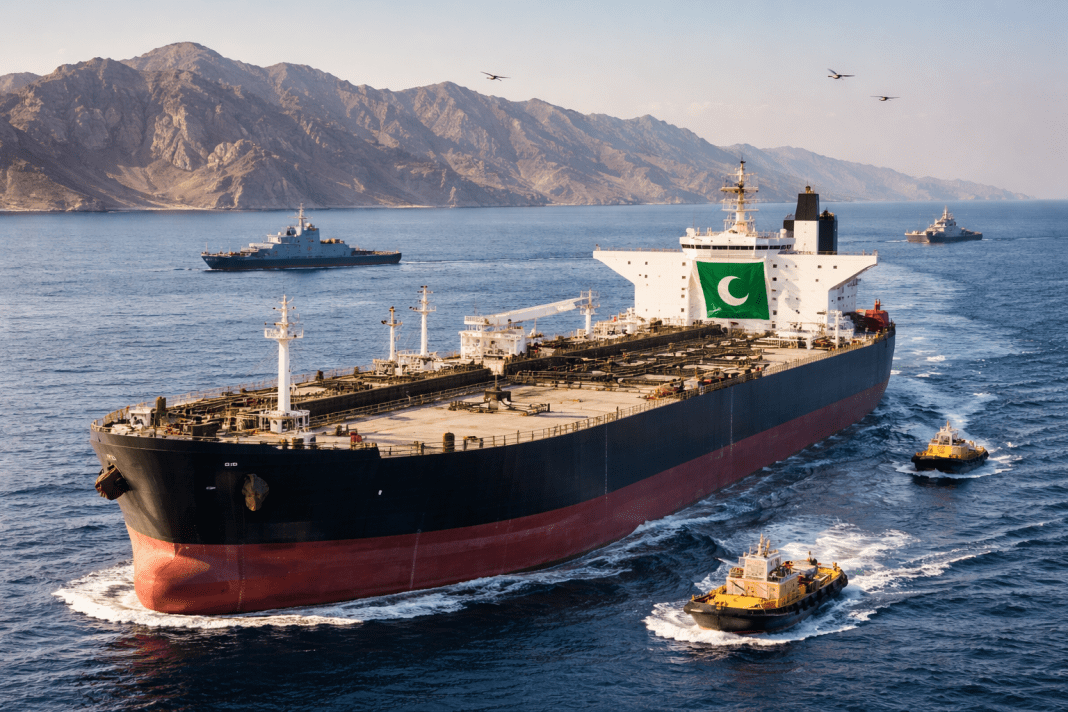

Amid rising tensions in the Middle East, the Strait of Hormuz remains a key focus for global energy markets. The situation is uncertain, and the successful passage of a Pakistan-bound oil tanker has drawn attention as a rare and significant development.
A Rare Passage Through a Critical Global Oil Route
A Pakistan-bound oil tanker has successfully passed through the Strait of Hormuz, marking a rare moment of movement in one of the world’s most sensitive and closely monitored waterways. This development comes at a time when tensions remain high due to the ongoing conflict involving the United States, Israel, and Iran. The safe passage of the vessel has drawn attention from global observers and energy markets.
Over the past two weeks, the situation in the region has disrupted regular shipping activity, creating uncertainty for oil transport. The Strait of Hormuz is one of the most critical energy routes in the world, with nearly one-fifth of global crude oil and liquefied natural gas shipments passing through it. Even minor disruptions in this narrow corridor can lead to immediate increases in fuel prices and affect economies far beyond the region.
Germany rejects Trump’s call for NATO to secure the Strait of Hormuz
Despite reports of attacks on several ships in the Gulf, the tanker was able to pass through without incident. This suggests that authorities may still allow certain shipments under controlled or negotiated conditions, even during periods of heightened conflict and ongoing security concerns.
First Non-Iranian Tanker Signals Possible Negotiated Access
The oil tanker, named Karachi, is operated by the Pakistan National Shipping Corporation. It reportedly became the first non-Iranian vessel to cross the strait while actively broadcasting its tracking signal, known as AIS (Automatic Identification System).
This detail is important. Ships often turn off their AIS signals in risky areas to avoid detection. However, the Karachi kept its signal on, indicating a level of confidence or assurance about its safe passage.
Data from ship-tracking services showed that the tanker had loaded crude oil from Das Island in Abu Dhabi before entering the strait. It then sailed close to the Iranian coastline before changing direction toward Pakistan.
Russian oil revenues jump $1.3 billion as Strait of Hormuz crisis shifts global supply
This movement pattern has raised speculation that the vessel may have been granted a form of safe passage. It suggests that even in a tense environment, some countries are able to maintain energy supply routes through diplomatic coordination.
Reports also indicate that other vessels, including some linked to India, China, and Iran, have managed to pass through the strait during the conflict. However, the Karachi stands out because it is the first publicly tracked non-Iranian tanker to do so while clearly signaling its position.
Pakistan Balances Energy Needs and Regional Relations
Pakistan relies heavily on imported oil and fuel, with a significant portion of these supplies moving through the Strait of Hormuz. This narrow waterway is one of the most important energy routes in the world. Any disruption in this area can quickly impact fuel availability in Pakistan and lead to rising domestic prices, making it a critical concern for the country’s economy.
At the same time, Pakistan maintains relationships with several key countries, including Iran, the United States, and Saudi Arabia. Balancing these ties has become more challenging as regional tensions increase, requiring careful diplomatic handling to avoid conflict while protecting national interests.
India-bound oil tanker reaches Mumbai safely after going dark through conflict-hit Strait of Hormuz
To ensure the safety of its trade routes, Pakistan’s navy has stepped up efforts to secure maritime lanes. These operations focus on monitoring sea activity and coordinating with regional forces to reduce risks for commercial shipping. In the case of the tanker Karachi, reports suggest that authorities did not require a naval escort, indicating that prior understanding may allow certain ships safe passage.
Another tanker, Lahore, is also heading toward Pakistan after loading oil from Yanbu. Officials have stated that the country currently holds enough fuel reserves for several weeks and is actively working to diversify imports to reduce dependence on any single route.