
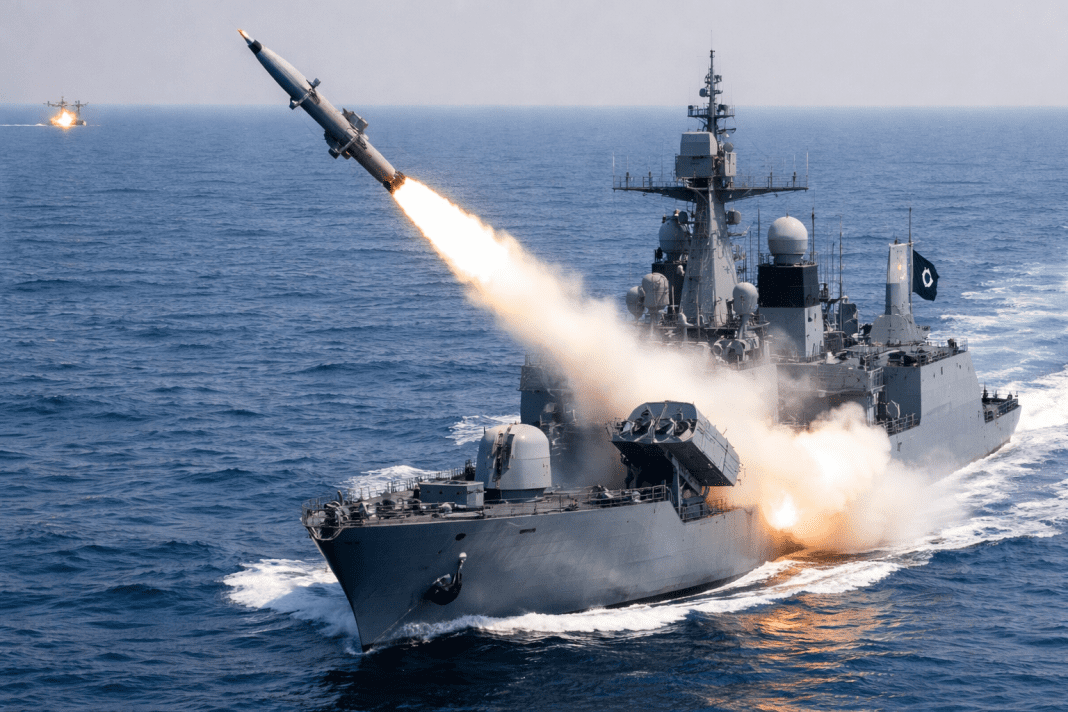

The Pakistan Navy conducted a live weapons test in the North Arabian Sea, successfully firing an FM-90(N) ER surface-to-air missile from a frontline warship to destroy a fast and highly maneuverable aerial drone during a fleet exercise. The navy officially confirmed it carried out the drill to test combat readiness and defend ships against modern aerial threats.
What Happened During the Missile Test
During a naval exercise, a warship fired the FM-90(N) ER surface-to-air missile at an airborne target simulating a hostile drone. The missile successfully intercepted the drone, which performed sharp turns and evasive maneuvers designed to mimic real threats, including sea-skimming missiles that fly close to the water to avoid detection.
The navy did not officially name the ship involved, but defense reports linked it to a long-serving frigate class already equipped with the FM-90 missile system. The drill showed that the launcher, deck layout, and sensor setup matched the known design of these frigates, which China helped build as part of a rapid fleet modernization program.
Link-16 shocker: Pakistan to receive top-tier U.S. combat communications in $686M upgrade package
The FM-90 system sits on a trainable launcher on the deck, allowing it to rotate and target incoming threats. When the ship detected the drone, its sensors tracked it, and the fire control system guided the missile toward the target. This demonstrated that even older ships can perform important defensive roles when equipped with upgraded weapons.
Using a drone as a target is significant because drones are smaller, faster, and harder to track than conventional aircraft. Many modern attacks rely on unmanned systems to strike with little warning, and the successful intercept highlights the navy’s ability to respond quickly and effectively to fast-moving aerial threats.
Understanding the FM-90(N) ER Missile System
The FM-90(N) missile system is a naval air defense weapon designed to protect ships from airborne threats. It is based on an older Chinese design inspired by a European system and has been upgraded over time to handle faster and more agile targets. The system detects threats using ship sensors, locks onto them, and fires a missile to intercept before the target can get close.
Primarily, the FM-90 provides short-range defense, protecting ships from nearby dangers. It is especially effective against low-flying threats like anti-ship missiles that skim the sea surface, giving ships only a few seconds to react. This makes the system vital for defending frontline warships during high-risk operations.
The recent test is notable because it involved the “ER” or extended range variant of the missile. This upgrade allows the missile to engage targets farther away than earlier versions, giving ships more time to respond and improving their ability to defend both themselves and nearby vessels, such as supply or merchant ships.
Although older point-defense systems like the FM-90 can handle fewer simultaneous targets compared to modern vertical launch systems, the ER upgrade extends their effectiveness. By increasing engagement range and improving coverage, the system enhances naval defense capabilities in increasingly complex maritime threat environments.
Why This Naval Test Matters Now
The successful missile engagement comes at a time of growing maritime security challenges in the region. Sea routes in and around the Arabian Sea are crucial for energy supplies, trade, and economic stability, and any disruption could affect countries dependent on imported fuel and goods. Modern threats to ships now include drones, cruise missiles, and stand-off weapons that adversaries can launch from a distance with precision. These systems are often cheaper and easier to deploy, making them more common in regional tensions.
By testing the FM-90(N) ER missile against a drone, the navy showed it can counter these modern threats using existing ships. The exercise proved that older warships remain operational and can be upgraded to meet today’s defense needs while the navy introduces newer vessels. It also sent an operational message that shipborne air defenses are active, tested, and capable of handling fast-moving aerial threats near key sea lanes.
The navy officially announced the test through state channels, reflecting careful planning and approval at the highest operational levels. Sharing details of the successful intercept highlighted the navy’s commitment to seaward defense and protection of national maritime interests. Although part of a larger fleet exercise, this live firing stood out for its realistic target and added to the record of tested naval air defense capabilities in the region.