
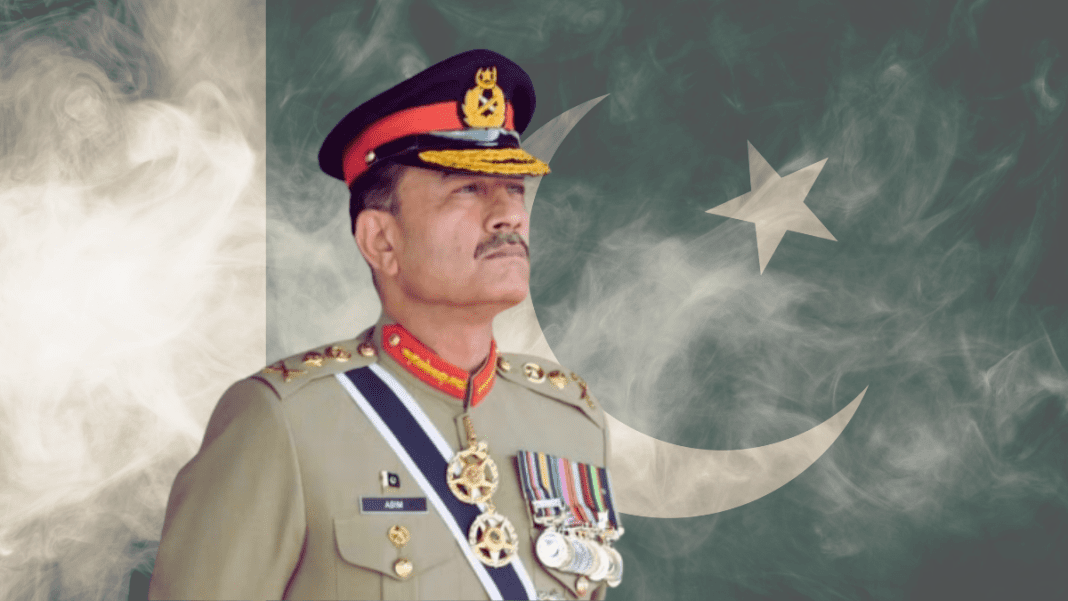

Pakistan’s Defence Chief, Field Marshal Asim Munir, has made a remarkable claim about the country’s military confrontation with India last May. Speaking in Islamabad at a national religious gathering, Munir said Pakistan felt “divine help” during the four‑day clash triggered by India’s Operation Sindoor — a military action that hit terror infrastructure inside Pakistan and Pakistan‑occupied Kashmir.
His statement has drawn attention across South Asia and beyond because it mixes religion with national defence and raises fresh questions about how Asim Munir and Pakistan’s leadership view last year’s conflict with India.
Asim Munir Says “We Felt It” During May Clashes
Field Marshal Asim Munir, Pakistan’s Chief of Defence Forces, addressed the National Ulema Conference in Islamabad earlier this December. At this gathering of Islamic scholars, he spoke about national security, religion, and regional tensions.
When describing the intense clashes with India in May 2025, Asim Munir said Pakistan’s armed forces experienced what he called “divine intervention” while their military was under heavy pressure after India’s Operation Sindoor.
Operation Sindoor began on May 7, when India launched strikes on terror targets in response to a deadly attack in Pahalgam that killed 26 civilians. Those strikes led to four days of sharp military exchanges before both sides agreed to stop military activity on May 10.
In his remarks, Munir said:
“We felt it.”
— Referring to divine help during the clash.
This was a rare public acknowledgment from a top Pakistani military official that the country faced severe military pressure from India’s offensive — even as the religious framing focused on spiritual support rather than military tactics or outcomes. Asim Munir’s comments were shared widely on local television and social media.
Religious Themes and Warnings: Asim Munir Highlights Pakistan’s Role
Munir didn’t limit his speech to the May conflict. Munir spoke at length about religion and Pakistan’s role in the Muslim world. He also drew parallels between Pakistan and the early Islamic state established by the Prophet more than 1,400 years ago. Among the 57 Islamic countries worldwide, he emphasised that Pakistan was honoured with a special role, including being protectors of Islam’s two holiest cities — Makkah and Madina — known as the Haramain Sharifain.
Alongside this religious framing, Asim Munir delivered a stark message to the Taliban government in Afghanistan about terrorism and cross‑border violence. Munir accused militant groups operating along the Pakistan‑Afghanistan border of threatening Pakistani lives.
U.S. Designates TRF as Terrorist Organisation After Pahalgam Attack Kills 26
He claimed that roughly 70% of the fighters in Tehrik‑i‑Taliban Pakistan (TTP) formations crossing into Pakistan are Afghan nationals. He used this statistic to demand the Afghan Taliban choose between supporting Pakistan or siding with the TTP.
Munir asked:
“Is Afghanistan not spilling the blood of our Pakistani children?”
The defence chief also stressed that in an Islamic state, only the state itself has the authority to declare or authorise jihad. He said no one, including non‑state groups or clerics, can issue such orders without official state approval.
May 2025 Clashes and Operation Sindoor Explained
The clash in May, often referred to in regional media as the May 2025 India‑Pakistan confrontation, began after a deadly terror attack in India’s Pahalgam region. India responded with Operation Sindoor on May 7, striking terror infrastructure across the border. Hostilities lasted until May 10, when both sides agreed to stop military actions.
The operation and ensuing clashes marked one of the sharpest escalations in tensions between India and Pakistan in recent years. However, both governments later worked towards de‑escalation and agreed to halt further fighting.
Asim Munir’s comments in December — months after the conflict ended — revisit those events in a religious and political context rather than focusing on the military details.
These remarks have generated discussion and debate inside and outside Pakistan. Some commentators have highlighted that referring to divine help after a serious confrontation with India is unusual for a high‑ranking military leader. Others see it as part of a broader narrative meant for domestic audiences.
What remains clear is that Asim Munir’s statements blend religion, military experience, and regional politics in a way that is drawing international attention.