
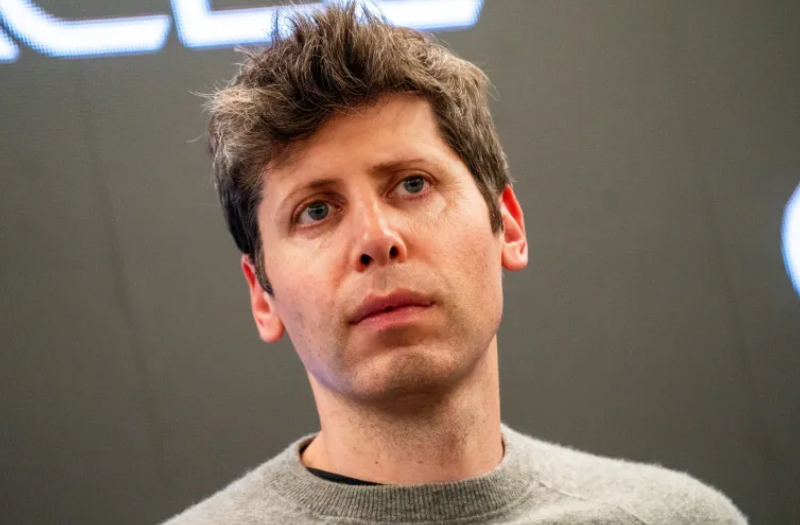

OpenAI Chief Executive Officer Sam Altman openly admitted that his company rushed into a Pentagon artificial intelligence (AI) deal that “looked opportunistic and sloppy.” His remarks followed widespread criticism and a high-profile dispute involving another AI company, Anthropic, and the U.S. Department of Defense.
Altman’s comments have sparked global discussion about AI safety, ethics, and responsible use, especially as governments and military agencies deploy powerful AI systems. Many experts and users are now questioning how companies like OpenAI make high-stakes decisions under pressure.
OpenAI Says Pentagon AI Deal Was Rushed, Altman Admits
Altman posted on the social platform X (formerly Twitter), admitting that OpenAI moved too quickly with the Pentagon agreement. He said the deal “was rushed and could have been communicated more clearly.” He added, “We shouldn’t have rushed to get this out on Friday,” acknowledging that military applications of AI are complex and need careful explanation.
ICE disclosure raises issues for OpenAI CEO Sam Altman as DHS reveals agency use of AI systems
The CEO emphasized that OpenAI is now working to clarify the language in the agreement. The revised terms will make it explicit that OpenAI’s AI models cannot be used for domestic surveillance of American citizens. Additionally, intelligence agencies like the National Security Agency (NSA) will be restricted from relying on OpenAI systems for sensitive operations.
Altman described the experience as a “good learning opportunity” for the company. He said OpenAI wants to ensure its principles are clear as the company navigates the fast-moving world of AI technology, where mistakes could have serious consequences.
By admitting the deal was hasty, Altman highlighted the challenges tech companies face when negotiating with government agencies. He also reassured employees, partners, and users that OpenAI is taking steps to address the issues raised by both the public and its internal team.
Pentagon Deal Sparks Clash with Anthropic
The Pentagon agreement came immediately after a public dispute between the U.S. military and Anthropic PBC, another major AI company. Anthropic had refused to agree to terms it saw as risky. These included provisions that could allow AI to be used for mass domestic surveillance or autonomous weapons systems without proper oversight. In response, the Pentagon blocklisted Anthropic. This move drew criticism from many users and industry experts.
Governor Gavin Newsom enforces strict AI law to protect kids from chatbot dangers – Regtechtimes
Hours after Anthropic’s blocklisting, OpenAI announced that it would allow the Pentagon to deploy its AI models in classified government networks. Altman emphasized that OpenAI disagrees with the Pentagon’s decision to blocklist Anthropic. He said the company’s goal is to promote responsible AI deployment. OpenAI also wants to cooperate with government agencies in a way that is safe and ethical.
This sequence of events put OpenAI in the spotlight. It raised questions about how AI companies balance commercial interests, ethics, and public accountability. The concerns are especially relevant when working with military or defense organizations.
Safeguards, Backlash, and Employee Concerns
The Pentagon AI deal immediately raised concerns among experts and the public about safety and ethics. Critics warned that deploying AI in sensitive government networks without strict oversight could create risks. While Anthropic had insisted on clear contractual limits to prevent misuse, particularly in surveillance and autonomous weapons, OpenAI relied on technical safeguards. The company also used internal monitoring and oversight to manage potential risks.
OpenAI CEO Sam Altman responded by assuring the public that the company’s AI systems would be closely monitored at all times. He said the AI would run on secure servers. Altman added that it would follow strict internal principles to prevent misuse. He stressed that even without formal contractual limits, the company aims for responsible deployment and strong safety standards.
ICE triples Azure data use — Microsoft says no mass civilian surveillance
The deal caused significant public backlash. Many users unsubscribed from OpenAI services in protest. Meanwhile, Anthropic’s Claude app surged to the top of Apple’s download charts. This reflected growing interest in alternatives seen as more transparent and ethically cautious.
Inside OpenAI, leadership announced an all-hands meeting. Employees were given the chance to ask questions and raise concerns. Altman emphasized that transparency and clear communication are essential. He said this is particularly important as OpenAI navigates the complex challenges of deploying AI in national security, where mistakes could have serious consequences.