
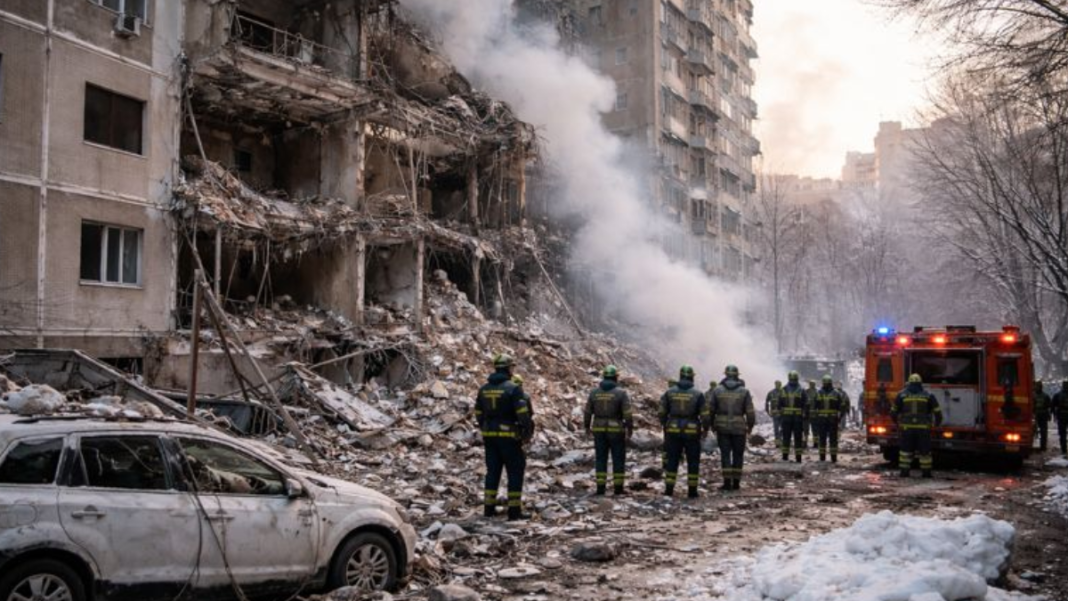

Odesa, Ukraine’s key port city on the Black Sea, is facing a growing wave of missile and drone strikes as the focus of the war shifts back to the sea. The attacks are hitting homes, schools, and essential infrastructure, disrupting daily life and placing civilians under constant pressure. Power outages, damaged buildings, and repeated air raid sirens have become routine for residents across the city.
As Ukraine’s main maritime gateway, Odesa holds major economic and strategic importance. Nearly all of the country’s sea-based food exports move through this region. This makes the city a central target, with long-range strikes replacing direct naval engagement. Civilians now live with ongoing disruptions and uncertainty as the conflict intensifies around the Black Sea.
Odesa Under Repeated Fire
In recent weeks, air attacks on Odesa have become more frequent and widespread. Missiles and drones often arrive at night, shaking buildings and waking families. Residential blocks, offices, and public spaces have been damaged, leaving many homes unsafe. Streets that once bustled with activity are now quiet, especially after dark, when power outages leave entire neighborhoods without light.
Türkiye refuses to let Ukraine war turn the Black Sea into a wider battlefield
Emergency teams respond quickly to clear debris and assist affected residents, but repeated strikes make recovery difficult. Families worry about their safety, and some who previously fled fighting in other parts of Ukraine now face displacement once again.
The regional governor of Odesa, Oleh Kiper, has said that the city’s coastal location creates both protection and vulnerability. While the sea acts as a natural barrier, it also makes layered air defense harder to build. During the heaviest recent attacks, large parts of the region lost electricity, heating, and water, with some areas still experiencing daily outages lasting several hours.
Energy Systems and Civilian Life Disrupted
Energy infrastructure has become a major target. Power stations, electrical lines, and water systems have been damaged, leading to long blackouts. Without electricity, homes grow cold, elevators stop, and hospitals and schools must rely on backup generators.
Water shortages have added to the hardship, forcing residents to collect water from emergency points. Heating systems shut down during winter, making indoor life uncomfortable and sometimes unsafe. People bundle up indoors and adjust their routines around limited access to basic services.
Diehl Defence to boost missile production after Ukraine orders 18 IRIS-T units
Lt. Col. Denys Nosicov, a territorial defense officer in the region, said the enemy is using combined missile and drone attacks to place pressure on civilians. These strikes aim not only to damage infrastructure but also to weaken morale. Alongside physical attacks, online messaging campaigns spread fear and confusion.
Attackers have also hit public buildings. Drones and missiles damaged schools, training centers, and offices, disrupting education and work. Some institutions lost valuable archives and records. Authorities paused classes or moved them to temporary locations, and many buildings remain cold, smoky, and partially unusable.
Black Sea Tensions and Strategic Pressure
The Black Sea has become a central zone of tension. While Ukrainian defenses have pushed enemy warships farther away, long-range strikes continue from air and distant launch points. This has turned shipping routes into high-risk areas and disrupted maritime trade.
Ukraine’s military leadership has stated that Russia aims to gain control of southern regions, including Odesa, to cut the country off from the sea. Chief of Staff Oleksandr Syrski said Russia has attempted to impose its terms by force, including plans to block Ukraine’s access to maritime routes.
The country’s president, Volodymyr Zelenskyy, has also spoken about the ongoing attacks on Odesa and other port cities. He said these strikes target both civilians and the economy by damaging infrastructure and reducing export capacity. He emphasized that the goal is to weaken Ukraine’s economic lifeline through the Black Sea.
Despite the challenges, defensive preparations continue across the region. Authorities are strengthening fortifications, improving air defenses where possible, and maintaining high readiness among emergency services.
For the people of Odesa, the war is no longer distant. It is felt in dark homes, damaged schools, and disrupted daily routines. As fighting intensifies across the Black Sea, the city remains under constant pressure, with civilians bearing the greatest burden of a conflict that continues to reshape life along Ukraine’s southern coast.