
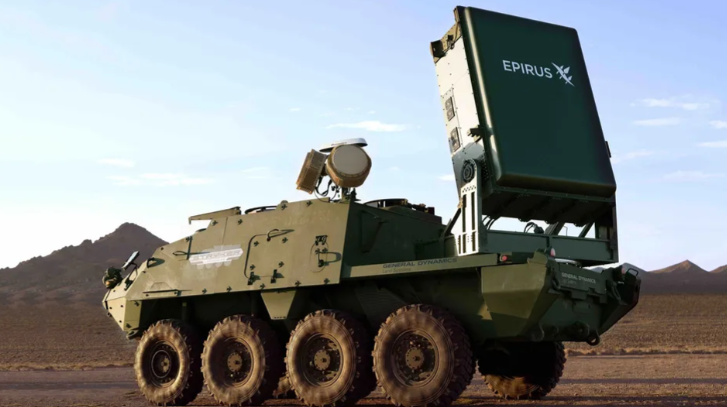

The United States military has successfully tested groundbreaking high-power microwave (HPM) weapons that can neutralize drones in seconds. These new systems, including the Leonidas and THOR, show a remarkable ability to protect military bases and critical infrastructure by taking down multiple drones at once without using traditional missiles.
HPM Weapons Show Powerful Drone Defense Results
Recent trials of high-power microwave (HPM) weapons delivered striking results, showing how effective this technology can be against modern drone threats. The Leonidas system, developed by Epirus, demonstrated strong performance by disabling 49 out of 61 drones in a single test. This showed its ability to handle multiple targets quickly and efficiently.
In another trial, the same system achieved a perfect success rate, taking down all 49 drones it targeted. This level of accuracy highlights the reliability of HPM technology in real-world scenarios. At the same time, the THOR system, developed by the U.S. Air Force Research Laboratory, also proved its strength in countering drone swarms.
US pulls key missile defenses from South Korea as interceptor stockpiles face growing pressure
These results underline the growing importance of HPM weapons in modern defense. Their ability to act quickly, cover wide areas, and reduce costs makes them a powerful solution for protecting military bases and critical infrastructure from drone attacks.
How High-Power Microwave Weapons Work
Unlike traditional weapons like missiles or guns, HPM systems do not physically destroy drones. Instead, they use concentrated bursts of electromagnetic energy to disrupt the electronics of drones, forcing them to shut down and fall from the sky. This makes the technology non-lethal and highly efficient.
Traditional defense systems, such as anti-air missiles, can be extremely expensive, with each missile costing over $3 million. In contrast, HPM weapons can target dozens of drones at once at a fraction of the cost. The beam of energy from these systems is instantaneous and does not require locking onto each drone individually, unlike laser systems. This means HPM weapons can take out entire swarms in a matter of seconds.
US urges Israel to pause strikes on Iran oil infrastructure citing risks to global energy supply
The Leonidas system is mobile and designed to protect key areas like military bases and infrastructure. Its latest Gen-II units can cover distances up to 2 kilometers. On the other hand, the U.S. Air Force Research Laboratory developed THOR and tailored it for rapid response against drone threats, providing another layer of defense for U.S. forces.
Key Advantages and Operational Details
One of the biggest advantages of HPM systems is their speed. A single pulse can disable multiple drones almost instantly, which is crucial when dealing with drone swarms that may attack in large numbers. These systems react faster than conventional weapons and give military personnel a powerful tool to protect people and assets without risking lives.
Another major advantage is cost-effectiveness. Unlike single-use and expensive missiles, HPM weapons can be recharged and reused, making them an attractive option for long-term defense. This approach reduces expenses and provides a sustainable, scalable solution to counter emerging drone threats in military operations worldwide.
The success of these trials shows that the U.S. military is expanding its capabilities to deal with modern threats. By integrating HPM systems like Leonidas and THOR into its defense networks, the military gains a fast, reliable, and affordable way to counter drone attacks.
Both systems are designed to be mobile, making it possible to deploy them quickly to areas where drone threats are highest. The U.S. military can now respond to attacks on bases or critical infrastructure with a technology that can disable dozens of drones within seconds, ensuring that defense operations are faster, safer, and more efficient.
The high-power microwave weapons tested by the U.S. military represent a major advancement in drone defense technology. With their ability to neutralize multiple drones instantly, low operational cost, and non-lethal approach, Leonidas and THOR mark a significant step forward in protecting military forces and critical infrastructure from the growing threat of drone swarms.