
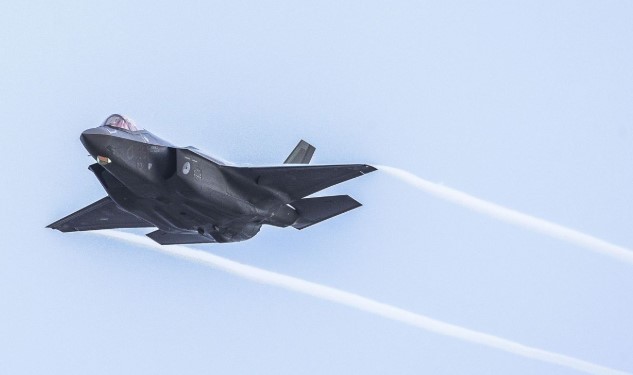

In an unusual event over the Netherlands last night, the Royal Netherlands Air Force scrambled two advanced F-35 fighter jets to intercept a mysterious drone that appeared in the Netherlands airspace. The incident, which took security forces by surprise, highlighted the speed and efficiency of national air safety measures and raised questions about unidentified objects flying in restricted skies.
Unidentified Drone Triggers Rapid Response in Netherlands Airspace
The event began when Dutch air traffic control (ATC) detected an aircraft that could not identify itself through regular radio communication. Authorities quickly realized that the object, later confirmed as a drone, was operating silently without responding to any standard signals.
Because of the lack of communication, security teams treated the drone as a potential threat. The Netherlands takes airspace violations very seriously, especially when aircraft cannot be identified. Officials said the drone’s inability to “speak” to air traffic control forced them to take immediate action.
China warns Netherlands to act responsibly after embassy denies cyberattack allegations
Within minutes, the Royal Netherlands Air Force (RNLAF) launched two F-35 fighter jets from Volkel Air Base. The jets’ advanced sensors and rapid communication systems allowed the pilots to quickly assess threats and take necessary action. The F-35s took off at high speed, scanning the skies to locate the unidentified drone and evaluate its movement within the Netherlands airspace.
F-35s Take Swift Action to Secure Netherlands Airspace
The deployment of the F-35s demonstrated how quickly national air security protocols can be activated. These modern jets not only provide defense against potential attacks but also ensure that civilian flights remain safe. In this case, the jets were able to track the drone in the Netherlands airspace without disrupting normal air traffic.
The pilots conducted a careful security scan, analyzing the drone’s speed, altitude, and direction. Despite the initial concern, authorities later confirmed that the drone did not appear to pose an immediate threat. After several minutes of surveillance, the F-35s safely escorted the drone as it left Dutch skies, ensuring no harm came to people, aircraft, or infrastructure in the Netherlands airspace.
Nexperia row softens as China lifts chip limits and Netherlands pauses takeover move
This rapid response highlights the critical role of readiness in air defense. Security teams, decision-making systems, and the Department of Defense worked in coordination to manage the incident efficiently. By acting quickly, they minimized risk while keeping civilian flights unaffected.
Airspace Security Tested by Silent Threat
Incidents like this underline the importance of constant vigilance in protecting national skies. Even when a drone is not directly dangerous, its presence can challenge air traffic management and test the effectiveness of security protocols. Authorities emphasized that their systems are designed to detect, track, and respond to unidentified objects 24 hours a day.
The silent nature of the drone, which could not communicate via standard transponders or radio, forced the security teams to rely on rapid detection and advanced aircraft technology. F-35 jets, with their state-of-the-art sensors and rapid-response capability, played a central role in preventing a possible escalation of risk in the Netherlands airspace.
🇳🇱 Netherlands shocks NATO—becomes first to fund $540M weapons for Ukraine
Officials also stressed that civilian air traffic was never in danger during the operation. The drone’s presence, while unusual, did not interfere with flights, and the F-35s returned safely to their base after completing their mission. The incident served as a real-life example of how modern air defense combines human decision-making with advanced technology to maintain safety in the Netherlands airspace.
The Dutch Ministry of Defense confirmed that the drone left the country’s airspace without incident. While the object remains unidentified, authorities said the event successfully tested the efficiency and readiness of air security operations. By responding immediately and using advanced jets, the Netherlands demonstrated its ability to handle unexpected threats in the Netherlands airspace while keeping public safety a top priority.