
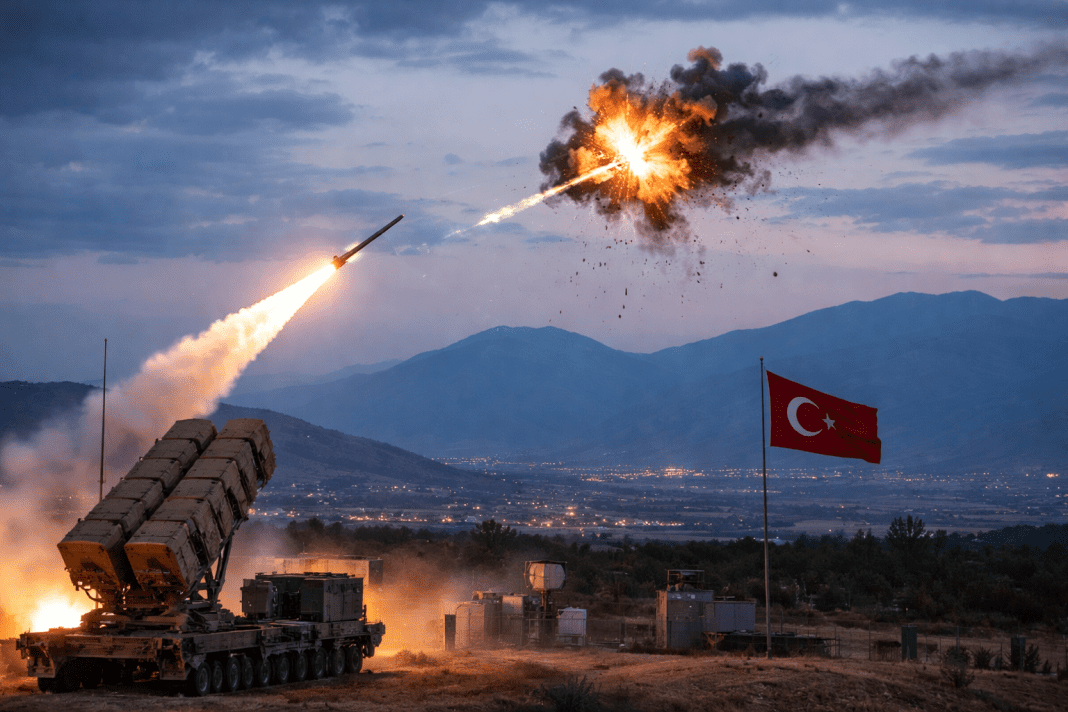

On Wednesday, NATO forces intercepted a missile heading towards Turkish airspace, raising alarms across the region. Turkish officials said the missile appeared to come from Iran, passing through Iraq and Syria before being destroyed. This is believed to be the first time NATO has intercepted a missile linked to Iran targeting a member country like Turkey.
NATO Intercepts Missile Over Turkey, Raising Concerns
The missile did not hit any part of Turkish territory, and no injuries or damages occurred. Authorities confirmed that the interception prevented any potential harm to civilians or critical infrastructure. NATO and Turkish defense teams monitored the missile closely from the moment they detected it and acted immediately to ensure all safety measures were in place.
NATO executed the interception using advanced air defense technology, showing the alliance’s ability to respond quickly to unexpected threats. These systems track and neutralize incoming missiles before they can reach populated areas. The swift action highlights the alliance’s preparedness and readiness to act in volatile situations, reassuring both member states and the public.
The event also raised questions about Iran’s role and intentions amid current tensions in the Middle East. As a NATO member, Turkey relies on the alliance’s defenses to secure its airspace. While the missile was successfully intercepted, the incident heightened vigilance among military and civilian authorities and reminded the region of the fragile nature of security during conflict.
Iran Denies Any Role in the Incident
Following the interception, Iranian military authorities strongly denied launching any missile towards Turkey. State media reported that the General Staff of the Iranian Armed Forces issued a statement. The statement emphasized that Iran respects the sovereignty of neighboring Turkey. It also categorically denied any missile attack.
“The armed forces of the Islamic Republic of Iran respect the sovereignty of the neighboring and friendly country, Turkey. They deny any missile launches towards the territory of that country,” the statement, reported by Iran’s Fars news agency, said.
This denial comes at a time when tensions across the Middle East remain high. The Iranian statement aimed to clarify that the country has no hostile intentions towards Turkey. It also stated that no missile launch had been authorized or carried out by Iranian forces.
Despite Iran’s denial, Turkish authorities maintain that a missile originating from Iran was detected before being destroyed. This contradiction between NATO and Iranian reports has created uncertainty about the details of the event. Both sides, however, agree that no harm occurred and that the interception successfully neutralized any potential threat to civilians.
Regional Security and Immediate Response
The incident drew significant attention because it involved the airspace of a NATO member country. NATO’s ability to intercept the missile so quickly demonstrated the alliance’s preparedness and its capability to protect both civilians and strategic interests in volatile situations.
Turkey issued immediate alerts and coordinated closely with NATO to ensure air defenses were fully operational. The missile’s swift destruction prevented potential harm and highlighted the effectiveness of modern air defense systems in safeguarding member countries.
Experts monitoring the situation noted that even when no damage occurs, such events are treated with great seriousness. Intercepted missiles can raise concerns about misfires, miscommunication, or technical errors, particularly in a region already tense with conflicts and heightened military activity.
U.S. Navy conducts rare submarine torpedo strike against Iranian warship in international waters
Both Turkey and NATO continue to keep a close watch on the region. Iranian authorities remain firm in their denial, reiterating that no missile launch towards Turkish territory took place.
The incident highlights the fragile security situation in the Middle East, where even a single missile in flight can escalate tensions quickly. While Wednesday’s missile was intercepted without incident, it serves as a reminder of the importance of vigilance, timely action, and effective communication among neighboring countries and military alliances like NATO.