
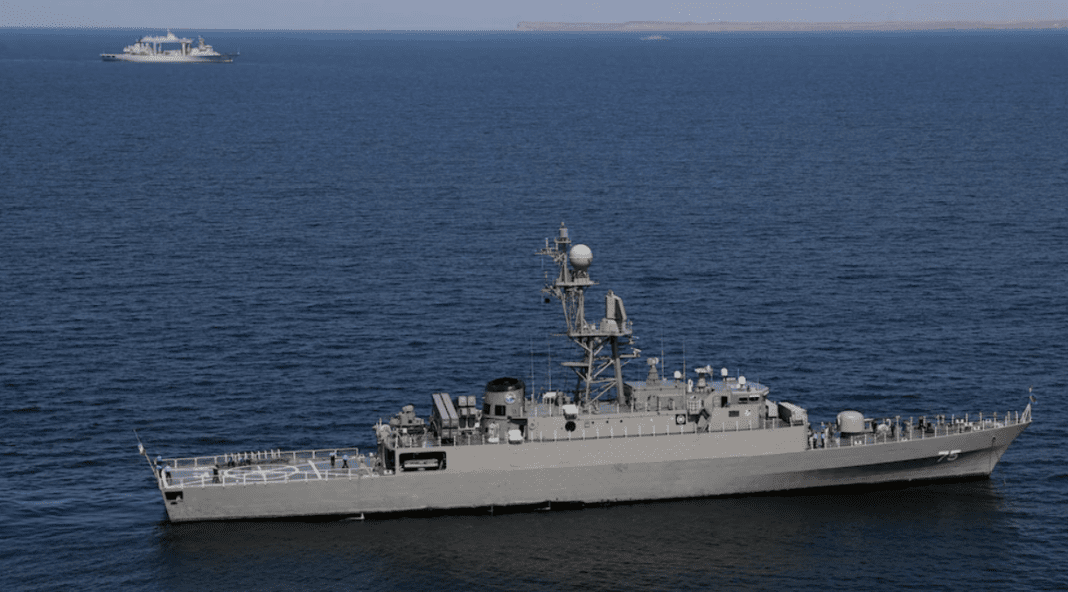

Tensions rose in Sri Lanka after Opposition MP Mujeebur Rahman revealed that the Iranian warship IRIS Dena waited 11 hours off the southern coast. The ship was then sunk by a US submarine, killing 87 sailors. The attack has escalated tensions between the US and Iran. Lawmakers and the public are questioning why the ship was not allowed to dock sooner.
“Why Made to Wait?” — Question in Sri Lankan Parliament
Sri Lanka’s Parliament saw sharp questions this week as Opposition MP Mujeebur Rahman challenged the government over the handling of the Iranian warship IRIS Dena. He said the vessel was kept waiting about 40 nautical miles off Galle Port for permission to dock.
Rahman noted that the ship had difficulty returning to Iran due to the regional conflict, yet it waited 11 hours offshore. “Why was it made to wait? Why was it not allowed to dock sooner?” he asked.
Sri Lanka launches dramatic rescue as Iranian frigate IRIS Dena begins sinking in Indian Ocean
His questions came shortly after a US submarine torpedoed and sank the frigate, killing 87 sailors. Rahman’s remarks highlighted concerns over how global conflicts are affecting Sri Lanka and the possible impact of the country’s decisions.
Lawmakers from both sides listened as Rahman demanded answers. Some said Sri Lanka should have offered safe harbor sooner, while others urged adherence to international law for foreign warships. His question, “Why made to wait?” has drawn widespread attention and scrutiny over naval protocols.
What Happened to the IRIS Dena
The Iranian warship IRIS Dena was returning to Iran after taking part in naval drills in India’s Visakhapatnam port. The ship had completed two training missions with other countries and was on a routine journey home.
Tensions escalated when a United States submarine fired a Mark 48 torpedo at the vessel in the Indian Ocean, sinking it and killing 87 Iranian crew members. The US military described the attack as a strategic strike in international waters. Defence Secretary Pete Hegseth said the Dena “met a quiet death” and highlighted the submarine’s global reach and capability.
US Navy conducts rare submarine torpedo strike against Iranian warship in international waters
The sinking is considered one of the most serious hostile naval engagements between the US and Iran in recent years. It may also be the first time a submarine torpedo has sunk an enemy ship since World War II.
Iran condemned the attack as an act of aggression. In retaliation, the Islamic Revolutionary Guard Corps (IRGC) reportedly struck a US oil tanker in the Persian Gulf. Iranian officials said the attack was a direct response to the loss of the Dena and its sailors.
These events — the sinking, the retaliation, and political debate in Sri Lanka — underscore how volatile and complex the situation has become in the region.
Questions Raised and Reactions So Far
Opposition MP Mujeebur Rahman told Parliament that the ongoing conflict prevented the Iranian warship IRIS Dena from safely returning to Iran, yet Sri Lankan authorities delayed the ship off the coast before a US submarine sank it. Yet, it waited 11 hours about 40 nautical miles from Galle Port for docking permission.
Rahman’s remarks raised several pressing questions. Why did the Dena have to wait so long? Was the Sri Lankan government slow to respond? Were there legal or strategic reasons for the delay? Did officials fully understand the risks faced by the Iranian crew while waiting at sea? Some lawmakers suggested that allowing the ship to dock earlier might have prevented the tragedy. Others noted that the attack occurred in international waters and may not have been avoidable.
Sri Lankan officials have not publicly explained their decision-making process. Some aides said they were following international rules and security protocols. Others pointed to diplomatic sensitivities.
Rahman’s questions struck a chord in Parliament. They highlighted public concern over the safety of foreign vessels. They also raised questions about Sri Lanka’s role in escalating US-Iran tensions. Authorities and lawmakers are now focused on understanding the exact sequence of events that led to the IRIS Dena being stranded offshore and ultimately attacked.