
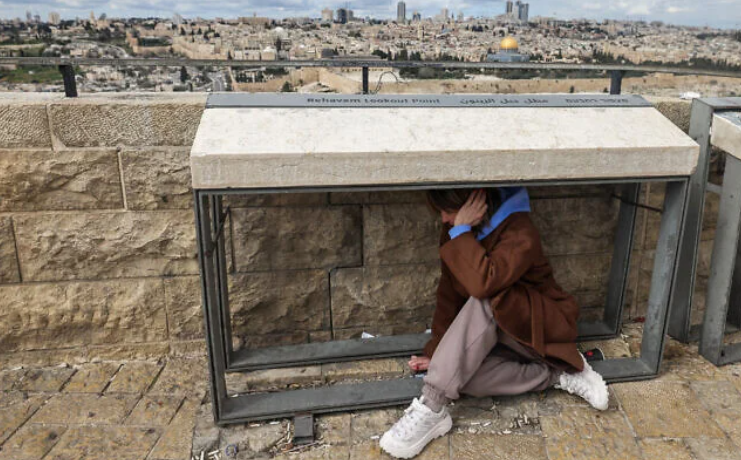

Israeli cities experienced unprecedented chaos overnight as Iran launched multiple waves of ballistic missiles targeting the country. Red alert sirens blared across major cities, including Tel Aviv and Jerusalem, as well as in central Israel and parts of the northern West Bank. Residents rushed to bomb shelters, following the emergency warning systems that urged them to stay indoors.
Chaos in Tel Aviv, Jerusalem, and Central Israel
The sudden missile barrages triggered widespread panic. Families hurried to underground shelters while emergency services coordinated efforts to keep people safe. Explosions were reported in Jerusalem, though authorities confirmed no casualties were recorded during the latest wave of attacks.
The Israel Defense Forces (IDF) confirmed that its air defense systems were actively intercepting the incoming missiles. Advanced anti-missile technologies neutralized multiple threats in real-time, allowing civilians to remain largely safe. After the third wave of overnight missile attacks, authorities allowed residents to leave shelters, signaling that the immediate danger had passed.
Iron Dome strain in Israel-Iran war pushes India to double S-400 missile shield
Officials noted that the scale and intensity of the strikes reflected the seriousness of the confrontation. Residents described a night of fear and uncertainty as sirens echoed through the streets and the sky lit up with missile interceptions. Despite the panic, the prompt response of the IDF and emergency services helped prevent casualties and maintain order in affected areas.
Israeli Counterstrikes Target Tehran Military Sites
In response to Iran’s missile barrage, Israel launched a significant wave of retaliatory strikes. Air raids targeted military installations in Tehran and other strategic locations across Iran. The operations focused on key command centers, ballistic missile systems, and strategic military infrastructure.
Authorities reported that approximately 300 Iranian defense systems and missiles were destroyed during the strikes. Israeli jets also targeted sites linked to nuclear facilities and strategic weapons production areas. Large military compounds housing command centers and internal security personnel were among the key targets. The strikes aimed to diminish Iran’s capacity to launch further attacks against Israel.
The military operations extended beyond Iran’s borders. Israeli forces conducted targeted strikes against Hezbollah positions in Beirut, where missiles had been fired at Israeli territory. During these exchanges, two Israeli soldiers sustained moderate injuries, highlighting the regional impact of the missile confrontations.
Officials emphasized that the counterstrikes were calculated and precise, aimed at neutralizing threats while protecting civilian lives. The operations demonstrated Israel’s ability to respond quickly and effectively to complex missile attacks.
Public Response and Shelters Measures
The overnight missile attacks placed significant pressure on Israel’s emergency response system. Magen David Adom, Israel’s main ambulance and emergency service, confirmed that no injuries were reported despite explosions in multiple cities. Bomb shelters were filled as millions of residents sought protection, demonstrating the scale and seriousness of the threat.
Authorities issued repeated alerts, emphasizing the urgency of the situation and advising residents to stay indoors. Schools, offices, and public spaces were temporarily closed, and transportation in affected areas was disrupted. Public compliance with safety directives played a crucial role in preventing casualties during the missile barrages.
The events highlight the ongoing high tension in the region. Iran’s repeated missile launches and Israel’s strategic counterstrikes illustrate the intensity of the military confrontation. Despite widespread fear and disruption, the combined efforts of the IDF and emergency responders ensured public safety, allowing residents to resume normal activities after the threat subsided.
The overnight missile attacks underscore the rapid escalation potential in the region. Millions of Israelis experienced the shock and urgency of seeking shelter, emphasizing both the destructive power of modern missiles and the importance of advanced defensive systems. Emergency responders and the military coordinated closely, successfully managing the crisis and mitigating the impact on civilian life.