
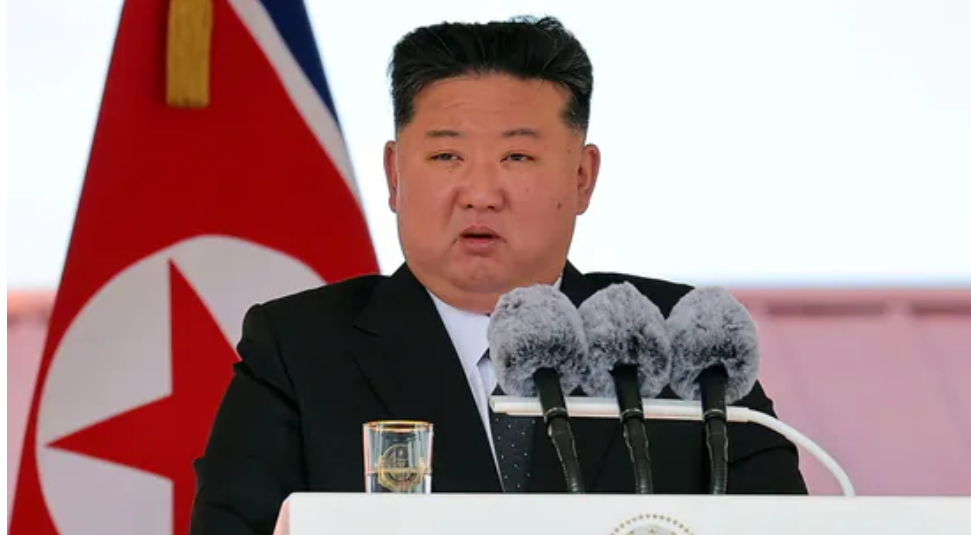

Tensions in the Middle East are rising. North Korean leader Kim Jong Un has warned that his country could enter the war if any North Korean citizens in Iran are harmed. He called their safety “not negotiable” and said they must return home safely. Because North Korea is a nuclear-armed country, the warning has raised global concerns about a wider conflict.
Kim Jong Un Warns Coalition Over Safety of North Korean Citizens in Iran
Reports say several North Korean citizens are currently in Iran. Some are believed to be technical workers or advisers linked to industrial and military projects. North Korean leader Kim Jong Un said their safety is a top priority and warned that any harm to them would be treated as a direct attack on North Korea.
The statement has raised concern among analysts because it could bring another powerful country into the conflict. North Korea has a strong military and nuclear weapons. Its possible involvement is worrying for many countries around the world.
Americans Scramble to Evacuate Middle East as 9,000 Flee War Zone in 72 Hours
The warning also came after Israeli Prime Minister Benjamin Netanyahu compared Iran to “50 North Koreas,” a remark that increased tensions. At the same time, Spain agreed to cooperate with the United States after facing heavy trade tariffs. Meanwhile, Qatar declared a state of emergency and halted natural gas production, a move that could affect global energy markets.
Military Losses and Escalating Battles Raise Global Alarm
The conflict has intensified both at sea and in the air as military operations continue across the region. Recent reports say an Iranian warship has been sunk during the fighting. The Iranian submarine IRIS Fateh has also reportedly been destroyed. These incidents have raised concerns because naval battles can quickly increase the scale of a conflict.
Experts say clashes at sea are often seen as dangerous turning points. Naval forces from several countries operate in nearby waters, which means any confrontation could involve more militaries. Because of this, even a single incident at sea can rapidly expand into a wider military crisis.
In the United States, the situation has sparked political debate in Washington. Members of the U.S. Congress have voted to block further strikes against Iran. Many lawmakers warned that expanding the military campaign could lead to a larger and more dangerous war in the region.
Despite the vote, the Pentagon is seeking about 50 billion dollars in additional funding. Officials say the money would help replace aircraft, drones, and other military equipment lost or damaged during operations. Reports suggest that nearly 2 billion dollars worth of military assets has already been lost, highlighting the growing cost of the conflict.
Russia, NATO and Regional Defenses Enter High Alert
Other global powers are reacting to the rapidly escalating crisis in the Middle East. Russia is reportedly preparing plans concerning Iranian nuclear facilities after losing contact with parts of Iran’s leadership. Officials are considering ways to secure these sensitive sites, underlining the seriousness of the situation. Control over nuclear facilities is critical due to the high risks associated with nuclear technology.
Meanwhile, NATO forces in Turkey have raised their air defense readiness. Defense reports indicate that NATO systems recently intercepted a ballistic missile heading toward Turkish airspace. This has put air defense units across the region on high alert, as Turkey’s strategic location places it close to several conflict zones.
Trump signals prolonged US campaign as Middle East conflict enters fourth day
The situation is further complicated by internal U.S. military reports. Some American officers have reportedly described the operation as part of a “divine plan for Armageddon,” introducing religious language into a highly sensitive military campaign. This contrasts sharply with North Korea’s approach, which focuses strictly on security concerns.
North Korean leader Kim Jong Un has warned that any harm to North Korean citizens in Iran would be treated as a direct attack on his country. Their presence is now considered a geopolitical “tripwire” in the ongoing Operation Epic Fury. Analysts say this warning adds a powerful new factor to the conflict, keeping military forces across multiple regions on high alert.