


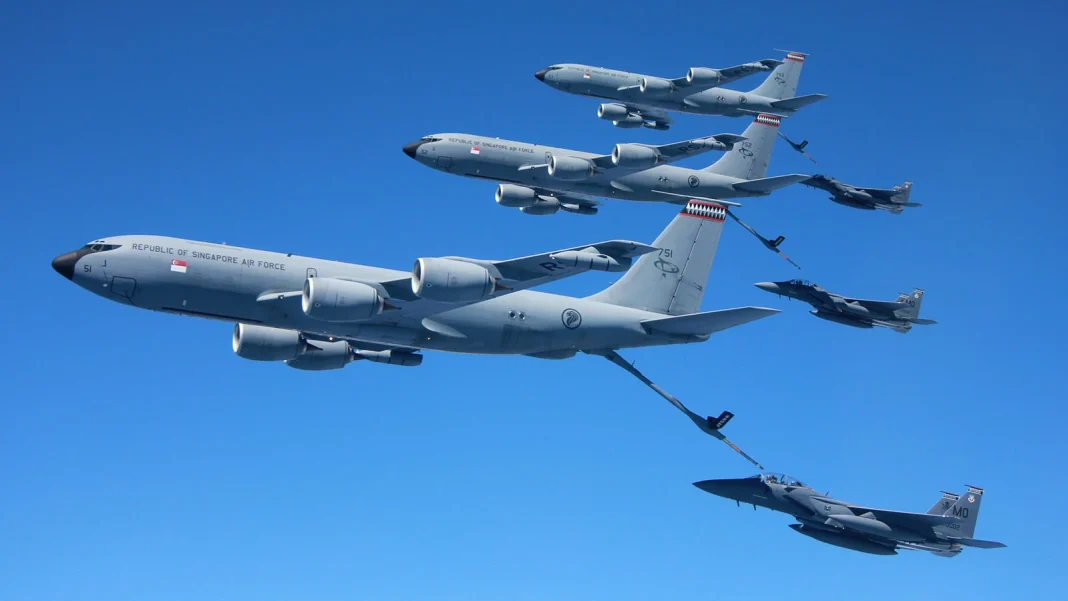


A dramatic set of conflicting claims has emerged after a U.S. aerial refuelling aircraft crashed over western Iraq, with Iranian-linked media alleging the plane was shot down while American officials insist the incident was not caused by hostile action.
According to Press TV, a broadcaster associated with the Iranian government, the spokesperson for the Islamic Revolutionary Guard Corps (IRGC) Central Military Headquarters claimed that a U.S. Boeing KC-135 Stratotankerwas struck by a missile fired by resistance groups operating in western Iraq. The report said the aircraft was conducting aerial refuelling operations when it was targeted.
Iranian state media further claimed that all six U.S. service members on board the aircraft were killed in the incident. The statement cited by Press TV said air defence systems operated by what it called the “Resistance Front” successfully engaged the tanker aircraft while it was refuelling another combat jet in the region.
However, the United States Central Command (CENTCOM), which oversees U.S. military operations across the Middle East, has rejected those claims. In an official statement, CENTCOM confirmed that a Boeing KC-135 Stratotanker supporting military operations had been lost over Iraq but emphasized that the crash was not caused by hostile fire.
According to the CENTCOM press release, the incident occurred during Operation Epic Fury, a U.S. military mission being conducted in the region.
“Two aircraft were involved in the incident. One aircraft went down in western Iraq, while the second aircraft was able to land safely,” the statement said.
CENTCOM also took to the social media platform X to clarify the circumstances surrounding the crash.
“This was not due to hostile fire or friendly fire,” the command said in its public update.
Rescue operations underway
U.S. authorities said recovery and rescue operations are currently underway at the crash site in western Iraq, although details remain limited as the situation continues to unfold.
Military officials noted that more information will be released once investigators are able to gather additional details and confirm the circumstances surrounding the incident.
“More information will be made available as the situation develops. We ask for continued patience to gather additional details and provide clarity for the families of service members,” the statement added.
The Boeing KC-135 Stratotanker is a critical component of U.S. global air power. Developed by Boeing, the aircraft allows fighter jets, bombers, and other military aircraft to remain airborne for extended periods by refuelling them mid-flight. The tanker fleet has been widely used in U.S. military operations across the Middle East for decades.
Because aerial refuelling aircraft typically operate alongside combat jets during active missions, any loss of a tanker platform can raise immediate questions about operational safety and potential hostile threats in the area.
Iran-linked claims add to regional tensions
The Iranian-linked reports suggesting that resistance forces shot down the aircraft come at a time of heightened tensions between Washington and Tehran.
Groups aligned with Iran, including several armed factions operating in Iraq and Syria, have frequently targeted U.S. military positions in the region with rockets, drones, and other weapons. However, such claims are often disputed or remain unverified until further evidence emerges.
Iranian state media’s claim that the aircraft was hit while refuelling an “aggressor fighter jet” could not be independently confirmed at the time of reporting.
The Day Stealth Died: Iran Becomes First Country to Destroy F-35 Jets in Active Combat
Security analysts note that tanker aircraft are typically protected by fighter escorts and operate at high altitudes, making successful missile strikes against them relatively rare unless sophisticated air defence systems are involved.
Trump says situation with Iran moving “very rapidly”
The crash also comes amid growing geopolitical tension involving Iran and the United States.
Speaking during a Women’s History Month event at the White House, U.S. President Donald J. Trump said the situation involving Iran was evolving quickly while praising the strength of the American military.
“The situation with Iran is moving along very rapidly. It’s doing very well. Our military is unsurpassed. There’s never been anything like it,” Trump said during the event.
He also highlighted efforts made during his earlier administration to rebuild U.S. military capabilities.
“We had a very successful first term. We rebuilt our military. That’s one of the reasons we’re doing so well now with our military,” Trump said.
Investigation likely to determine cause
For now, the exact cause of the crash remains under investigation. While Iranian-linked sources claim the aircraft was destroyed by missile fire, U.S. officials continue to maintain that no hostile activity was involved.
Military experts say determining whether mechanical failure, operational complications, or external factors caused the crash will require a detailed investigation involving flight data, radar records, and mission reports.
Iran sets three conditions to end war with US and Israel as regional tensions and strikes continue
As rescue teams work at the crash site and U.S. authorities gather additional information, the incident is likely to draw intense international scrutiny due to its potential implications for security dynamics in the Middle East.
Further updates are expected as officials release additional findings from the ongoing investigation.