


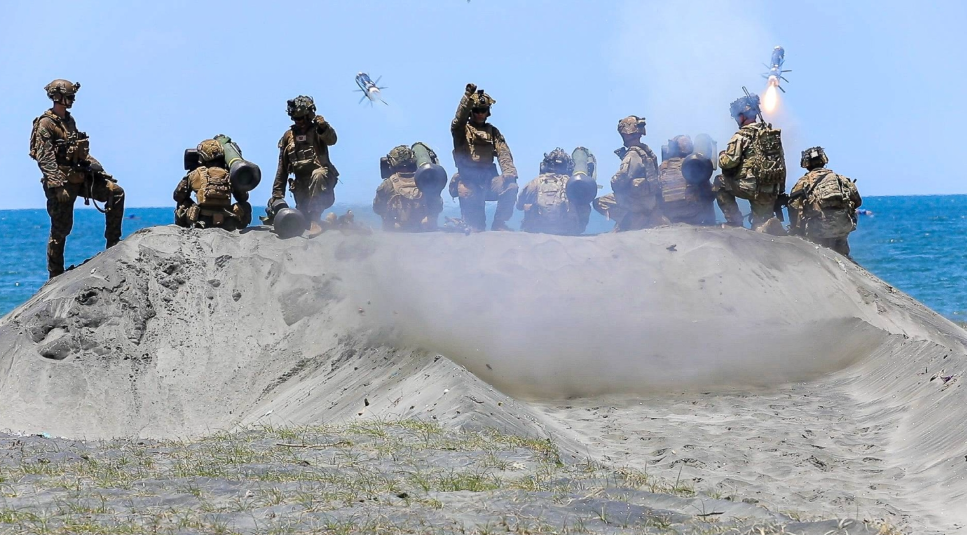


Japanese ground troops have joined major multinational drills in the Philippines for the first time, marking a new step in regional defense cooperation. The exercises involve the United States, the Philippines, Japan, and other allies working together to improve readiness and coordination in complex security situations.
First-Ever Deployment Marks a Major Step in Japan–Philippines Defense Cooperation
Japanese ground troops have joined large military drills in the Philippines for the first time, marking a significant step in regional defense cooperation. Around 420 personnel from the Japanese Ground Self-Defense Force are actively participating in the ongoing Salaknib exercises, which the United States and the Philippines hold annually.
The Japanese contingent includes combat-ready soldiers as well as specialized electronic warfare and medical support units. They are moving beyond observation and actively engaging in field training and coordinated exercises with allied forces.
US presses Japan for support as Trump-Takaichi meeting exposes alliance strain
The Joint Pacific Multinational Readiness Center 26 program conducts the drills, focusing on realistic combat-style training and improving coordination among partner nations. It aims to help different militaries operate more effectively in complex situations.
Officials say this marks a major expansion of cooperation between Japan, the United States, and the Philippines, and the first time since World War II that Japanese ground forces have taken part in such exercises in the Philippines.
Inside Salaknib and JPMRC: Large-Scale Multinational Training Across Northern Luzon
The Salaknib exercises are being carried out across multiple training areas in northern Philippines, including Fort Magsaysay in Nueva Ecija and nearby sites. These locations are being used for live-fire drills, field operations, and coordinated tactical training involving several allied forces working together.
The exercises will run until May 20 and include a broad range of military activities designed to test how well different forces can operate in complex and changing conditions. Training also focuses on modern challenges such as electronic systems and advanced battlefield environments.
The scale of the drills is large, with around 4,400 Philippine troops participating alongside about 2,800 personnel from the United States. Smaller contingents from Australia and New Zealand are also part of the operation, making it a major multinational exercise.
Japanese ground troops are taking part under the Joint Pacific Multinational Readiness Center program. Their role includes joint field maneuvers, coordination drills, and support operations with partner nations. The goal is to improve cooperation between militaries that use different systems, languages, and training methods.
The exercises include live-fire drills with real weapons in controlled environments, along with communication, movement, and planning exercises that simulate real combat situations. Officials also highlighted that the drills extend beyond traditional warfare and include electronic warfare and modern military technologies.
Expanding Military Exercises in the Philippines: Balikatan, Kamandag, and Regional Cooperation Growth
Japan’s participation in the Salaknib exercises reflects the growing expansion of multinational military training in the Philippines, which is becoming an important hub for joint defense drills involving several allied countries.
After the first phase of Salaknib ends on April 17, another major exercise called Balikatan will begin on April 20. Military planners expect this to be the largest edition so far, as forces from the United States, the Philippines, and partner nations such as Canada, Australia, France, New Zealand, and Japan join the exercise. Japan has previously taken part in smaller roles, mainly as observers, but this year it plans to send around 1,000 personnel, marking a significant increase in involvement.
Japan’s Self-Defense Forces, including maritime units, will also join the exercises, expanding cooperation beyond land-based training into naval operations.
Another exercise, Kamandag, will take place in June and July. It will focus on marine and coastal defense training with Philippine and U.S. Marine forces and will also include Japanese participation. These drills often use advanced systems such as missile defense and unmanned surveillance technologies.
The Philippines plays a key role due to its strategic Indo-Pacific location, offering both land and maritime training environments. A Reciprocal Access Agreement between Japan and the Philippines supports these activities and enables smoother coordination and legal approval for joint military operations.