
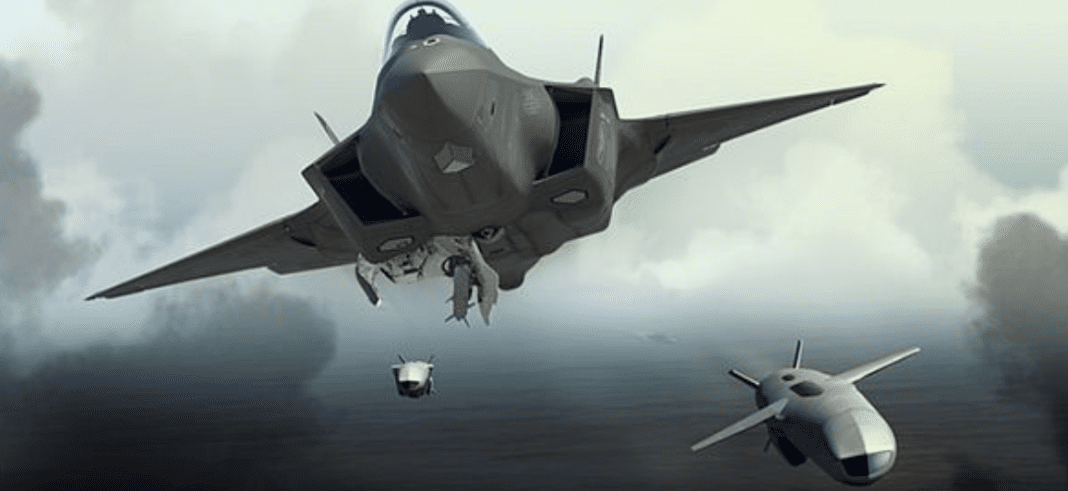

Japan has ordered more Joint Strike Missiles for its F-35A fighter jets under a new contract announced on December 19, 2025. Worth about $79 million, the deal marks Japan’s fifth follow-on order and supports continued upgrades to the Japan Air Self-Defense Force’s advanced fighter fleet.
What the Joint Strike Missiles Are and Why It Matters
The Joint Strike Missile (JSM) is a modern air-to-surface cruise missile designed specifically for the F-35A Lightning II fighter jet. A key feature of the JSM is its ability to be carried inside the aircraft’s weapons bay, rather than on external mounts. This internal carriage preserves the F-35A’s stealth, making it harder for enemy radar to detect the jet during missions.
Stealth is crucial for the F-35A, as external weapons increase radar visibility. By fitting inside the internal bay, the JSM allows the aircraft to carry out strikes while remaining hidden, even in areas with advanced air defenses. The missile can engage both land and maritime targets, including military bases, radar sites, ships, and other high-value objectives. Though exact range and speed details are not publicly disclosed, the JSM is described as a long-range precision weapon, enabling aircraft to attack from a safe distance without entering heavily defended zones.
The JSM is also designed to operate in contested airspace, where enemy radar and defenses are strong. It supports missions where survivability is critical, particularly in early-phase operations. Developed with F-35 users in mind, the missile offers flexibility in targeting and mission planning. This makes it an important tool for air forces relying on stealth aircraft for both defensive and deterrence operations.
Japan’s Growing Role as a Key JSM Operator
Japan has been one of the earliest international customers for the Joint Strike Missiles (JSM), integrating it closely with its broader F-35 program. As Japan expanded its fleet of F-35A fighters, it equipped the aircraft with advanced weapons like the JSM to match their capabilities.
The repeated follow-on contracts show that Japan is moving beyond initial testing and small purchases. Instead, it steadily increases its missile inventory to align with the size and operational needs of its F-35 fleet. The Japan Air Self-Defense Force will use the latest batch of JSMs to defend the nation’s airspace and respond to potential threats. Adding more missiles enhances the force’s ability to conduct precise strikes while keeping pilots and aircraft safer.
Japan joins a growing list of JSM operators, including Norway, Australia, Germany, and the United States. This trend reflects allied nations’ interest in missiles that stealth aircraft can launch without compromising survivability. Shared use among allies also supports interoperability, making joint exercises and coordinated defense operations easier. Japan’s continued JSM purchases highlight its commitment to maintaining a modern, accurate, and flexible defense posture, especially in scenarios involving advanced air defense systems.
How the JSM Fits Into Japan’s Defense Strategy
The latest missile order highlights how Japan is aligning its weapons inventory with the capabilities of its aircraft. The F-35A is designed to operate in difficult environments, and weapons carried by the aircraft must support that role. Internal weapons such as the JSM help preserve the jet’s low-observable design, which is central to its effectiveness.
For missions where avoiding detection is critical, internal carriage allows the aircraft to approach targets with a lower chance of being seen. This is particularly relevant in scenarios involving sophisticated radar networks and missile defenses. The JSM supports this approach by offering a balance of range, accuracy, and stealth compatibility.
The fact that this is Japan’s fifth follow-on contract suggests a sustained procurement process rather than a one-time purchase. It shows a clear pattern of building up missile stocks over time. This method allows Japan to gradually expand its capabilities while maintaining consistency in training, maintenance, and mission planning.
By continuing to invest in weapons designed specifically for the F-35A, Japan is ensuring that its advanced fighters can perform as intended. The combination of stealth aircraft and internally carried precision missiles plays a central role in modern air defense strategies.
The new contract with Kongsberg Defence & Aerospace adds another layer to Japan’s existing defense framework. It reinforces the country’s focus on precision strike capabilities, survivability, and flexibility across different mission types. As part of the Japan Air Self-Defense Force’s growing arsenal, the Joint Strike Missile remains a key element in supporting national and regional security tasks.