
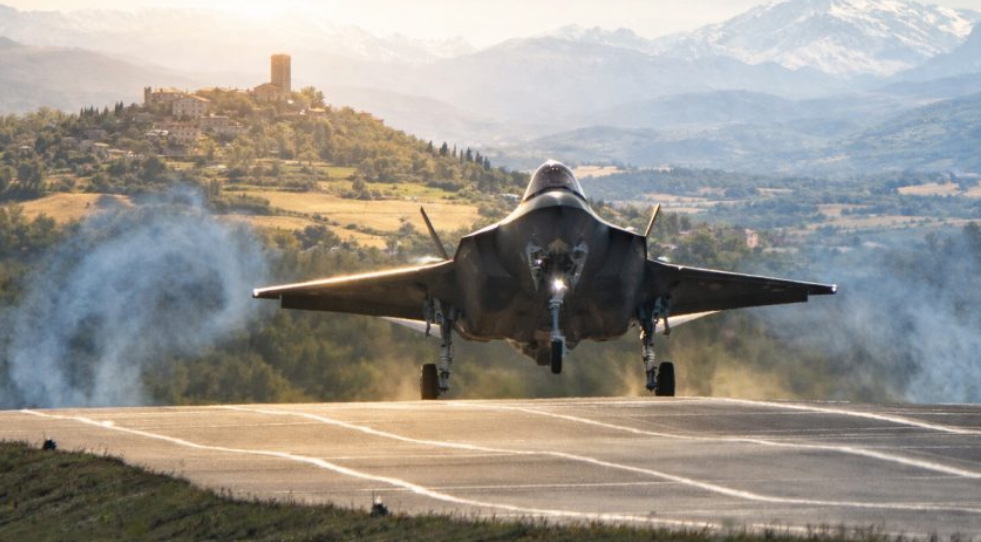

Italy is considering using its highways to land F-35 fighter jets. This move could boost military flexibility during wartime. The concept has been tested in other countries. It aims to keep aircraft operational even if airbases are threatened by missiles or long-range drones. By using highways, the air force could quickly disperse jets. This would make them harder for enemies to target. The idea comes with significant logistical challenges.
F-35 Capabilities and International Precedents
Questions have arisen about whether the F-35 can safely land on highways. Experts confirm that the aircraft is fully capable of such operations. The United States tested this concept in 2024 when F-35A fighters successfully landed on a prepared highway in Finland as part of the Agile Combat Employment program, which focuses on dispersing aircraft to reduce vulnerability. Norway also showed that F-35s can take off from highways a year earlier, proving the idea works in real-world conditions.
Italy operates both F-35A and F-35B variants. The F-35B has a short takeoff and landing capability, allowing it to use even smaller highway sections. This provides extra flexibility for operations but also demands careful planning to ensure safety and effectiveness.
Hackers strike Olympic sites in Milan and Cortina in warning to Ukraine-backing Italy
Highway operations are not as simple as landing anywhere with enough space. Specific stretches of road must be selected, prepared, and occasionally closed to traffic. These areas require coordination for both training exercises and potential real-world military operations.
Logistical Challenges of Highway Landings
Italy’s highway network covers over 7,000 kilometers, providing many possible sites for fighter operations. Selecting the right stretches is just the first step. Authorities must coordinate with civilian agencies to manage road closures, ensure safety, and prepare the roads for aircraft landings. Pavements must be strong enough for the jets, and obstacles such as traffic signs, barriers, and overhead structures need to be removed or avoided.
Implementing this capability requires significant funding and time. Preparing highway sections, conducting training exercises, and maintaining readiness all involve major investment. Italy also needs clear procedures for quickly activating these sites in emergencies. Military planners note that highway operations are not meant to replace airbases but to complement them, increasing overall resilience.
💣 NATO rift widens—France and Italy snub U.S. weapons deal amid Ukraine crisis
The strategic value of highway operations is significant. F-35s could land and take off from designated highway sections. This would allow Italy to keep its jets operational even if traditional airbases are attacked or temporarily disabled. Spreading aircraft across multiple locations reduces the risk of a single strike causing major damage. It also makes the fleet harder for enemies to track or target. This dispersal improves the overall survivability of the air force in high-risk situations.
Highway operations would also give the Italian Air Force more flexibility to respond quickly to threats. Pilots could take off from multiple locations and reposition forces as needed. They would not have to rely solely on conventional bases. This ability enhances readiness and helps maintain continuous operations under pressure. By combining mobility with dispersal, highway operations could become an important tool for Italy’s air defense.
Coordinating Military and Civilian Structures
Executing highway landings requires close coordination between military and civilian authorities. Traffic management, public safety, and infrastructure readiness are all important. Each chosen stretch of road must be regularly checked and maintained. Military exercises would likely need temporary road closures, planned in advance to reduce disruption for the public.
Training exercises are also crucial to make sure pilots can operate safely from highways. Precision in takeoff and landing is essential, especially on roads not built for aircraft. Even though the F-35 can handle such operations, the margin for error is smaller than at a standard airbase.
Italy has not announced any specific program or timeline for highway operations. Experts emphasize that this is a long-term project. Choosing suitable roads, securing funding, and creating operational protocols will take time.
Despite this, the discussions show that Italy is seriously exploring highway operations as part of its national defense strategy. The concept aims to increase flexibility and protect aircraft in case traditional airbases come under attack.