
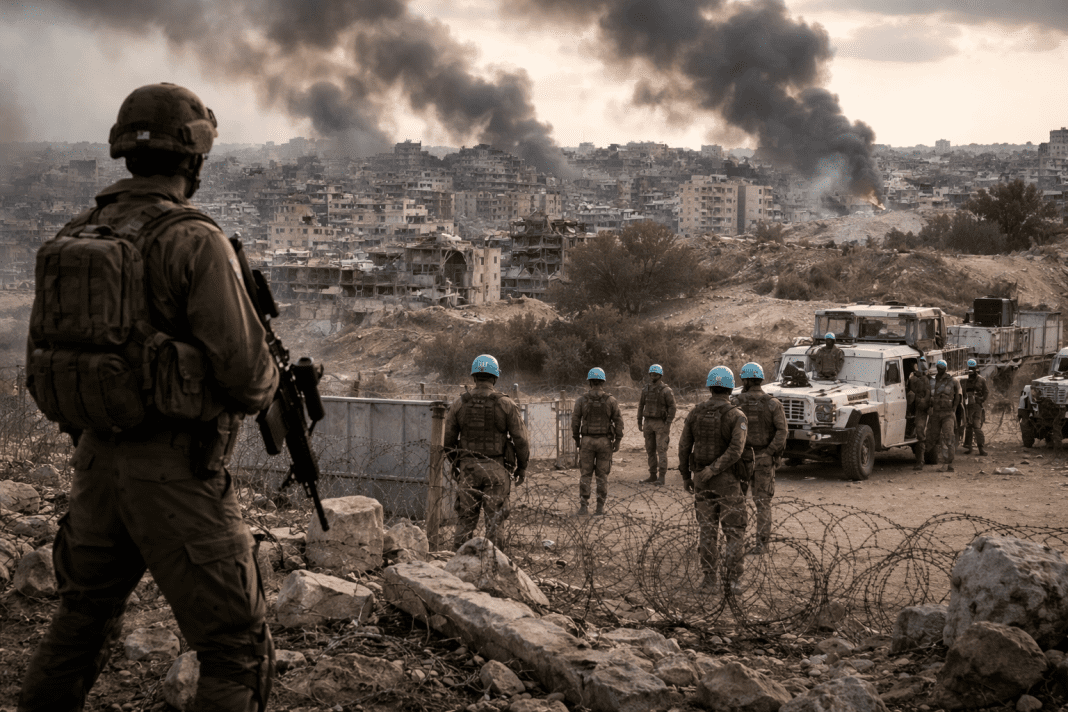

The fragile cease-fire in Gaza has brought temporary calm, but the situation remains tense. Hamas, the armed group controlling Gaza, has refused to disarm. They continue to consolidate power and engage in a low-intensity struggle with rival groups, which they appear to be winning. This means the calm could end at any time, and Israel might return to military operations. Experts suggest that if war resumes, Israel may need a different approach—one focused on counterinsurgency rather than just bombing and raids.
Why Past Military Efforts Haven’t Worked
Over the last two years, Israel has launched multiple military campaigns aimed at weakening Hamas. These operations often targeted militant areas, but without providing governance or protection for the civilians in the cleared zones. As a result, Hamas has been able to regroup and reclaim power repeatedly.
When an area is cleared of militants but left without security, it creates a power vacuum. In Gaza, this vacuum has allowed Hamas to maintain control and intimidate or eliminate rival groups. Previous strategies relied heavily on “search-and-destroy” missions, hoping that local civilians would rise up against Hamas. These efforts have not worked. Civilians are unarmed and cannot safely challenge Hamas, and armed rival groups are often too weak to make a difference.
Without proper security and governance, military operations alone cannot defeat Hamas. This is a key lesson from the ongoing conflict: eliminating armed groups is only part of the solution. Without governance, services, and protection, the vacuum is quickly filled again by the same forces.
Counterinsurgency: A Different Approach
Counterinsurgency is a strategy that combines military action with governance. It focuses on protecting civilians, providing services, and supporting alternative local authorities. The goal is to win the support of the population while gradually weakening the armed group. In Gaza, this could mean creating “safe zones” in areas cleared by Israeli forces. These zones would be protected by an international force, allowing local governance to take root and support ordinary citizens.
The International Stabilization Force (ISF) is a proposed solution to achieve this. The ISF would be made up of international troops and trained police who could protect civilians in cleared areas. Unlike direct combat forces, the ISF would focus on safety, order, and local governance. People in these areas could receive identification, access services, and rebuild their lives without fear of attack. By doing so, an alternative power structure could emerge that does not rely on Hamas.
This strategy has historical precedents. In post-World War II Germany, Allied forces established military governance to rebuild society before giving citizens the authority to govern themselves. In Gaza, the ISF could similarly provide security and services to create a visible alternative to Hamas.
Challenges of Implementing Counterinsurgency
Creating a safe and governed area in Gaza is not simple. One challenge is forming the ISF itself. Countries willing to contribute troops and police, such as Indonesia, are ready only for peacekeeping, not combat. Deploying these forces requires international approval, which can be slow, and some Arab countries prefer to wait for Palestinian consent, which is currently unavailable because there is no representative Palestinian government in Gaza.
Timing is critical. The longer Hamas consolidates its control, the harder it becomes to remove them and protect civilians. Every delay gives Hamas the chance to purge opposition groups, making any future military or governance effort more difficult. Immediate deployment of an ISF, even in a limited capacity, could protect civilians and opposition groups and begin establishing governance structures before Hamas strengthens its position further.
Israel carries out airstrikes on southern Lebanon as ceasefire monitoring continues
Even a small-scale deployment could cover tens of thousands of residents. By providing security, services, and a governing framework, the ISF could shift the balance of power in Gaza without relying solely on violent confrontation. This approach combines elements of both “carrot and stick”: protection and benefits for civilians, along with the military presence to deter armed attacks.
Israel’s previous campaigns have shown that without governance, bombing and raids alone cannot defeat Hamas. Counterinsurgency provides a path that focuses not only on weakening armed groups but also on building stability and safety for civilians. By creating safe areas and supporting local governance, an alternative power structure could emerge in Gaza, giving residents hope and reducing Hamas’ influence.