

Seamus Culleton is an Irish plasterer. He has been held in harsh ICE detention in the U.S. for nearly five months. He was arrested for overstaying his visa. Culleton refuses to accept what he claims were forged deportation documents. His case is unusual for a white European in a system often criticized for targeting immigrants of color.
Harsh Detention Conditions in Texas
Culleton was first held in a small, overcrowded cell for five days and later moved to an ICE facility in Buffalo, New York. While there, an ICE agent asked him to sign documents agreeing to his deportation. Culleton says he refused, instead marking a box stating he wanted to contest his arrest. He listed his grounds for contesting as being married to a U.S. citizen and having a valid work permit.
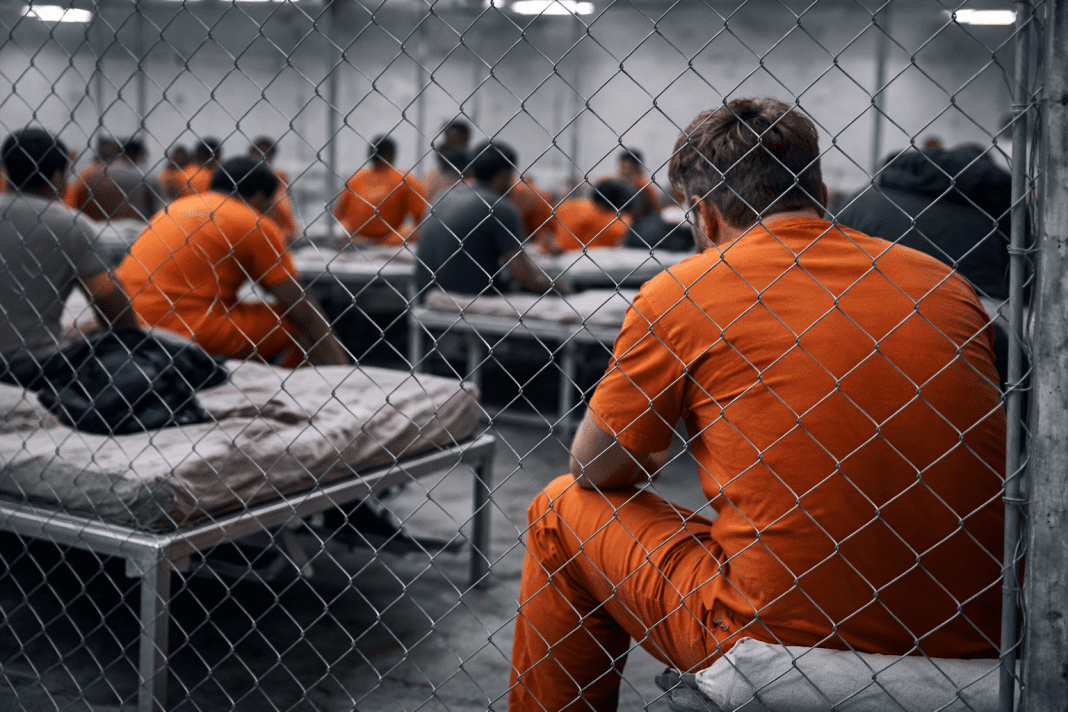
Things became even more difficult after he was transferred to El Paso, Texas. There, Culleton describes being confined in a large, cold, and damp room with over 70 other men. Meals are reportedly small, “child-sized portions,” leading to fights over food and juice. He describes the toilet facilities as filthy and says detainees are allowed outside for fresh air and exercise fewer than a dozen times in nearly five months. Most detainees do not speak English, and Culleton notes the atmosphere is full of “anxiety and depression.”
These conditions reflect complaints that have emerged from ICE facilities nationwide. According to past reports, Congress members have faced resistance when attempting to inspect detention centers. Judge orders forcing access to these sites have occasionally revealed alarming realities about life inside ICE facilities.
Legal Confusion and Disputes Over Documents
Culleton’s case has also drawn attention because of disputes over the paperwork involved. Two ICE agents claimed he signed documents agreeing to deportation while in Buffalo, but Culleton insists the signatures are not his. His attorney, Ogor Winnie Okoye of BOS Legal Group in Massachusetts, appealed to a federal court, but the judge ultimately sided with ICE despite noting multiple irregularities in the agency’s documents.
This legal limbo has left Culleton in an uncertain and stressful situation. He cannot appeal under U.S. law, even though he wishes for handwriting experts to examine the disputed documents. He also believes video footage from his interview in Buffalo would show he refused to sign any deportation forms. Culleton describes the waiting as “psychological torture” and says facility officials recently tried again to get him to sign a deportation order, which he refused.
Civil conflict fears rise in the US as ICE expands power and political trust collapses
Culleton contrasts this ongoing detention with his application for a green card. “You have one section of the government trying to deport me, and another trying to give me a green card,” he said. This highlights the contradictions that can arise within the U.S. immigration system, especially when bureaucratic errors or disputed documents are involved.
ICE Detention Sparks International Attention
Homeland Security spokesperson Tricia McLaughlin has denied allegations about the harsh conditions in El Paso. She said ICE facilities maintain higher detention standards than most U.S. prisons. McLaughlin also said Culleton could have been immediately removed to Ireland. However, he chose to stay in ICE custody.
Culleton says he stayed because he refused to accept what he claims were forged deportation documents. His case has drawn attention because he is a white European immigrant. Cases like his are unusual in a system often criticized for targeting immigrants of color.
Federal authorities arrest Kyle Wagner over alleged threats targeting ICE agents online
Critics argue Culleton’s situation exposes bigger issues within ICE’s policies. It raises questions about fairness, transparency, and consistency. This is especially true when someone less likely to face harsh enforcement ends up in extreme conditions.
The story has gained international attention. Irish media reports quickly spread across the Atlantic. Culleton remains in ICE custody. He continues to contest the deportation orders. His experience shows the challenges many face in the U.S. immigration system, regardless of nationality or background.