
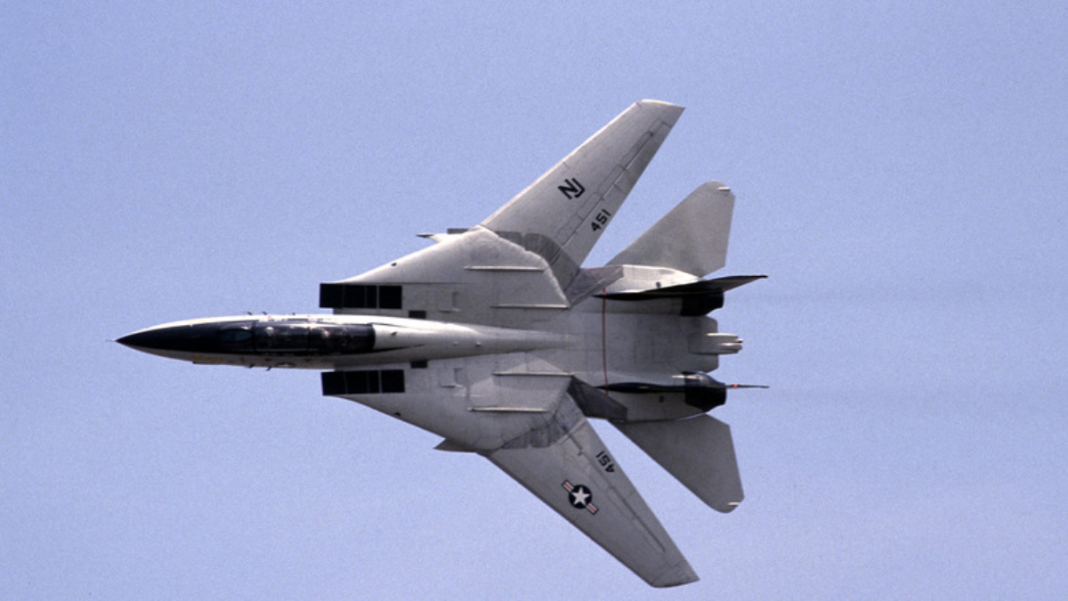

Recent airstrikes linked to the ongoing Iran conflict have raised questions about the fate of the F-14 “Tomcat,” one of the most iconic fighter jets ever built. Satellite images and videos suggest that Israeli strikes may have hit several of these aircraft at Iranian airbases.
The F-14 is a Cold War-era jet that was once among the most advanced in the world. Today, Iran is believed to be the only country still operating it. This makes any damage to these jets especially significant.
The strikes appear to have targeted aircraft parked on the ground. Some images show damaged jets, while others suggest that certain targets may not have been real aircraft. Experts have pointed out that some visible jets could be decoys placed to confuse surveillance.
Because of this, it is still unclear whether all the damaged aircraft were operational. However, even the possibility that the last working F-14s may have been destroyed has drawn global attention.
How the F-14 reached Iran and survived political change
The presence of the F-14 in Iran dates back to the 1970s. At that time, Iran, under Shah Mohammad Reza Pahlavi, was a close ally of the United States. During a 1972 visit by U.S. President Richard Nixon, Iran expressed interest in buying advanced military equipment.
The United States agreed to sell the F-14, making Iran the only country outside the U.S. to operate this aircraft. Iran received 79 jets along with training, spare parts, and advanced missile systems.
White House eyes Iran’s Parliament Speaker Ghalibaf as potential key to future talks
This relationship changed after the 1979 Islamic Revolution. The Shah was removed from power, and a new government led by Ayatollah Ruhollah Khomeini took control. Relations with the United States collapsed, and strict sanctions were imposed.
At first, there were discussions about selling the F-14s back. However, these plans did not move forward.
Despite the lack of support and spare parts, Iran kept the aircraft. When war broke out with Iraq in 1980, the F-14 became an important part of Iran’s defence. Pilots trained before the revolution returned to service and helped train others.
During the Iran-Iraq War, the F-14 played a major role in protecting airspace. It was credited with shooting down many enemy aircraft and became a key asset despite limited resources.
Keeping the F-14 flying under heavy restrictions
Maintaining the F-14 fleet without official support was a major challenge. Iran used several methods to keep the aircraft operational over the years.
One method involved using “hangar queens,” which are non-working aircraft used for spare parts. This allowed a small number of jets to continue flying while others were dismantled.
Israel intensifies Beirut airstrikes and captures Hezbollah Radwan fighters in south
Iran also worked on developing its own repair systems. Engineers tried to recreate parts and adapt existing equipment. In some cases, different types of missiles were modified to work with the aircraft.
In recent years, only a small number of F-14s were believed to be operational. Some estimates suggested that around 10 aircraft were still in use.
Smuggling networks and rising concerns over spare parts
In addition to domestic efforts, international smuggling networks were used to obtain spare parts. Over the years, there were several cases involving attempts to illegally send F-14 components to Iran. These efforts showed how important the aircraft remained.
Concerns about Iran accessing spare parts were so serious that when the United States retired its own F-14 fleet in 2006, many of the planes were destroyed instead of stored. This was done to prevent parts from being reused.
The recent airstrikes have now brought the status of these jets into question. While some reports claim several aircraft have been destroyed, others suggest that some of the targets may have been decoys.
Even though the F-14 is no longer considered effective against modern fighter jets, it remains an important symbol of military history. The latest images and reports suggest that this long and unusual chapter involving the aircraft may now be nearing its end, although full confirmation is still awaited.