
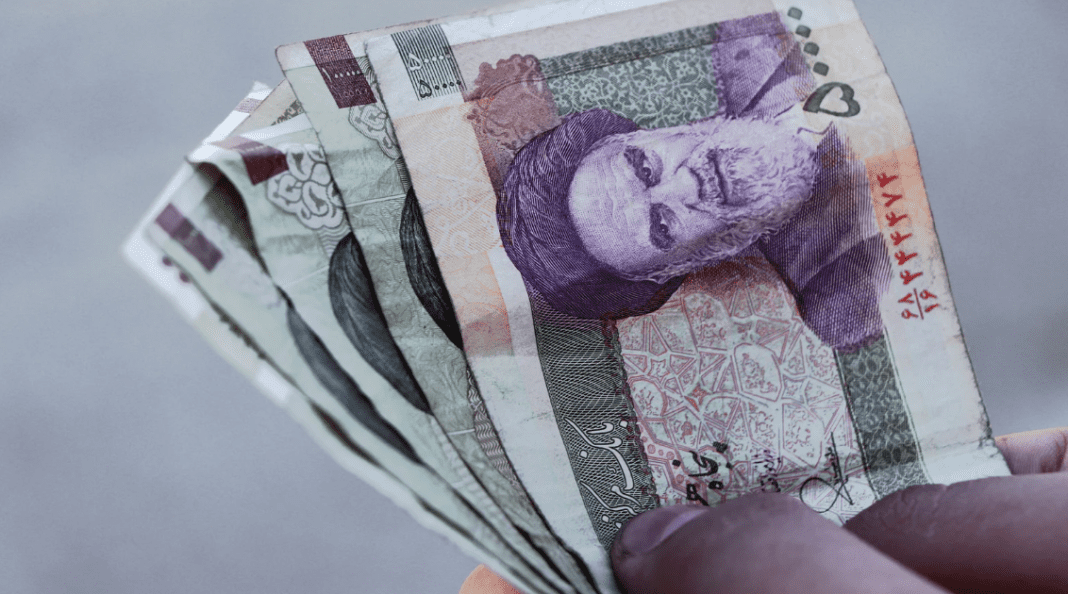

Iran is facing one of its toughest economic crises in decades. The country’s currency, the rial, has lost tremendous value over the years, leaving everyday life more expensive for millions of people. A key reason behind this crisis is the influence of the Islamic Revolutionary Guard Corps (IRGC), which controls large parts of Iran’s economy. Understanding how this powerful organization operates helps explain why the currency struggles and why ordinary Iranians feel the impact so sharply.
How the Revolutionary Guard Took Control
The IRGC is not just a military force. Since its creation after the 1979 revolution, it has acted as a parallel center of power, with both political and economic influence. Originally set up to protect the country’s Islamic foundations, the IRGC also expanded its reach during the Iran–Iraq war from 1980 to 1988. At that time, it built independent logistics and engineering capabilities to support the military.
After the war, the revolutionary guard turned these capabilities toward business. Its main engineering arm, Khatam al-Anbiya, began winning state contracts for construction, energy, and infrastructure projects. Over time, the organization expanded into nearly every profitable sector, including ports, telecommunications, transport, mining, and oil and gas.
Many of these contracts were awarded without competitive bidding and operated with minimal civilian oversight. This created a “dual economy”: one part for the public and private sectors, and another controlled by military-linked groups. Because of this setup, the IRGC and its associated companies could operate more efficiently than private businesses, especially under international sanctions, further concentrating wealth and influence.
The Iranian government often describes this system as a “resistance economy,” designed to survive sanctions and external pressure. However, in practice, it has allowed a small group of military and security-linked actors to dominate key resources, while ordinary citizens and businesses face increasing economic hardships.
Sanctions and Currency Instability
Iran has faced strict international sanctions for decades. These restrictions limit its ability to sell oil directly and have forced the country to rely on costly indirect trade routes. Ships carrying Iranian oil often use “shadow fleets” or offshore storage to avoid detection, which reduces the price Iran receives per barrel.
Even when Iran manages to sell oil to countries like China and Malaysia, it earns far less than it could under normal circumstances. For example, in one year, Iran’s oil exports brought in about $23 billion, but the country could have earned roughly $5 billion more if it had avoided the hidden costs of sanctions.
IRGC Captain’s Sinister Plot: Shocking Murder of U.S. Citizen in Iran Revealed
These financial pressures are reflected in the value of the rial. At the time of the 1979 revolution, one U.S. dollar was worth about 70 rials. By early 2026, it had risen past 1.4 million rials, meaning the currency lost nearly 20,000 times its value over four decades. With access to foreign currency heavily controlled, most Iranians cannot buy dollars at the official state rate, which is often reserved for businesses connected to the IRGC. This restriction turns access to dollars into a political privilege, creating frustration and uncertainty for ordinary people.
Everyday Impact and Public Anger
The dual economy and currency instability have real-life consequences. Rising prices and inflation make basic goods harder to afford, pushing more Iranians into poverty. In the past decade, nearly 10 million people have fallen below the international poverty line, and 40% of the population is now at risk of slipping into poverty.
One place where the economic pain becomes visible is Tehran’s Grand Bazaar. This historic market is a commercial hub, connecting merchants, supply chains, and customers. It has also become a center of protest. When the bazaar shuts down or fills with demonstrators, it signals widespread frustration over high prices and economic mismanagement. Protest chants in the streets often reflect both anger at the government and resentment toward the economic privileges enjoyed by the IRGC.
Qatar may host Iran’s hypersonic Fattah protection as lawmaker urges IRGC shield against Israel
Currency instability in Iran is no accident. Policies that allocate foreign currency at subsidized rates favor politically connected actors, while inflation pushes households and firms to move savings into dollars and goods. This cycle further weakens the rial and makes life more expensive for the general population.
Iran’s economic difficulties are closely tied to the IRGC’s influence. By controlling vital sectors, the organization has secured both wealth and power, but ordinary Iranians face the consequences: a shrinking currency, rising prices, and increasing financial vulnerability.