


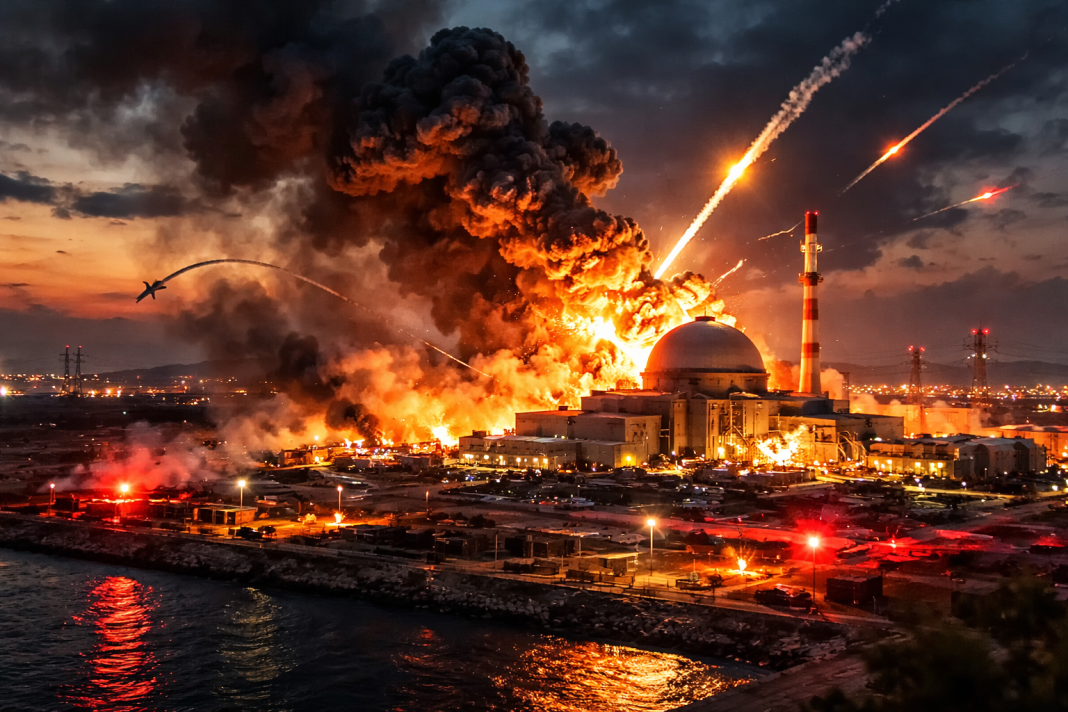


Tensions in the Middle East have sharply intensified after a projectile landed near Iran’s Bushehr Nuclear Power Plant, a key civilian nuclear facility located along the country’s southern coast. According to official statements shared with the International Atomic Energy Agency, the incident occurred on Tuesday evening and involved a strike hitting the premises of the plant.
Missile Incident Near Bushehr Raises Global Alarm
Authorities confirmed that the projectile did not cause any physical damage to the nuclear infrastructure. No workers or staff were injured in the incident. Radiation levels around the site also remained normal, easing immediate fears of a nuclear accident.
The Bushehr plant holds major importance for Iran’s energy sector. It is the country’s only operational nuclear power plant and plays a vital role in electricity generation. Any threat to such a facility raises serious global concerns, especially given the risks linked to nuclear safety.
US and Israel signal diverging war aims in Iran conflict as strikes expand beyond nuclear targets
The strike reportedly hit the vicinity of the plant around evening hours. Initial reports suggest that the impact occurred outside critical operational zones. Despite the lack of damage, the event has triggered widespread concern due to the sensitive nature of nuclear facilities and the potential consequences of escalation.
Claims of Retaliation Targeting Israeli Nuclear Sites
Following the incident, pro-government and military-linked accounts claimed that Iran responded by targeting nuclear-related sites in Israel, including facilities in Dimona and the Negev region. These claims suggest the move may have been a retaliatory action after the strike near Bushehr.
However, there has been no independent confirmation of these claims. Officials have not verified whether any missiles or drones successfully hit these Israeli locations. The lack of verified information has created uncertainty, with different narratives emerging across platforms.
The Dimona region is widely known for hosting Israel’s primary nuclear research center. Because of its strategic importance, any reported attack on this area quickly draws international attention. Even unconfirmed claims can increase tensions, as such sites are considered highly sensitive.
The broader conflict between Iran and a coalition led by the United States and Israel has already entered its third week. The situation has seen repeated exchanges of missile strikes, drone attacks, and military operations across multiple regions.
In recent days, several countries in the Gulf region have reported intercepting incoming missiles and drones. These developments indicate that the conflict is expanding beyond its original boundaries, affecting neighboring nations and increasing the risk of wider regional instability.
International Reactions and Rising Concerns Over Nuclear Safety
Global reactions to the Bushehr incident were swift and serious, reflecting the sensitivity of any event involving nuclear infrastructure. The International Atomic Energy Agency warned that even though no physical damage was reported, any military activity near nuclear facilities is extremely dangerous. It stressed that such incidents increase the risk of accidents that could have far-reaching consequences, not just for one country but for the entire region. The agency urged all sides to exercise maximum restraint and avoid actions that could escalate tensions further.
Russia also strongly condemned the strike near the Bushehr plant. Officials confirmed that the facility remains safe and radiation levels are normal at present. However, they emphasized that any attack near nuclear infrastructure carries serious risks, including the possibility of environmental damage and threats to human safety. They warned that continued escalation could lead to unpredictable and severe outcomes.
North Korea warns of nuclear support for Iran if US or Israel targets new leader Mojtaba Khamenei
China criticized actions that violate international law and called for calm. It urged all parties to return to diplomatic negotiations and avoid military steps that could worsen the situation. At the same time, several Western nations raised concerns about Iran’s nuclear program, particularly its enriched uranium stockpile and limited cooperation with international inspectors.
The conflict is already affecting global markets, shipping routes, and regional stability. Countries have also condemned attacks on civilian areas, warning they violate international law and endanger lives.