
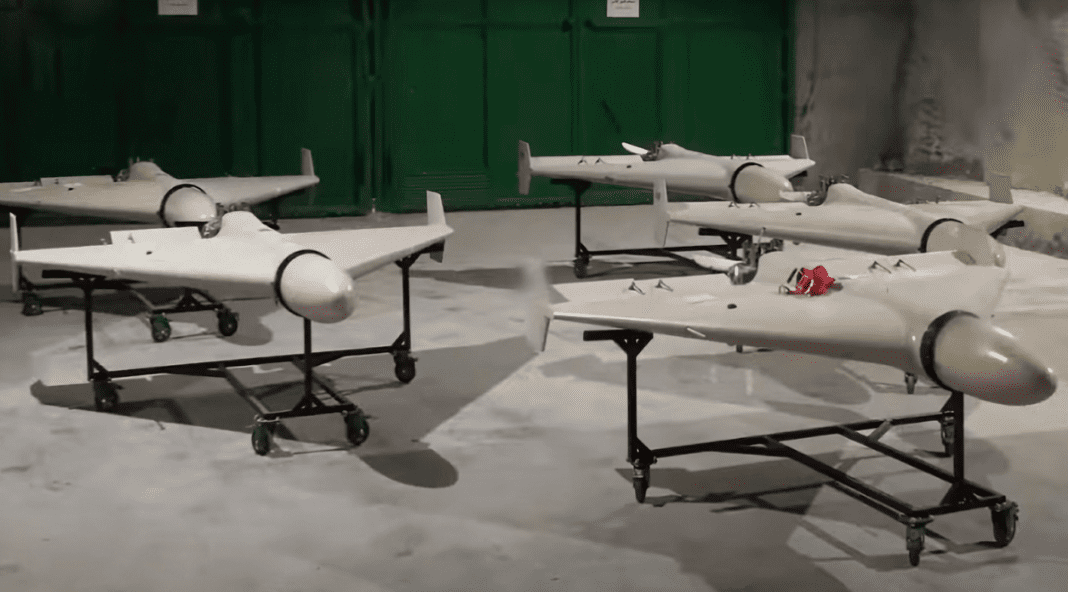

The war in Ukraine has reached a point where control of the skies is as vital as ground combat. As fighting drags on, air power—especially drone technology based on Iranian designs—has become a major tool for pressure and disruption. Built up through years of cooperation and technical exchange, this drone technology is now being used at scale, shaping daily life and the balance of capabilities across Ukraine.
Iran’s drone technology enters the battlefield
Drones supplied and designed with Iranian drone technology have become a central part of Russia’s air operations in the Ukraine war. These are not small or simple devices, but long-range attack systems that rely on advanced drone technology to travel hundreds of kilometers and strike targets far from the front lines. Often described as kamikaze-style systems, these drones crash into targets and explode on impact, making them effective despite their relatively low cost.
Because these drones cost less and are easier to produce than cruise missiles, Russia can launch large numbers in repeated attacks. These strikes strain and sometimes overwhelm air defense systems. Even when Ukrainian forces intercept many, others still get through, causing damage and maintaining constant pressure.
Russia steps into Middle East diplomacy as Putin holds talks with Netanyahu and Iran’s president
Iran spent years developing cost-effective drones under heavy restrictions, focusing on systems that can bypass stronger defenses without expensive components. Iran transferred that experience into Russia’s program. Over time, Russia replaced missiles with drones as a more practical option for frequent long-range attacks.
Wreckage found in Ukraine shows that Russia now uses newer and faster models, which reduce reaction time for defenders. Iran has also trained production teams, enabling Russia to manufacture them domestically at a faster pace and reduce reliance on imports.
Mass production and pressure on air defenses
One of the biggest challenges for Ukraine is the sheer number of drones Russia is now deploying. Intelligence assessments indicate that both sides produce around a thousand drones a day using expanding drone technology capabilities. Even if only some are launched, the volume stretches air defense systems and exhausts limited resources.
Iran gains powerful AML–CFT support from Russia, challenging FATF’s global control
Air defenses aim to stop missiles and aircraft, but defending against threats created by drone technology comes at a high cost. In many cases, missiles used to shoot down drones cost far more than the drones themselves. This forces defenders to make hard decisions about which threats to engage and which to risk letting through.
Russian forces often launch drone attacks in waves. While Ukrainian forces intercept many drones, others slip past defenses. Even when damage remains limited, repeated alarms, explosions, and fires place heavy strain on civilians and emergency services, and firefighters and repair crews must respond again and again under risky conditions.
Why drones have become central to the conflict
At the start of the war, forces mainly used drones for surveillance and tracking enemy positions. Over time, the role of drone technology expanded, and drones became tools of constant pressure rather than limited strikes.
Iranian-designed drone technology suits this role because it remains simple, reliable, and easy to produce in large numbers. Loud engines often warn civilians moments before impact, creating fear and psychological stress even when damage stays limited.
Suspected Iranian arms cargo ship sinks in the Caspian, spotlighting a shadow war route to Russia
From a military perspective, drone technology provides flexibility. Forces can launch drones from multiple locations, require less logistical support, and avoid putting pilots at risk. Inside Ukraine, the growing drone threat has forced changes in defense planning, with greater focus on mobile air defenses, electronic warfare, and early warning systems.
Drones are no longer a secondary element of the conflict. Powered by rapidly advancing drone technology, they have become a daily presence, reshaping both military operations and civilian life as unmanned aircraft play an increasingly central role in the skies.