

Iran has once again found itself at the center of global attention after strong remarks by its president sparked widespread debate and concern. Many readers are asking a simple but serious question: Did Iran officially declare war on the United States? The answer requires careful explanation, clear facts, and an understanding of what was actually said.
What Exactly Did Iran’s President Say About War?
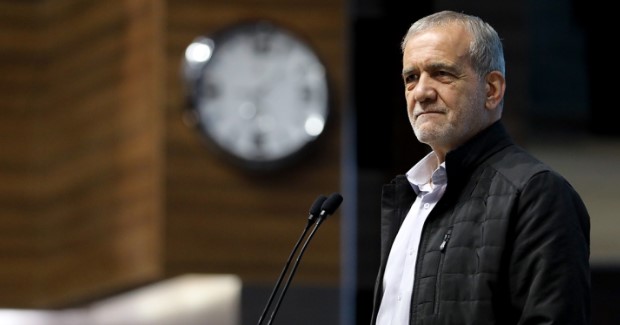
Iranian President Masoud Pezeshkian made the remarks during an official interview with Iranian state media on Saturday. In that interview, he said Iran is facing what he described as an “all-out war” with the United States, Israel, and Europe.
His words were strong and emotional, but they were not a formal declaration of war.
Pezeshkian said these countries do not want Iran to “stand on its own feet.” By this, he meant that Iran believes Western powers are trying to weaken the country so it cannot become independent or powerful.
Despite Chemical Weapons Past, Iran Reportedly Weighs Unconventional Missile Options
He explained that, in his view, the conflict Iran is facing is not just military. He said the pressure comes from many directions at the same time. According to him, Iran is under economic pressure through sanctions, political pressure through isolation, cultural pressure through media and influence, and security pressure through military threats.
The president compared the current situation to the Iran-Iraq war of the 1980s, a major conflict that lasted eight years and caused massive loss of life. However, he said today’s situation is even more complex.
During the Iran-Iraq war, he said, the enemy was clear. Missiles were fired, and Iran knew where attacks came from and where to respond. Today, he said, the pressure is less visible but more widespread, surrounding Iran from all sides.
Importantly, Pezeshkian did not say Iran is launching an attack or formally declaring war. His comments described how Iran feels it is being treated and pressured, not a legal or military announcement of war.
Why Were These Comments Made Now?
Timing is key to understanding why these remarks were made.
The comments came just before Israeli Prime Minister Benjamin Netanyahu’s scheduled meeting with US President Donald Trump. According to reports from NBC, Netanyahu planned to brief Trump on possible future military actions against Iran.
These discussions reportedly focused on concerns that Iran is rebuilding air defense systems damaged during a recent conflict and expanding ballistic missile production facilities. These developments have raised alarms in Israel and the United States.
Iran sees these discussions as part of ongoing threats against its security. From Tehran’s perspective, military planning by its rivals adds to the sense of being surrounded and targeted.
United States moves to restrict Iranian oil revenue by sanctioning 29 vessels
At the same time, Iran’s nuclear talks with Western countries remain stalled. Negotiations aimed at limiting Iran’s nuclear program in exchange for sanctions relief have not moved forward. This has increased tensions on all sides.
Iran has also been strengthening its relationships with groups like Hamas. These ties are viewed by Iran as strategic alliances, while the US and Israel see them as serious security threats.
All these developments created a tense background for Pezeshkian’s remarks. His statements appear aimed at explaining Iran’s position to its own people and to the wider world during a moment of high pressure.
Has Iran Threatened Military Action Against the US and Israel?
While Iran has not declared war, its leaders have issued strong warnings.
President Pezeshkian said Iran is now “stronger than during the 12-day war” with Israel. He claimed that Iran has improved its equipment and overall power since that short but intense conflict.
He warned that if Iran’s enemies choose direct confrontation, they should expect a stronger and more decisive response. This statement was framed as a warning rather than an announcement of immediate action.
Iran’s Supreme Leader, Ayatollah Ali Khamenei, has also made similar statements in recent months. He has warned the United States against military intervention and said any aggressor would face “irreparable damage.”
These comments reflect Iran’s long-standing position of deterrence. Iranian leaders often say they do not seek war, but they are prepared to respond if attacked.
After 12-day conflict, Israel fears Iran’s missile factories are running at “unprecedented speed”
From a legal and diplomatic standpoint, no official declaration of war has been made. Declarations of war are formal acts, usually announced through official government channels and recognized under international law. That has not happened in this case.
Instead, what is unfolding is a continuation of high-level rhetoric, warnings, and political messaging amid growing regional tensions. The language used is strong, but it remains within the realm of statements and threats rather than direct action.
For now, the situation remains one of intense diplomatic, military, and economic pressure rather than an officially declared war.