
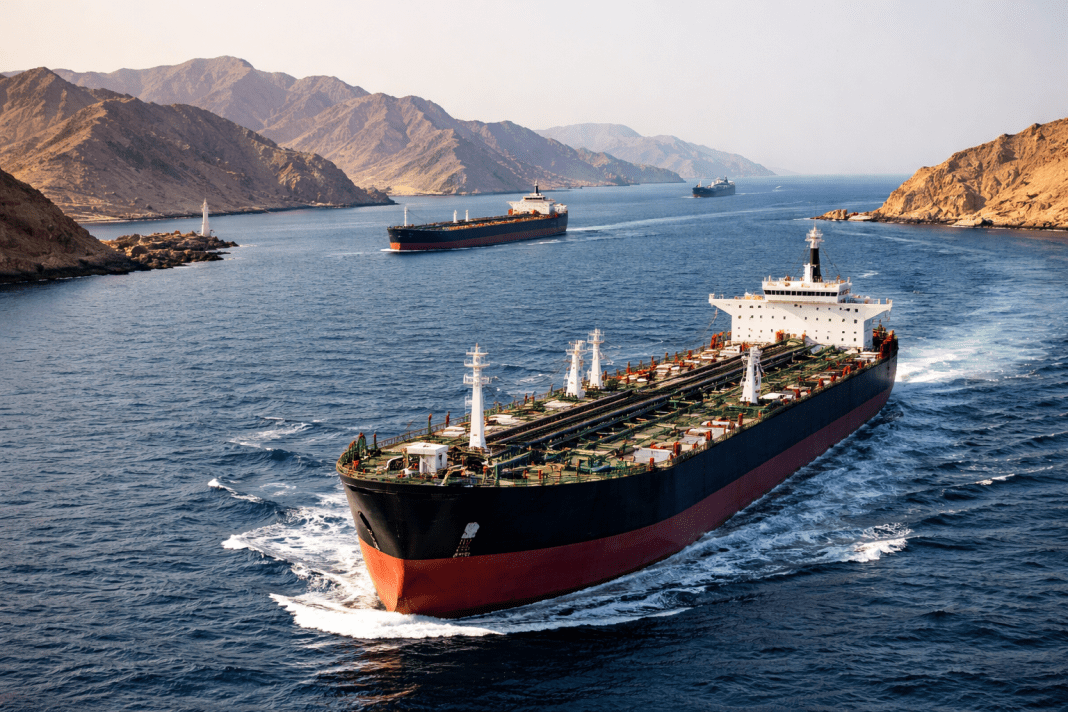

The Islamic Revolutionary Guard Corps (IRGC) of Iran has announced a dramatic offer that could shake the global oil market. On Tuesday, the military body said it will allow certain countries unrestricted passage through the Strait of Hormuz, one of the world’s most critical oil routes. However, there is a surprising condition attached. Only nations that expel both US and Israeli ambassadors from their territory will gain this “full freedom” to navigate the waterway.
The Strait of Hormuz is no ordinary water passage. It is a narrow stretch connecting the Persian Gulf to the Gulf of Oman. Around 20 percent of the world’s oil passes through this corridor every day. Any disruption here can send oil prices soaring and impact countries around the globe. This announcement by the IRGC comes amid heightened tensions and ongoing conflict in the Middle East, causing uncertainty in oil supplies.
Strict Condition Set for Safe Passage Through the Strait of Hormuz
According to Iran’s state broadcaster, the IRGC declared that while some countries will have the right to move ships freely through the Strait of Hormuz, this privilege will only apply to nations that cut diplomatic ties with both the United States and Israel. The statement emphasized that only these countries will enjoy “full right and freedom” to operate in the strategically important waterway.
This development is part of the wider geopolitical tensions in the region. The IRGC’s announcement directly ties safe maritime passage to political actions by other nations. It signals that Iran is leveraging its control over the Strait to influence foreign policies of Arab and European countries. Experts say that this could affect global oil markets and diplomatic relations, as countries weigh the potential benefits and consequences of complying with this strict condition.
US Response and Oil Market Turmoil
The announcement from Iran comes at a time of high tension with the United States. The US President has issued strong warnings to Tehran. He stated that if Iran attempts to block the flow of oil, the country will face a much larger military response. The president highlighted that no nation would be allowed to “hold the world hostage” by disrupting global oil supply.
Trump downplays rising gas prices as US-Iran conflict disrupts oil markets globally
In addition to military threats, the United States is taking action on the economic front. The president announced that some oil-related sanctions will be temporarily waived. The move aims to calm global oil markets and reduce the rising prices, which have already crossed $100 per barrel due to multiple factors. These include the partial shutdown of the Strait of Hormuz and a slowdown in oil production in key Middle Eastern countries.
The waiver of sanctions is a significant step, especially amid the war in the region. By reducing certain trade restrictions, the United States hopes to ease pressure on oil prices while maintaining leverage over Iran. At the same time, the combination of military threats and economic adjustments shows the intensity of the global stakes surrounding the Strait of Hormuz.
Global Impact and Strategic Significance
The Strait of Hormuz remains a vital chokepoint for global energy supply. Any conflict or restriction in this passage could disrupt shipments, leading to immediate economic ripple effects worldwide. Iran’s conditional offer to allow free passage introduces new layers of uncertainty. Countries must now consider political decisions alongside economic interests if they want to secure safe navigation through the strait.
Iran blocks 38 Indian vessels in Persian Gulf and accuses India of aiding US submarine attack
The situation has already contributed to the volatility of oil markets. Traders and analysts are closely monitoring developments, as the strait’s accessibility affects not just oil-exporting countries but also nations that rely heavily on imported energy. With the IRGC’s demand tied directly to diplomatic actions, nations face difficult choices that balance international relations with energy security.
In summary, the IRGC’s statement marks a high-stakes moment in international affairs. By offering “full freedom” in the Strait of Hormuz, but only to countries willing to take strong political actions, Iran is asserting its power in one of the world’s most strategic regions. Meanwhile, global oil markets remain under pressure as major players navigate this complex mix of diplomacy, security, and economic interests.