
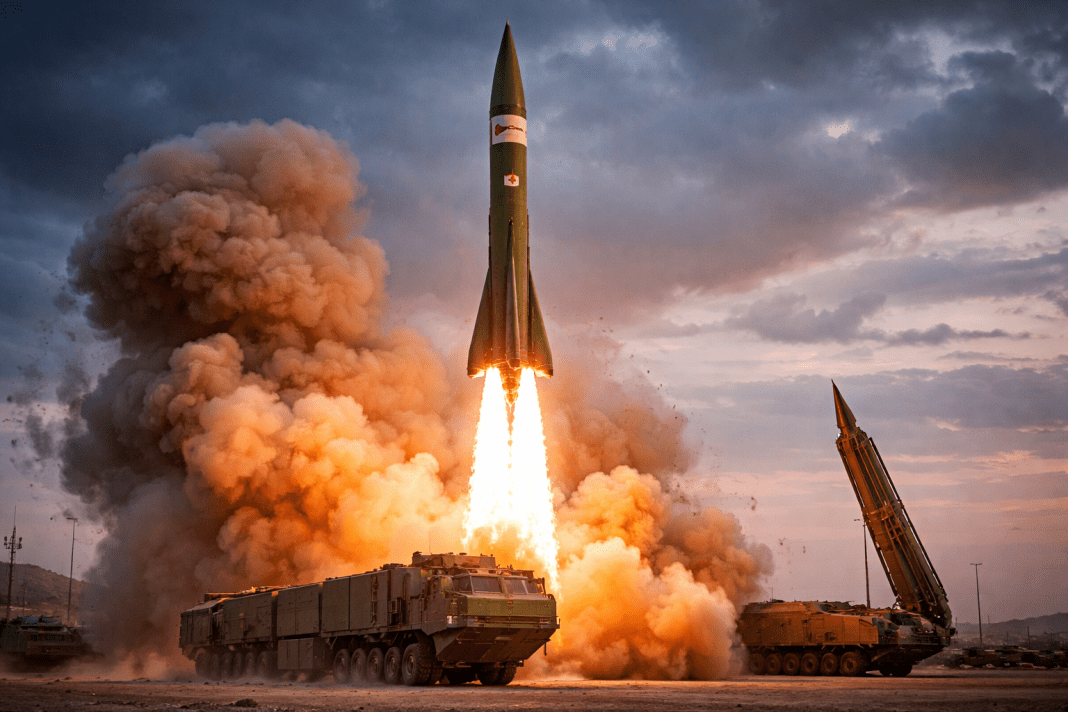

The Middle East conflict has intensified. Iran confirmed the first operational use of its “ultra-heavy” Sejjil ballistic missile. The missile carries a 1,000-kg warhead and is considered one of Iran’s most powerful weapons. The launch took place during the ongoing operation known as Operation Epic Fury. Air raid sirens continue to sound in several areas as attacks and interceptions occur. Regional defense systems remain on high alert to protect cities and critical infrastructure.
Ultra-Heavy Sejjil Missile Enters the Battlefield
Iran’s Sejjil is a two-stage ballistic missile powered by solid fuel. Solid fuel allows the missile to be launched much faster than older liquid-fuel systems. Because it can be stored ready for use, it requires very little preparation before launch. This makes the missile more responsive during military operations.
The Sejjil can be fired from mobile launch platforms that move on roads. These launchers can quickly change locations, making them harder to detect and destroy before launch. The missile is estimated to have a range of about 2,000 kilometers, allowing it to reach targets across much of the Middle East. It also carries a powerful 1,000-kilogram warhead.
Iran launches sweeping spy crackdown, arrests dozens accused of passing military secrets to Israel
Officials describe the payload as “ultra-heavy” because of its destructive power. The missile travels at extremely high speeds after launch and follows a ballistic path that rises high before descending rapidly toward its target. Its combination of speed, range, and heavy payload has made the Sejjil an important part of Iran’s deterrence capabilities.
Conflict Intensifies During Operation Epic Fury
The deployment of the Sejjil missile took place during the ongoing military confrontation known as Operation Epic Fury. The conflict has lasted for 17 days and has involved repeated missile launches and air strikes across several parts of the region. The situation has kept governments and security forces on high alert as tensions continue to rise.
During this period, multiple cities have experienced frequent warning sirens. Authorities have instructed residents to move quickly to shelters when alerts sound. Emergency services and defense teams remain on standby while air defense systems attempt to intercept incoming missiles before they reach populated areas.
Iran’s military command stated that future strikes in the operation will focus on warheads weighing more than one ton. Officials said the goal is to increase the impact on strategic targets considered important during the conflict. This announcement signaled a shift toward the use of heavier and more destructive weapons.
Military analysts say such large warheads can cause serious damage to fortified structures, military bases, and command centers. The increased explosive mass delivers a much stronger impact than lighter missiles. At the same time, the heavier payload also creates additional challenges for regional air defense systems trying to intercept them.
Air Defense Systems Face New Challenges
Regional air defense systems have been working constantly to detect and intercept incoming missiles during the conflict. These systems use radar, tracking technology, and interceptor missiles to destroy threats in the air before they reach their targets. Military officials reported that several Sejjil missiles were intercepted during recent attacks.
Despite these interceptions, the missile’s 1,000-kilogram warhead remains a serious concern. Experts say even debris from such a heavy payload can cause damage if it falls into populated areas. The destructive power of the warhead makes every interception attempt critical for protecting cities and infrastructure.
Ballistic missiles like the Sejjil travel at extremely high speeds during the final stage of their flight. In this terminal phase, the missile descends rapidly toward its target, leaving defense systems with only a short time to respond. Solid-fuel missiles are also harder to counter because they can be launched quickly with little preparation.
The missiles are often launched from mobile platforms that can move and hide along roads. This mobility makes it harder for opposing forces to locate and destroy them before launch. Meanwhile, missile alerts continue across several cities as residents follow emergency instructions and move to shelters when sirens sound.