
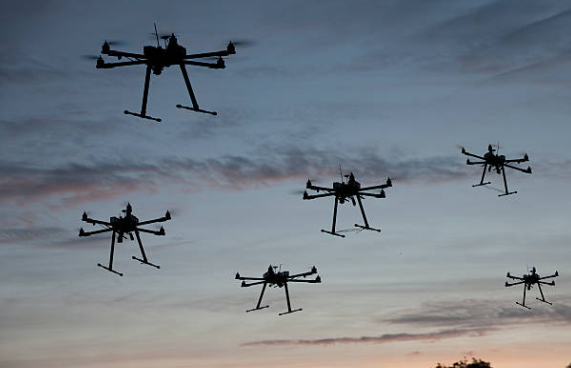

A senior IDF Air Force officer has explained how Israel is increasingly relying on UAVs in operations linked to Iran and regional conflicts. Col. K said drones have become central to modern warfare, supporting surveillance and strikes while the fleet continues to expand and evolve.
IDF UAV Fleet Becomes Central Force in Operations Against Iran and Regional Threats
A senior Israel Defense Forces (IDF) Air Force officer explained how Israel prepares and uses its unmanned aerial vehicle (UAV) fleet in operations linked to Iran and other regional conflicts. Col. K, who leads the Israel Air Force’s UAV and Intelligence Department, said drones have become one of the most important tools in modern warfare and now operate across nearly every major front where the IDF operates.
She said that in recent years of fighting, including operations involving Iran, the IDF has used UAVs in Gaza, Lebanon, and even deep inside Iranian territory. These drones gather intelligence, track enemy movements, and carry out strikes while reducing risk to pilots. She described UAVs as “central to every front” due to their growing importance.
Yair Lapid warns of a looming security disaster as he reveals Eyal Zamir’s ten red flags for the IDF
Col. K also highlighted a major shift in long-range missions, where Israeli drones operated far beyond national borders in hostile areas. During Operation Rising Lion in June 2025, UAVs reportedly flew thousands of hours and conducted hundreds of strikes, forming a key part of aerial operations.
Drone Warfare, Long-Range Missions, and Advanced Technology Used in Combat Zones
Col. K said UAVs played a key role in the 12-day conflict involving Iran, carrying out both surveillance and strikes. She stated that Israeli drones conducted around 500 attacks, nearly half of all aerial strikes, targeting missile launch sites, weapons storage, and logistics hubs.
She explained that UAVs were often chosen over crewed aircraft when possible to reduce risk to pilots, though they cannot refuel mid-air and must complete missions within fuel limits. Despite this, the IDF operated drones effectively over long distances in complex conditions.
IDF uncovers massive 7-km Hamas tunnel hidden beneath UN compound — one of Gaza’s biggest ever found
During the conflict, Iran launched missile and drone attacks toward Israel and the region. In response, Israeli UAVs located and struck key infrastructure. Col. K also noted that drones operated in GPS-denied environments common in Iran and Lebanon.
To handle this, Israel developed advanced navigation systems that allow UAVs to function without satellite guidance. She added that all systems, including sensors and weapons, are produced by Israeli companies such as IAI, Elbit Systems, Rafael, and Aeronautics.
Drone Losses, Aircraft Recovery, and Expansion of UAVs Capabilities in IDF Operations
During the recent conflict, UAV operations faced risks and occasional losses. One major incident involved a Heron drone that enemy fire reportedly hit during a mission over Iranian territory. Despite the hit, the drone returned safely, though it suffered serious damage, including to its fuel tank.
Col. K said technicians repaired the damaged drone and returned it to active service, highlighting both the vulnerability and resilience of UAV systems in combat conditions.
While officials have not confirmed exact figures, estimates suggest that operations caused multiple UAV losses. Reports say the United States may have lost around 20 Reaper drones in related missions, while Israel is believed to have lost more than a dozen unmanned systems. Even so, the IDF said losses remained relatively low compared to the scale of operations.
IDF releases bodycam footage of night operations targeting Hezbollah sites in Lebanon
The officer stressed that strong preparation and system design helped maintain operational capability despite battlefield risks. She also noted that the IDF is expanding its UAV fleet, introducing new platforms such as the Heron MK2 and forming additional squadrons. The Hermes 650 Spark is also part of this expansion.
Col. K added that lessons from global conflicts, including the war in Ukraine, are being studied to improve UAV performance. She said unmanned systems remain central to intelligence gathering and precision strikes across multiple regions.