
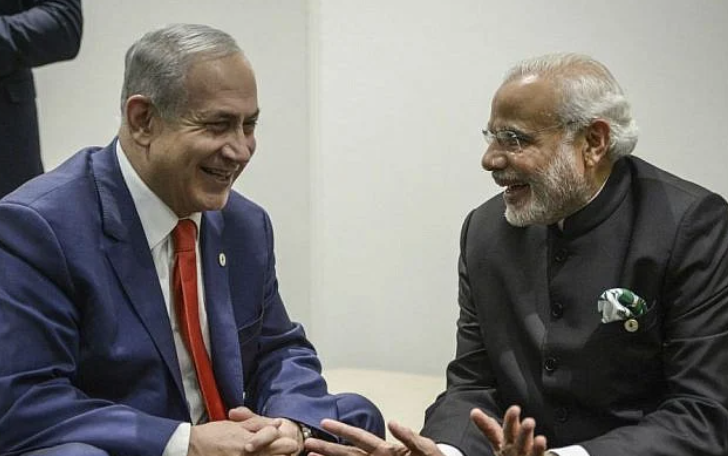

Prime Minister Narendra Modi is preparing for a two-day visit to Tel Aviv from February 25–26 as India moves to strengthen its strategic and defence partnership with Israel, focusing on defence, anti-ballistic missile development, technology, and security.
Officials confirmed that the two countries will sign a Memorandum of Understanding (MoU) on security cooperation, but they do not expect to finalize any formal defence deals. During the visit, PM Modi will meet Israeli Prime Minister Benjamin Netanyahu to discuss defence collaboration, trade, technology, and counter-terrorism.
Focus on Anti-Ballistic Missile Defence and Advanced Systems
A central point of the visit will be the joint development of anti-ballistic missile defence systems under India’s Mission Sudershan initiative. This project aims to protect Indian territory from long-range missile threats, which increasingly pose a major security challenge.
India fast tracks Rampage missile purchase from Israel as Su 30 MKI integration proves precision
The discussions will focus on how India can leverage Israel’s expertise in anti-ballistic missile technology to strengthen its defensive capabilities. Israel has long led the world in missile defence technology and has successfully tested several of its systems in real operational environments.
Some of the most notable systems include:
- Arrow missile system – designed to intercept long-range threats, part of Israel’s anti-ballistic missile defence network
- David’s Sling – built to handle medium-range missile threats
- Iron Dome – effective against short-range rockets and missiles
Experts consider these technologies among the most advanced in the world, giving Israel a unique edge in anti-ballistic missile operations. India is also exploring collaboration in other cutting-edge defence areas, including high-energy laser defence systems, long-range stand-off missiles, and armed drones such as loitering munitions.
Defence Secretary RK Singh laid the groundwork for this expanded cooperation during his visit to Israel in November last year. During that trip, the two countries signed an MoU on enhanced defence collaboration, creating a framework for future joint technology sharing, research, and development projects. This prior engagement has set the stage for deeper cooperation in anti-ballistic missile and high-tech defence systems during PM Modi’s upcoming visit.
Procurement of Long-Range Missiles and Naval Systems
Beyond missile defence, India is evaluating and planning to jointly develop long-range precision strike systems that can launch from air, land, and sea platforms. These systems will enable India to target high-value enemy assets, bypass advanced enemy air defence networks, and strengthen the anti-ballistic missile shield that India is building under Mission Sudershan.
Some of the key systems under consideration include:
- SPICE 1000 guided bombs for precision air strikes
- Rampage air-to-surface missiles
- LORA air-launched ballistic missiles
- Ice Breaker long-range precision strike systems
- Extended-range Barak 8 missiles for Indian Navy warships
Chinese Watchdog Brands India-Israel Axis a Dangerous Threat to Peace
The inclusion of advanced naval systems such as the Barak 8 is intended to strengthen India’s maritime security, especially in strategic sea lanes. Together, these systems could provide India with a comprehensive defence capability spanning land, air, and sea domains, complementing its anti-ballistic missile defence efforts.
Broader Strategic Dialogue Beyond Defence
While defence remains a central focus, India and Israel are also expected to discuss cooperation in broader strategic areas. The talks are likely to cover science and technology, agriculture innovation, clean drinking water solutions, and quantum computing projects, reflecting both countries’ interest in high-tech and sustainable solutions.
India and Israel have maintained close political and security ties in recent years. The two nations often collaborate on counter-terrorism initiatives and strategic matters, building trust and strengthening their partnership across multiple sectors.
India’s supersonic power surges as IAF explores Israeli Air LORA for long-range dominance
The upcoming visit is viewed as an important step in further consolidating these ties. It provides an opportunity to foster technology exchange and expand bilateral collaboration in defence and strategic innovation, particularly in anti-ballistic missile technology, paving the way for long-term cooperation.
Officials have emphasized that while they will not finalize any immediate arms deals, the visit represents a critical step as India and Israel work to build a stronger and more resilient defence relationship. Both countries aim to combine their expertise to enhance national security, technological innovation, and strategic alignment in the region.