
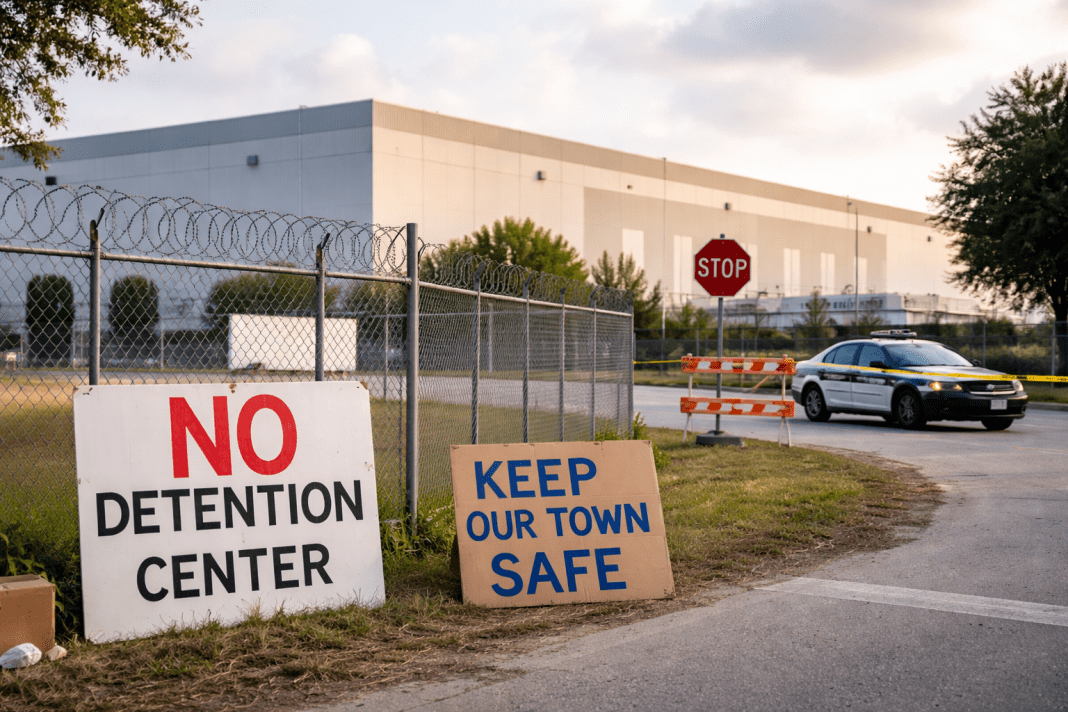

Strong community protests in Hutchins, Texas, convinced the owner of a warehouse to refuse selling or leasing the facility to the US government. The major real estate company’s decision removed the building from consideration as a detention centre for immigrants and reflected public anger over the Trump administration’s strict immigration policies.
Hutchins Warehouse Owner Refuses Government Deal Amid Public Outcry
The Department of Homeland Security (DHS) had approached the company about acquiring the warehouse. But after hearing from local residents and advocacy groups, the company announced it “has not and will not enter into any agreement” for the warehouse to be used as a detention facility.
Residents of Hutchins, a small town located just 12 miles from central Dallas, expressed strong opposition to the plan. Many argued that a detention centre could overwhelm the town’s resources and disrupt the community’s daily life. Community members spoke at town hall meetings, stating that they did not want immigrants treated like “cattle” in their neighborhood. The warehouse had the potential to house up to 9,500 detainees, a number nearly matching the town’s population.
Local authorities and citizens praised the decision. The town’s mayor welcomed the news, saying it reflected the community’s values. The warehouse owner also emphasized its commitment to finding a tenant or buyer that would contribute positively to the local economy, maintaining a long-term relationship with Hutchins.
Public Pressure Shapes Corporate Decisions
Community activism played a key role in the warehouse owner’s choice. Specifically, local campaigners have been vocal about the consequences of expanding immigration enforcement in small towns. Moreover, their message, echoed in town hall meetings and on social media, stressed the importance of protecting human rights and maintaining safety in local neighborhoods.
In particular, one campaigner explained that public voices were crucial in influencing the company’s decision. As a result, many residents joined together to express their concerns, highlighting the dangers of housing thousands of detainees in a small community.
Children’s cries ignored: Kids in Texas and beyond left parentless after ICE raids
This situation also follows national controversies surrounding immigration enforcement. Over the past few months, federal agents faced criticism for aggressive tactics, which sometimes resulted in tragic incidents. Consequently, these events have contributed to growing concern among the public regarding immigration policies and the operations of agencies like Immigration and Customs Enforcement (ICE).
Furthermore, surveys suggest that many Americans believe the government has overstepped in sending federal immigration agents into cities. Accordingly, approval ratings for the president’s handling of immigration have dropped significantly, reflecting public unease over enforcement methods.
Concerns Over Community Safety and Resources
Experts and local leaders have warned that large detention facilities could strain city infrastructure and emergency services. Hutchins officials emphasized that such a facility would create significant challenges for law enforcement, healthcare, and other essential services.
Community members also voiced moral concerns, arguing that detaining large numbers of people, many of whom are seeking a better life, raises humanitarian questions. The potential scale of the facility sparked fears about crowding, safety, and the impact on local families.
The decision to reject the warehouse for use as a detention centre has been met with relief by political leaders in the area. They emphasized that decisions impacting communities should involve local input and consent, particularly when public safety and humanitarian concerns are at stake.
Death of Texas immigration detainee ruled homicide after autopsy finds fatal neck and chest pressure
The warehouse owner’s choice reflects a growing trend of corporations responding to community pressure and public sentiment. By refusing the sale or lease, the company acknowledged the importance of listening to local voices while maintaining its long-term business interests in the area.
The Hutchins community continues to show strong engagement in civic matters. Residents have made it clear that large-scale federal projects affecting the town must respect local values and priorities. Their unified opposition to the detention facility demonstrates the power of organized public opinion in shaping decisions by both private and government entities.