
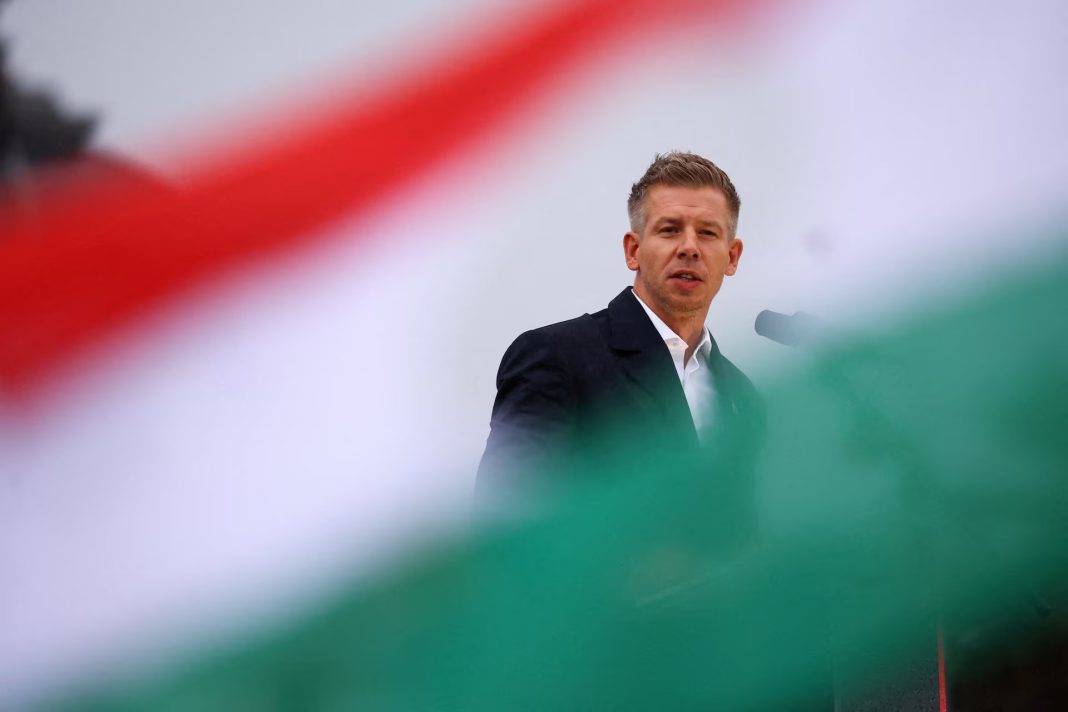

Budapest, Hungary — In a moment that will likely redefine Hungary’s political future, Peter Magyar has delivered a decisive electoral victory, bringing an end to Viktor Orbán’s 16-year grip on power. The result is being described as historic, not just for Hungary but for the wider European political landscape.
As votes were counted late into the night, it became clear that Magyar’s Tisza party had secured a commanding lead. With more than 97 percent of precincts reporting, the party had won 138 seats in the 199-member parliament, comfortably ahead of Orbán’s Fidesz party. The scale of the win reflects a powerful shift in public sentiment and a clear demand for change.
The atmosphere in Budapest quickly turned euphoric. Thousands gathered along the Danube River, waving flags and celebrating what many called a “new beginning” for the country. Speaking to the crowd, Magyar struck a tone that blended triumph with responsibility. He told supporters that the victory belonged to the people, adding that Hungarians had chosen unity and purpose over division.
For Orbán, the outcome marks a dramatic turning point. Having dominated Hungarian politics since 2010, he conceded defeat, calling the result both clear and difficult. Despite the loss, he vowed that his party would continue to serve the nation from the opposition. His tenure, however, leaves behind a deeply reshaped political system that will now be tested under new leadership.
One of the most striking elements of this Hungary election was the sheer level of participation. Nearly 80 percent of eligible voters turned out, making it one of the highest turnouts in the country’s modern democratic history. That surge in engagement reflects just how much was at stake. For many voters, this was more than a routine election; it was a defining choice about the country’s direction.
Orbán tells Volodymyr Zelensky Hungary will send “not a single penny” for war
The victory of Peter Magyar carries significant weight because it could hand his party a two-thirds majority in parliament. This is a crucial threshold in Hungary’s political system, allowing the government to amend the constitution. Ironically, it was the same level of power that Orbán used over the years to implement sweeping changes to Hungary’s institutions.
Magyar has made it clear that he intends to use this mandate carefully. Throughout his campaign, he emphasized the need to rebuild trust in public institutions, tackle corruption, and restore the independence of the judiciary. His message appears to have resonated with a broad cross-section of voters who felt increasingly disconnected from the previous administration.
Beyond Hungary’s borders, the implications of this election are already being closely watched. Under Orbán, the country often found itself at odds with the European Union. Disputes over democratic standards and governance led to tensions with Brussels and even the suspension of certain EU funds.
Now, with Magyar set to take charge, there is growing expectation that Hungary will move closer to the European mainstream. This could open the door to improved relations, the release of frozen funds, and greater cooperation on key issues. It may also influence ongoing discussions about support for Ukraine, which Hungary had previously complicated under Orbán’s leadership.
The international dimension of this political shift cannot be ignored. Orbán had cultivated close ties with Russian President Vladimir Putin and was often seen as one of Moscow’s most reliable partners within the EU. His departure from power could alter that dynamic significantly, potentially reducing Russia’s influence in European decision-making.
At the same time, the result may send ripples through global conservative movements. Orbán had long been admired by figures such as Donald Trump, who praised his nationalist policies. With Orbán now out of office, political observers are watching closely to see how this shift might impact similar movements elsewhere.
For now, the focus remains firmly on what comes next for Hungary. The road ahead for Peter Magyar will not be easy. Governing after such a long period of centralized control means navigating institutions that were shaped by his predecessor. Expectations are high, and the pressure to deliver tangible results will be immediate.
Still, the mood in Budapest tells its own story. There is a sense that something fundamental has changed. After years of continuity under Viktor Orbán, voters have chosen a different path, one that promises renewal but also comes with uncertainty.
Hungary now stands at the beginning of a new political chapter. Whether this moment leads to lasting transformation will depend on how effectively the new leadership can turn electoral momentum into meaningful reform. For millions of Hungarians, however, the message of this election is already clear: change is not only possible, it has arrived.